
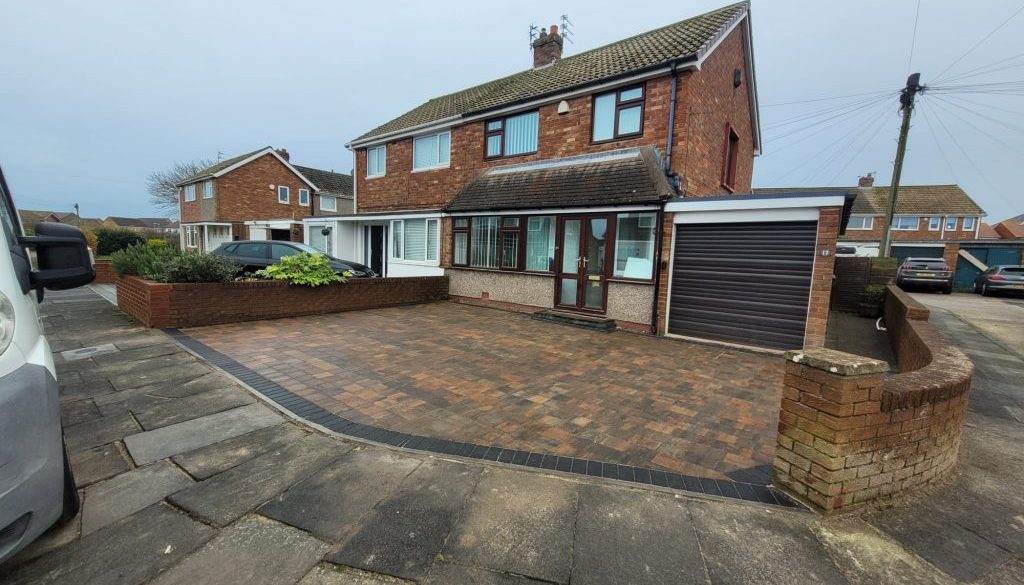
How Driveway Installation Works: From Start to Finish

M&C ADVICE & INSPIRATION
How Driveway Installation Works: From Start to Finish
Plan your outdoor space
with a clearer picture.
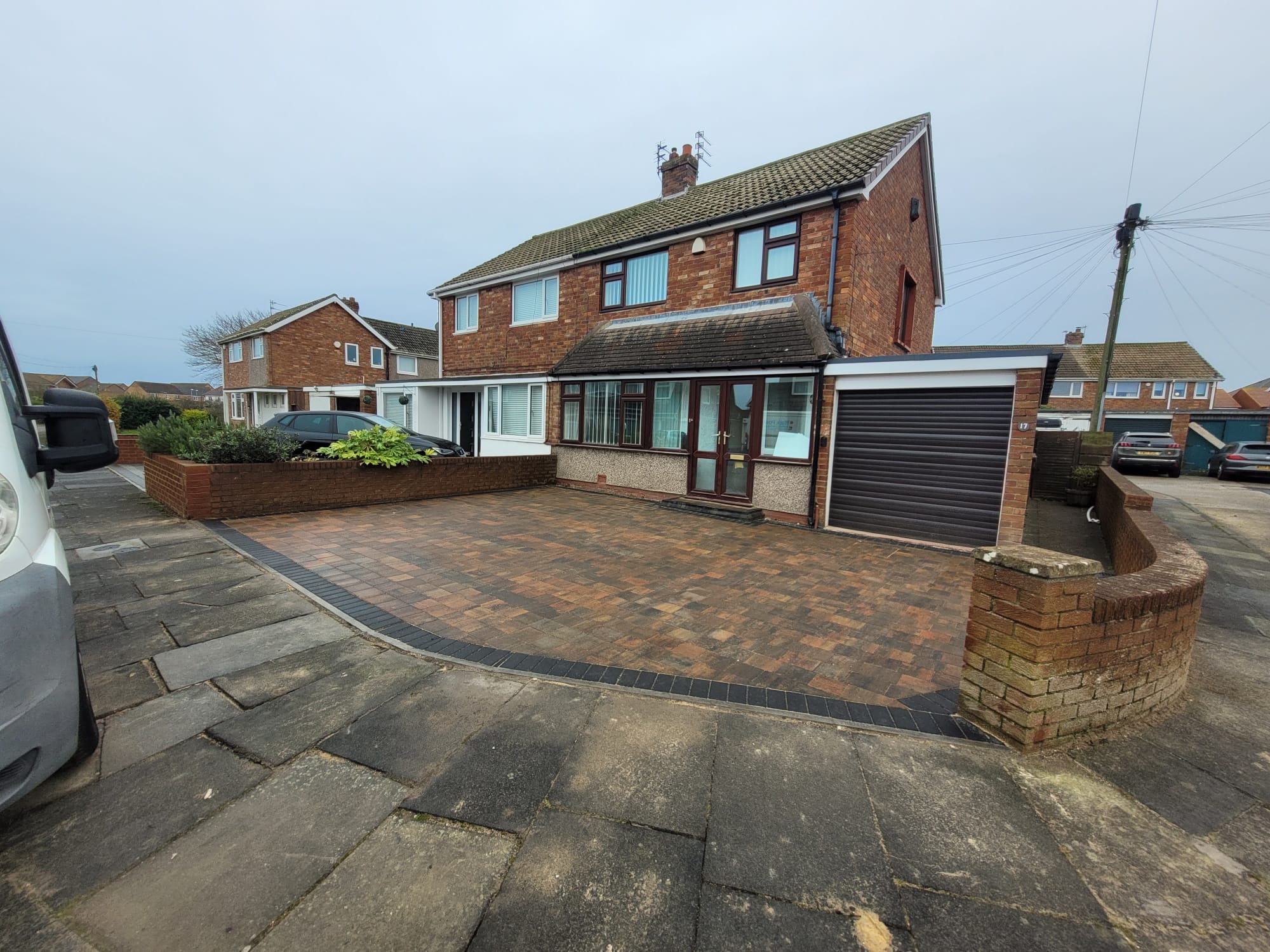
A driveway installation normally involves assessment, design, ground preparation, construction of the supporting layers, laying the chosen surface and handover. The details vary with the property and system. Understanding the sequence helps you compare quotations and prepare for access restrictions without assuming every driveway uses the same depth, materials or reopening time.
Planning work of your own? Explore our driveway contractors service, then use this guide to help shape the questions you ask at your site visit.
Assessment and a written specification
The installer should assess the existing surface, levels, access, expected vehicle use, ground conditions and drainage. Discuss known services, inspection covers, thresholds and any existing problems such as settlement or standing water.
Agree the proposed materials, construction, edges and water-management arrangements in writing. Identify assumptions that may need checking during excavation, and set out how changes will be priced and authorised.
Permissions and access arrangements
Check the planning position for the proposed surfacing and any highway approval needed for a new or altered vehicle crossing. These are separate matters. A contractor's quotation should identify who is responsible for applications and any work that remains subject to approval.
Arrange alternative parking, deliveries and pedestrian access before work begins. Discuss where materials and waste will be stored and how shared routes or neighbouring access will be protected.
Removal and ground preparation
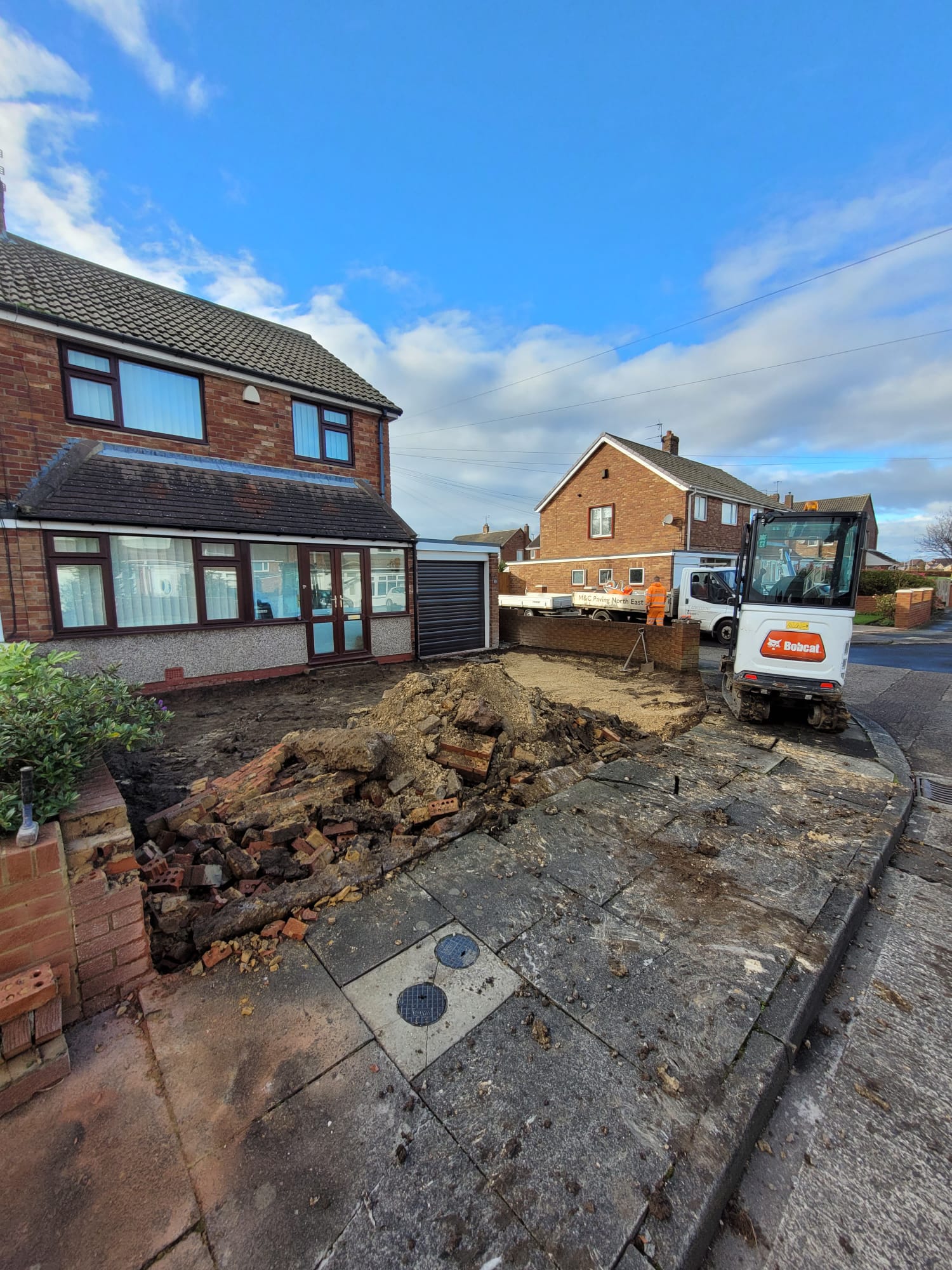
Existing surfaces are removed where required and the ground prepared to the agreed design. Excavation depth depends on the system, ground and loads; a generic depth range is not a substitute for a suitable specification. Unexpected conditions should be assessed rather than covered by the new work.
Supporting layers, edges and drainage
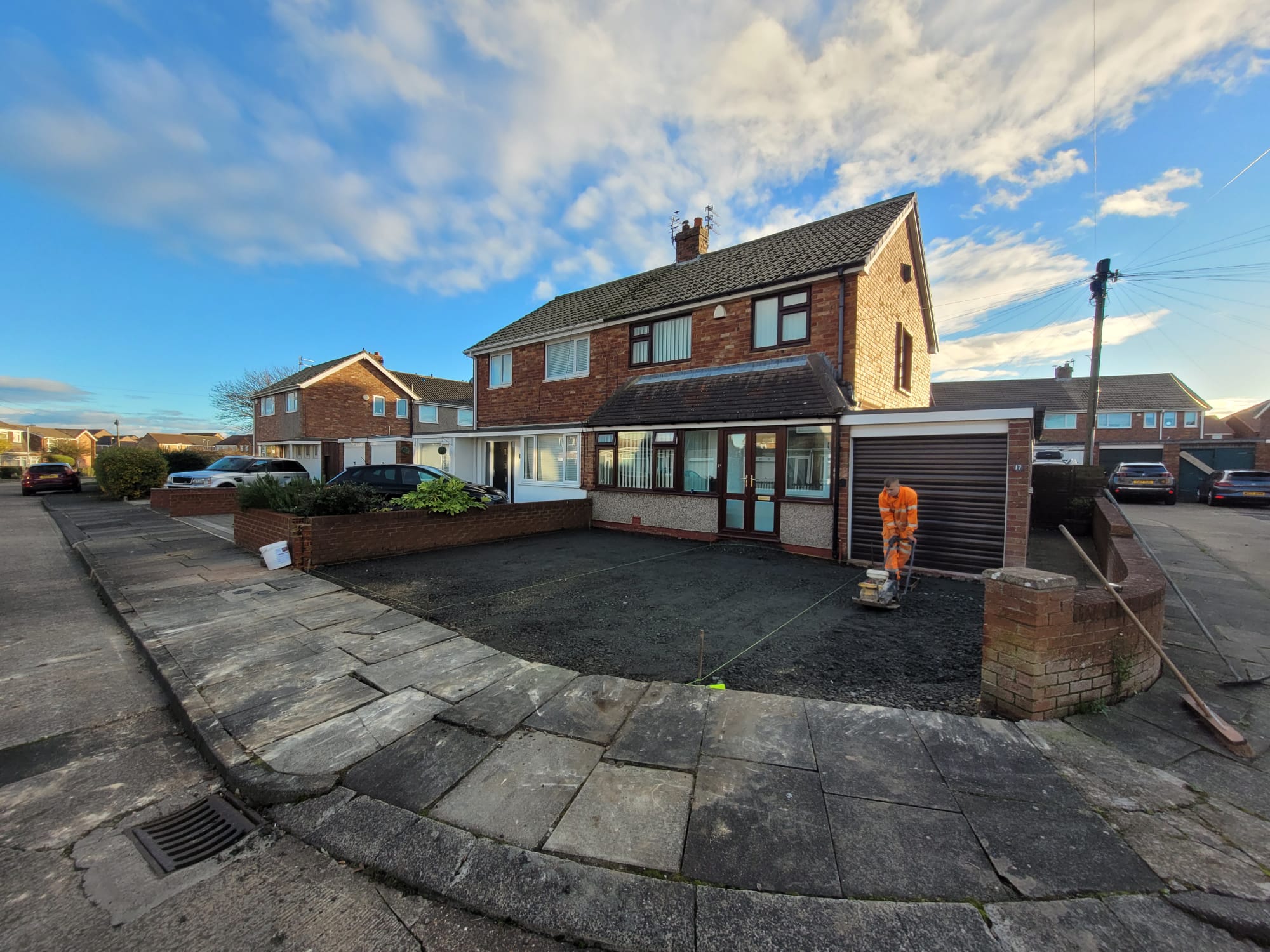
The supporting layers must suit the selected construction. Materials, thicknesses, separation, compaction and jointing differ between conventional and permeable systems. A membrane should not be presented as a universal solution to weeds or poor ground.
Coordinate edge restraints, inspection covers and drainage before laying the final surface. Ask where runoff will go and how the completed driveway meets doors, paths and the vehicle crossing. A surface that looks flat is not necessarily designed to drain appropriately.
Laying the chosen surface
Block paving
Units are laid and jointed using the method specified for the selected system. Conventional and permeable paving may need different supporting and jointing materials. Edge support and finishing details remain part of the construction.
Tarmac and concrete
These surfaces require appropriate preparation, laying and finishing. Weather restrictions, joint details and curing or cooling arrangements depend on the specification. Do not use a generic number of hours or days as confirmation that a driveway is ready for vehicles.
Resin-bound systems
The resin, aggregate, supporting construction and weather conditions must meet the chosen system's requirements. Confirm whether the complete proposal is permeable. Resin-bound and resin-bonded finishes should not be treated as equivalent systems.
Checks before handover
Review edges, levels, surface finish, inspection covers and the drainage arrangements with the contractor. Record any outstanding work and obtain product information, aftercare instructions and the written terms of any warranty being offered. Sealing is only included where appropriate to the installed product and specification.
Reopening and ongoing care
Follow written instructions for walking, parking and vehicle movements during early use. Reopening depends on the actual material, conditions and work completed, so plan alternative parking around the installer's confirmed advice.
Maintain the surface and drainage as instructed and seek assessment if movement, persistent puddling or damage develops. Routine cleaning and compatible treatments are useful maintenance; they do not repair an unsuitable underlying construction.
Ready to discuss your own project? Contact M&C Paving Northeast to arrange a free site visit and quote.
For a property in Blyth, see our driveways service in Blyth for local installation information.
Frequently asked questions
What happens first during a professional driveway installation?
The process should begin with an assessment and an agreed specification, before excavation or material delivery. The installer needs to understand use, access, levels, existing defects, ground and drainage, along with any required approvals.
Clarify what is included and which assumptions need checking during preparation. This provides a basis for comparing quotations and managing changes, rather than treating the first visible activity on site as the point when the construction details are decided.
Is there one standard excavation depth for every driveway?
No: the required excavation follows the system, ground conditions, intended loads and design rather than a universal depth quoted in an article. Different conventional and permeable constructions can need different materials and arrangements.
Ask the installer to explain the proposed layers and what will happen if unexpected conditions are discovered. A surface's name or a generic depth range is not enough to establish that the completed driveway will have suitable support or drainage.
Why are drainage and edge restraints installed before the final surface?
They form part of how the completed driveway is supported and how it manages water, so they need coordination with the main construction. Leaving them as last-minute additions can create difficult junctions or alter the intended levels.
Ask the contractor to explain the sequence and how inspection covers, thresholds and adjacent paths will be handled. The aim is a complete, coordinated installation rather than a finished-looking surface that still leaves unresolved edges or a poor water route.
How long should a driveway remain unused after installation?
The restriction depends on the actual materials, products, conditions and work completed. Cooling, setting and curing requirements vary, and a visually finished surface may not be ready for parking or turning wheels.
Obtain written instructions from the installer covering pedestrian and vehicle use, then arrange alternative access around those requirements. Avoid using a generic number of hours or days from another project as permission to load your driveway before the specified conditions are met.
What should I check at driveway handover?
Review the agreed finish, edges, transitions, covers, drainage arrangements and any outstanding tasks with the contractor. Obtain product details, aftercare and early-use instructions and the written terms of any warranty being offered.
Keep records of agreed changes so the final scope is clear. If something needs attention, record it and the proposed next step rather than relying on a general assurance that every mark, puddle or movement will necessarily resolve by itself.
FROM IDEAS TO YOUR OUTDOOR SPACE
Ready to take the next step?
Talk to M&C about the work you have in mind.


