

Paving Installation: What to Check at Each Stage

M&C ADVICE & INSPIRATION
Paving Installation: What to Check at Each Stage
Plan your outdoor space
with a clearer picture.

This guide explains the main stages of paving installation so you can discuss a proposal and review the work. It is not a universal construction specification: blocks, natural stone, porcelain and continuous surfaces have different requirements.
Planning work of your own? Explore our paving contractors service, then use this guide to help shape the questions you ask at your site visit.
Assess the site and intended use
Agree whether the surface will carry vehicles or pedestrians and identify thresholds, access routes, inspection covers and known services. Discuss existing movement or ponding before choosing the finish.
Agree the specification
The quotation should identify the selected product, supporting layers, bedding, jointing, edges and drainage. Depths and materials must suit the actual ground, loads and system. Follow the exact product’s guidance rather than treating generic online dimensions as instructions for every job.
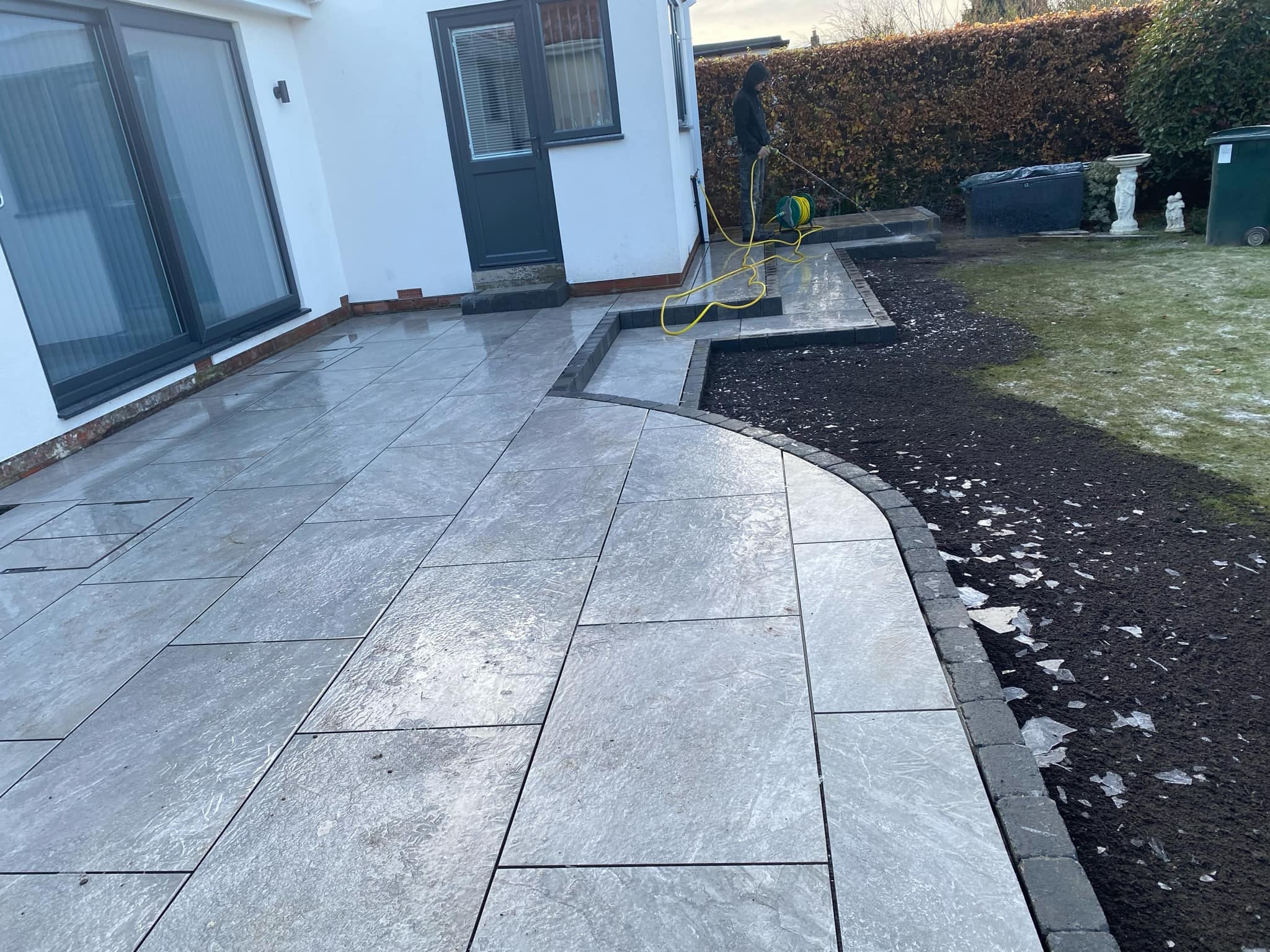
Coordinate levels and drainage
Plan the route and destination of rainfall before excavation. A suitable fall, collection point or permeable product is only one part of the arrangement. Confirm any planning or other approval requirements and who is responsible for them.
Prepare the supporting construction
Remove or retain existing material only as the specification allows. Assess unexpected ground conditions and agree any necessary changes before covering them. Suitable compaction, separation and edge support depend on the construction system.

Lay and joint the chosen product
Use the bedding, bonding, jointing and finishing approach appropriate to that product. Flexible block paving and rigidly bedded slabs should not be treated as equivalent. Permeable systems also need compatible supporting and jointing materials.
Review the completed work
Walk through the agreed scope with the contractor. Review edges, thresholds, inspection covers, surface stability and the drainage arrangement. Record outstanding items and obtain written instructions for early use, cleaning and any product-specific treatment.
Maintain the installed system
Keep the surface and accessible drainage clear of debris and use compatible cleaning methods. Sealing is optional or unsuitable for some products, so follow the actual instructions. Recurring movement or standing water deserves assessment rather than repeated cosmetic treatment.
Ready to discuss your own project? Contact M&C Paving Northeast to arrange a free site visit and quote.
See the areas covered by M&C Paving Northeast when planning a local project.
Frequently asked questions
Can I use one paving installation method for every surface?
No, concrete blocks, natural stone, porcelain and continuous surfacing can require different supporting, bedding and jointing arrangements. The intended loads and ground conditions matter too. Obtain the instructions for the exact product and a suitable site specification.
A generic step-by-step article is useful for understanding the sequence, but it cannot provide one reliable construction detail for every project.
How deep should a paving foundation be?
The required excavation and supporting layers depend on the ground, proposed surface, loads and construction system. A single depth quoted online cannot establish suitability for your driveway or patio. Ask the installer to identify the specified layers and how unexpected conditions will be handled.
Where conditions are uncertain, investigation may be needed before the final construction and price can be agreed.
Should paving slabs be laid on sand or mortar?
The bedding method must suit the chosen slab or block product and its intended use. Flexible block paving and rigidly bedded stone or porcelain should not be treated as the same construction.
Follow the relevant manufacturer guidance, including any bonding and jointing requirements. An unsuitable bed can leave the finished surface moving or poorly supported even when it initially appears level.
What is the correct jointing material for paving?
Use the material specified for the selected paving and construction system. Conventional blocks, permeable blocks and rigidly bedded slabs can need different joint details and products. Confirm compatibility before replacing material during maintenance.
The visible gap width alone does not tell you which product to use, and ordinary sand should not be substituted into a permeable system without checking the specification.
What checks should happen before a paving job is handed over?
Review the agreed scope, edges, thresholds, inspection covers and drainage arrangements with the contractor. Note any loose units, unexpected movement or incomplete work and agree how concerns will be resolved. Obtain instructions for early use, cleaning and any optional treatment.
Keep the product details and written warranty terms so later maintenance or repairs can follow the installed system's requirements.
FROM IDEAS TO YOUR OUTDOOR SPACE
Ready to take the next step?
Talk to M&C about the work you have in mind.


