Removing Oil from Your Driveway
M&C ADVICE & INSPIRATION
Removing Oil from Your Driveway
Plan your outdoor space
with a clearer picture.
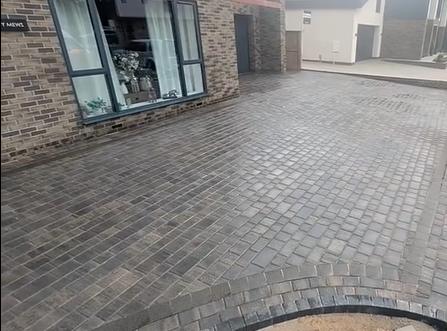
An oil spot under the car is easier to deal with before it spreads into the paving. Start by absorbing the fresh spill rather than scrubbing it over a larger area. Then identify the driveway surface: a method used on concrete blocks may be unsuitable for resin, asphalt, natural stone or a sealed finish.
If staining accompanies damaged or failing paving, our driveway installation information explains what to discuss when comparing repairs and replacement. Routine stain care starts with the instructions for the surface you already have.
Choose the Method for Your Surface
The right cleaning method depends on the material and its condition. Use only a method compatible with your installed paving, its joints and any coating. Follow the cleaner’s instructions, including protective equipment, a discreet test area and how to manage residues. Do not mix cleaning products or wash oil into a drain. For a larger spill or one reaching drainage, obtain appropriate spill advice rather than treating it as routine patio cleaning.
Removing oil, lubricants, and chemicals from your driveways can be a challenging task. Some driveway surfaces are porous, and oil can quickly seep through and create a visible and lasting stain.
Stains on your driveway can affect the aesthetic value of your home and need to be addressed at the earliest.
When removing complex stains caused by oil, you must follow a series of steps to ensure that you can remove most of it. It is very important that, if you can, you should address oil spills immediately. Keeping specialised oil absorbents at home or your business site can be handy. Let us look at some of the ways which can help you remove oil and oil stains.
Cat Litter
You read that right. Cat litter can not only be used for keeping your home free from bad smells but also for removing oil and oil stains. Litter is typically prepared from absorbent clay, which can quickly soak up oils and lubricants. However, please note that you cannot use just any cat litter. Premium cat litter brands usually clump together when they come in contact with moisture. It is therefore recommended to use the cheap litter. You can read the back of the bag for ingredients, and if it says absorbent clay, you are good to go. To use the litter:
- Pour it on the spilt oil and let it soak.
- Check if the amount is sufficient for absorbing all the oil. If you have old oil stains, cat litter might not be that effective, but you can check that out by pouring litter and letting it sit for an hour.
- When all the oil has been absorbed, use a broom to clean the area.
- Next, put some dry detergent over the area and use a bristle brush to scrub it. Rinse with water after scrubbing.
- Repeat the process if necessary.
Oven Cleaner: Check Compatibility First
Oven cleaner is formulated for ovens, not as a general driveway treatment. Do not spray it over paving on the assumption that grease removal makes it suitable. Identify the surface and any coating, then choose an oil cleaner approved for that material. A cleaner that removes the mark but changes the colour or finish leaves another problem behind.

Sawdust and Paint Thinner: Avoid the Solvent Mixture
Absorbent material can help collect a fresh spill, but mixing it with paint thinner is not a suitable general cleaning method. Solvents can damage some surfaces; SureSet specifically warns that petrol and solvents can soften its resin. Use an absorbent suitable for the spill and follow the paving supplier’s advice for the remaining stain. Keep collected material contained and obtain the appropriate local disposal guidance.
Baking Soda
Baking soda is a magical ingredient readily available in your kitchen. From cleaning upholstery to absorbing oil, it can have various applications other than cooking.
- Pour baking soda over the spilt oil.
- Give it 20 to 30 minutes.
- With the help of a pressure washer or hose, wash the area thoroughly.
- Use a bristle brush to scrub the stained area.
- Rewash it with water.
- Repeat the process if necessary.
Liquid Detergent
If the spill is not too large and is fresh, you can also use liquid detergent.
- Use a strong liquid detergent.
- Pour it all over the stain.
- Pour some warm water.
- Scrub and scrub with the help of a stiff brush.
- Rinse it with a pressure washer or hose.
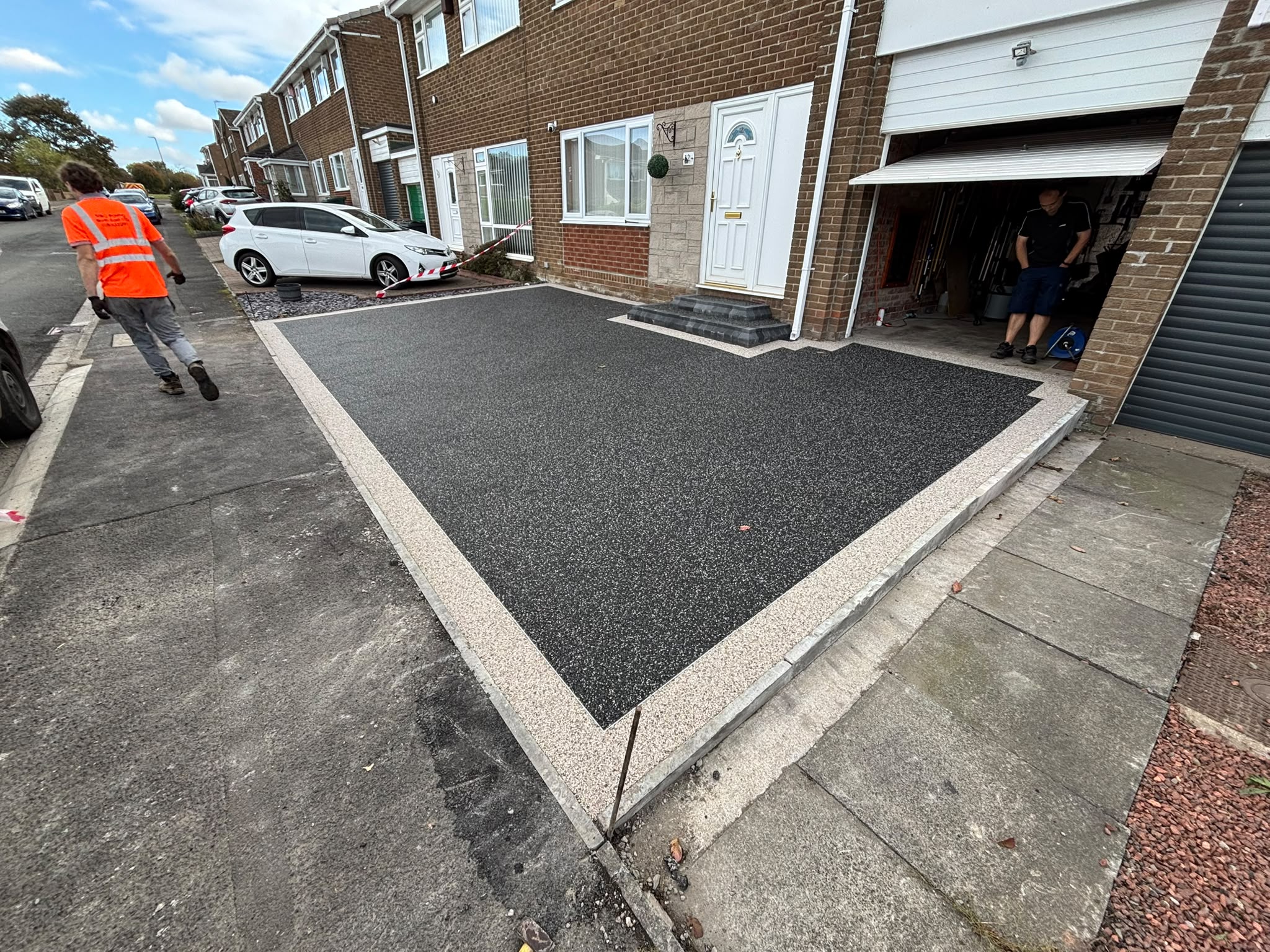
Poultice
Stain-removing poultices can be bought from online platforms like Amazon, but you can also make one at home.
- Use fine sawdust and talc to make a homemade poultice for removing stains.
- Mix it with hot water and liquid soap
- Wet the oil stain area and pour the poultice
- Let the poultice sit for a while
- Use a bristled brush to scrub the area
- Wash it with water.
Why Cleaning Products Should Not Be Mixed
Do not combine bleach, cola, detergents or other cleaners into a homemade stain-removal mixture. Follow one compatible product’s instructions and do not mix cleaning products unless their manufacturer explicitly directs it. If a treatment has already been applied, tell the surface supplier before using another. A persistent mark is a reason to reassess the method, not to add a stronger chemical mixture. See the fire service’s household-cleaning chemical guidance.
WD-40 Is Not a Universal Paving Cleaner
A product’s ability to loosen grease does not make it compatible with every driveway. Do not treat WD-40 or another solvent-based product as the final answer for all oil stains. Use the installed surface manufacturer’s advice, particularly for resin, asphalt or a coated finish. Old staining may need specialist cleaning or replacement of individual units where the paving system allows it; complete removal cannot be promised.
When the Stain Needs a Different Approach
Stop if the surface starts losing colour, shedding material or changing texture. Repeated strong treatment can enlarge the damaged patch. An older stain may not disappear completely, and a local replacement can be more appropriate than increasingly aggressive cleaning. Repair choices depend on the surface and whether matching units are available.
Marshalls’ cleaning and maintenance manual distinguishes absorbing a fresh spill from treating a remaining mark. Its advice is for the relevant paving, not every driveway material. SureSet’s aftercare guidance explains the solvent risk for its resin system. Follow the instructions for the product actually installed at your property.
Ready to discuss your own project? Contact M&C Paving Northeast to arrange a free site visit and quote.
Frequently asked questions
What should I do first when oil spills on the driveway?
Keep people away from the slippery patch and absorb the fresh spill with material suitable for the liquid and surface. Avoid rubbing it across a wider area. Keep the collected material contained and follow appropriate disposal guidance.
Identify the paving before choosing a cleaner. If the spill is substantial or reaches drainage, seek suitable spill advice rather than trying to rinse it away as an ordinary stain.
Can I use the same oil cleaner on resin and block paving?
Not automatically. Concrete blocks, natural stone, resin, asphalt and surface coatings can react differently to a cleaner. Identify the installed product and follow its supplier’s guidance, including any test area and restrictions.
SureSet warns that solvents can damage its resin system. A block-paving cleaning method should not be transferred to another surface simply because both are used for driveways.
Is it safe to mix bleach and other household cleaners?
Do not make a mixture of bleach, detergents, cola or other products for driveway cleaning. Follow a compatible cleaner’s instructions and use it on its own unless the manufacturer explicitly specifies otherwise.
Explain any previous treatment when seeking further advice. A stain that survives the first attempt does not establish that stronger chemicals or a combination of products will be suitable for the paving.
Will cat litter remove an old oil stain?
An appropriate absorbent may help collect fresh liquid, but it should not be relied on to pull an established stain out of every surface. Once the free liquid is collected, the next step depends on the material and the remaining mark.
Use the paving supplier’s recommended treatment rather than repeatedly scrubbing or adding products. An old stain may remain visible even after suitable cleaning.
When should stained paving be replaced instead of cleaned again?
Consider an assessment when compatible cleaning has not resolved the mark, or when the surface has been damaged by the spill or previous treatment. Individual units may be replaceable on some paving systems, though colour matching to weathered paving can be difficult.
Continuous surfaces need a different repair approach. Discuss the visible condition and treatment history before assuming that either another cleaner or complete driveway replacement is necessary.
FROM IDEAS TO YOUR OUTDOOR SPACE
Ready to take the next step?
Talk to M&C about the work you have in mind.