How Long Does a New Driveway Take? A Realistic Timeline
It is the question almost every homeowner asks at quote stage, usually followed by a nervous glance at the calendar. How long does a driveway take to install, and will it be finished before the weather turns?
The work on site is measured in days. The process around it, particularly where a new access or a dropped kerb is involved, is measured in weeks. Understanding which parts can be compressed and which cannot is the difference between a project that lands comfortably before winter and one that stalls in November.
How Long the Work Itself Takes
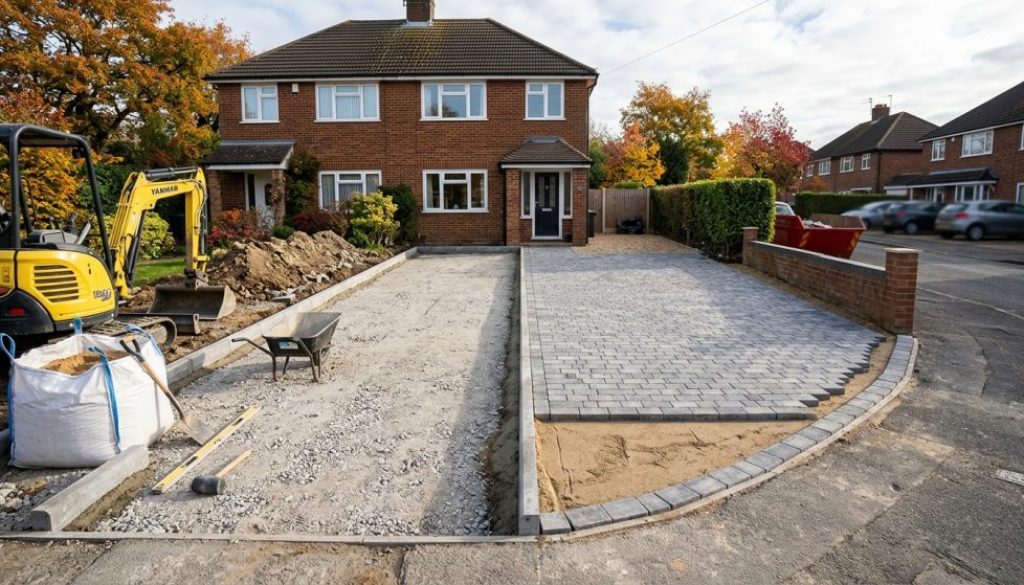
For a straightforward domestic driveway with no complications, the physical work commonly runs across a handful of working days rather than weeks. A typical block paving job on an average frontage often sits in the region of three to five days, and resin bound laid over a sound existing base can be considerably quicker.
That is only half the picture. Booking, approvals, material lead times and contractor availability sit in front of those days, and they are where most of the calendar actually goes. A homeowner who rings in early September wanting a finished drive by the end of the month is usually thinking about the laying, not the fortnight of preparation that has to happen first.
Size and complexity move the figure in both directions. A single parking space with good access and no change of level is quick. A wide frontage with steps, a retaining edge, a soakaway and heavy cutting around curves is a different job altogether, even in the same material.
Before Anyone Digs: Survey, Quote and Approvals
The preparation stage is invisible from the street, which is why homeowners underestimate it.
- Site survey. Measurements, levels, ground conditions, existing drainage and access are all assessed. This is also when problems get spotted rather than discovered mid-job.
- Quote and specification. Depths, materials, edge details and drainage should all be written down before anything is agreed.
- Planning check. Front garden surfacing over five square metres needs either a permeable surface or run-off directed to a permeable area within the property, otherwise planning permission applies.
- Dropped kerb application. If you are creating a new vehicle access, this goes through the local highways authority and runs on their timescale rather than yours.
- Material ordering. Specific blocks, kerbs, porcelain or resin aggregates can carry lead times, particularly for less common colours.
- Scheduling. Good contractors are booked ahead, especially through late summer and autumn.
Anyone converting a front garden for the first time should read our guidance on what to plan before turning a lawn into parking, since that decision affects every stage that follows.
Stage by Stage on Site
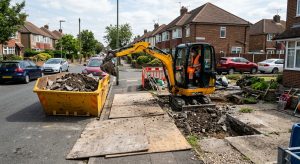
Once work starts, the sequence rarely changes. What varies is how long each stage takes on your particular frontage.
- Setting out and protection. Levels are marked, the working area is defined, and pavements or entrances are protected. Usually a matter of hours.
- Excavation. The existing surface and soil are dug out to the depth the design requires. Old concrete, tree roots or an unexpected slab underneath will slow this down.
- Muck away. Spoil leaves site by skip or grab lorry. Access dictates how quickly this happens.
- Sub-base. Compacted hardcore is laid in layers and consolidated. This stage does the structural work, and rushing it is the most common cause of a driveway failing early.
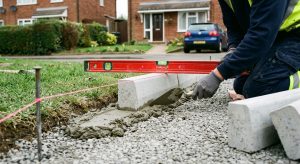
- Edge restraints and kerbs. Edgings are bedded in concrete to hold the surface in place. These usually need time to set before the surface goes down.
- Drainage. Channels, gullies or soakaway connections are installed and levels checked so water runs where it should.
- Surfacing. The visible layer goes on, which is the fastest stage on most jobs and the one people expect to take longest.
- Jointing, curing and clean-up. Sand brushed into block paving, curing time for concrete or resin, and a final tidy.
The drive is not usable throughout. Expect to park elsewhere from the excavation stage until the surface has set or cured properly.
How the Surface Choice Changes the Timeline
Different materials front-load or back-load the work in different ways.
- Block paving. Laying takes longer because every unit is placed by hand, and cutting around curves and edges adds time. Usable soon after jointing.
- Resin bound. Quick to lay over a suitable base, though it needs dry conditions and a cure period before traffic. Weather dependency is higher than most people expect.
- Tarmac. Fast to lay and quick to become usable, but it needs to cool and settle, and it should not be laid in wet or freezing conditions.
- Imprinted concrete. Poured quickly, then patterned, cut and sealed across several separate visits. Curing time before vehicles is the longest of the common options.
If you have not settled on a surface yet, our guide to choosing a driveway company you can rely on covers the questions worth asking before comparing quotes on price alone.
What Actually Causes Delays
Most delays come from a short list, and several of them can be headed off weeks in advance.
|
Cause of delay |
Avoidable? |
Who resolves it |
What you can do in advance |
|
Dropped kerb approval |
Partly |
Local highways authority |
Apply as early as possible, well before booking the work |
|
Underground services found |
Rarely |
Contractor, sometimes the utility company |
Share any knowledge of where services run on the property |
|
Weather |
No |
Nobody |
Build slack into the schedule, particularly from October onwards |
|
Material lead times |
Yes |
Contractor and supplier |
Confirm the material choice early rather than late |
|
Poor access |
Partly |
Contractor |
Flag narrow entrances, parked cars and gate widths at survey |
|
Unexpected ground conditions |
Rarely |
Contractor |
Mention any known soft ground, old structures or previous work |
|
Late design changes |
Yes |
You |
Settle the layout and edging details before work starts |
Underground services deserve particular attention in the North East. Electricity, gas, water and telecoms all run under front gardens, and where something sits too shallow, the relevant utility may need to lower or protect it. That work runs on their schedule, not the contractor’s.
What You Can Do to Keep Things Moving
Homeowners have more influence over the timeline than they usually realise.
- Start the dropped kerb application early, since council assessment and installation both take weeks and timescales vary considerably between authorities. Our step-by-step guide to dropped kerb applications sets out what is involved.
- Confirm your material choice at quote stage rather than after the base is in.
- Sort out alternative parking for the duration before work begins.
- Clear the frontage of pots, bins, bikes and anything else in the way.
- Tell your contractor about narrow gates, low branches or awkward turns before the lorry arrives.
- Stay reachable during the job so small decisions do not hold up a whole day.
Living With the Work
A driveway installation is disruptive for a short period, and knowing what to expect makes it easier.
- You will not be able to park on the drive, often for the best part of a week.
- There will be noise, particularly during excavation and compaction.
- Deliveries of stone, blocks and concrete arrive by lorry and need somewhere to unload.
- A skip or grab lorry needs space, and on some streets a permit.
- Pedestrian access to the front door is usually maintained, though the route may change day to day.
- Neighbours appreciate a heads-up, especially where parking is tight.
Most of this settles within a few days. The stage that tests patience is the gap between the sub-base going in and the surface going down, because the frontage looks unfinished while the important structural work is being done underneath.
Planning a Driveway Before Winter
The honest answer to how long a driveway takes to install is that the digging and laying are the quick part. Survey, approvals, material lead times and the local authority’s timescales are what set the finish date, and September is the sensible point to start if you want the work completed while conditions still suit it. Ground gets wetter, daylight gets shorter, and frost eventually stops certain work altogether, as covered in our piece on how weather affects driveway installation.
M&C Paving Northeast handles driveway installation across the North East, including driveways and kerbs and dropped kerb work in Blyth, Newcastle, Sunderland and Northumberland. If you want a realistic date rather than an optimistic one, get in touch and we will survey the site, check access and services, and tell you honestly what the timeline looks like.
FAQs
For all your paving and landscaping services…
Call us today – 0191 743 2048