Eco-Paving in the Northeast: Sustainable Driveway and Patio Solutions
M&C ADVICE & INSPIRATION
Eco-Paving in the Northeast: Sustainable Driveway and Patio Solutions
Plan your outdoor space
with a clearer picture.
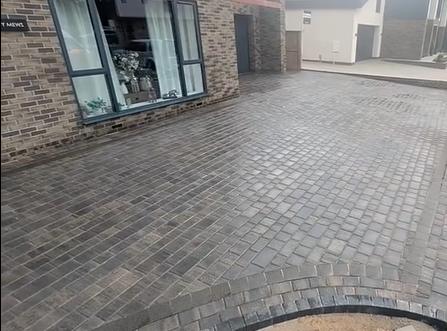
Eco-paving is a broad description, rather than one construction standard or a guarantee of low environmental impact. A useful comparison looks at how the proposed driveway or patio will manage rainfall, what materials it uses, how long it can remain serviceable and what maintenance or eventual replacement involves.
Planning work of your own? Explore our paving contractors service, then use this guide to help shape the questions you ask at your site visit.
Look beyond the environmental label
Ask what evidence supports an environmental claim about the exact product. Recycled content, manufacturing information, transport, sourcing and repairability may all be relevant, but a natural or recycled material is not automatically the best choice for every property.
Retaining suitable existing paving can sometimes avoid unnecessary replacement. A site assessment should distinguish cosmetic wear from defects that require reconstruction, rather than assuming a new material is always the more responsible option.
Understand permeable paving as a system
Permeable paving can form part of a surface-water design where the joints or surface and supporting layers are specified to manage rainfall. Ground conditions, available storage and any necessary drainage arrangements affect the proposal. A permeable product laid over an unsuitable layer may not perform as intended.
Ask the installer to explain the whole construction and where water will go. Do not assume a surface described as porous removes the need for drainage assessment or makes the garden immune to flooding.

Compare suitable material options
Permeable block paving
A suitable block system can use designed joints and supporting layers to manage rainfall. The jointing material, edge support and maintenance must suit that system. Conventional block paving should not automatically be described as permeable.
Porous surfacing
Porous concrete, asphalt or other specialist surfaces need a specification appropriate to their intended use and conditions. Ask about installation requirements, load suitability, maintenance and the evidence for any performance claims. The material name alone does not establish the completed construction's permeability.
Reclaimed and recycled materials
Reclaimed units or recycled aggregates may be appropriate where their quality and suitability are established. Check the intended external use, condition and construction requirements. Reuse is more useful when the resulting installation remains serviceable than when unsuitable materials need early replacement.
Plan maintenance from the beginning
Permeable paving needs care to keep its water pathways functioning. Soil, fine material and debris can affect performance, so follow the chosen system's instructions. Do not apply an ordinary sealer or replace jointing material without checking compatibility.
For an example of product-specific information, see Marshalls' paving and permeable-system guidance. Guidance for that manufacturer's products is not a universal specification for every driveway or patio.

Check approvals and property constraints
Front-garden paving and vehicle access can involve separate planning and highways checks. Review the current government front-garden surfacing guidance and ask the relevant authority about the property. A sustainability label does not establish that every approval requirement has been met.
Compare the complete proposal
Request a written scope identifying the product, supporting construction, drainage, access, waste arrangements and expected upkeep. Compare alternatives against the same use and site conditions. This provides a stronger basis for a decision than an unsupported promise of guaranteed savings, flood prevention or environmental benefit.
Ready to discuss your own project? Contact M&C Paving Northeast to arrange a free site visit and quote.
For a property in Blyth, see our paving service in Blyth for local installation information.
Frequently asked questions
What should an eco-paving claim actually tell me about a product?
It should identify a specific, supportable benefit rather than relying only on a green label. Relevant information may include material sourcing, recycled content, manufacture, transport, repairability and the expected maintenance or replacement process.
Ask which exact product the information describes and what evidence supports the comparison. A natural, recycled or permeable material is not automatically the lowest-impact choice for every site, particularly if an unsuitable installation leads to early removal and replacement.
Is permeable paving the same as a driveway that will never flood?
No: permeability does not establish unlimited capacity or remove the need for a drainage assessment. The surface, joints, supporting layers, ground and any outlet must work together as a designed system. Rainfall can exceed what a particular site or construction can accommodate.
Ask the installer how the proposal manages water, what checks support that design and what maintenance is required, rather than accepting a general promise of flood prevention based only on the paving's product description.
Can reclaimed paving be a good alternative to buying new materials?
Reclaimed paving may be useful where the units remain suitable for their intended external use and the proposed construction. Check condition, dimensions, available quantities and any uncertainty about the product's specification before committing to the design.
Not every salvaged brick or slab is appropriate for a driveway or exposed path. Ask how the materials will be assessed and installed, and compare the complete project rather than assuming that reuse always means lower cost or better performance.
Should permeable paving be sealed as part of routine maintenance?
Do not apply a general-purpose sealer to a permeable system without checking the specific manufacturer's instructions. Treatments or inappropriate jointing materials can affect the pathways that allow water through the construction. Maintenance should follow the installed system's requirements, including keeping relevant joints or surfaces free from unsuitable debris.
Obtain the product details at handover and ask the supplier about a proposed treatment before allowing maintenance work that could change the paving's intended drainage performance.
Further guidance: Marshalls paving and permeable-system guidance.
How can I compare the environmental value of repairing and replacing paving?
Begin by finding out whether the existing installation is structurally suitable and what is causing any defects. Retaining serviceable materials may avoid unnecessary waste, while repeated cosmetic repairs to a failing construction may not provide a sensible long-term solution.
Compare the proposed scope, material use, waste handling, durability and future maintenance. Ask for the reasoning behind the recommendation rather than assuming that a completely new surface or an eco-labelled product is automatically the more responsible choice.
FROM IDEAS TO YOUR OUTDOOR SPACE
Ready to take the next step?
Talk to M&C about the work you have in mind.