
How to Prepare Your Property for a Driveway or Patio Installation

M&C ADVICE & INSPIRATION
How to Prepare Your Property for a Driveway or Patio Installation
Plan your outdoor space
with a clearer picture.
Installing a new driveway or patio is an excellent way to enhance your property’s functionality and aesthetic appeal. A well-laid surface provides a durable, visually pleasing outdoor space that complements your home. However, achieving a long-lasting and professional result requires careful planning and preparation. From assessing your space to selecting the right materials and ensuring a stable foundation, every step contributes to the success of the installation.
Planning work of your own? Explore our driveway contractors service, then use this guide to help shape the questions you ask at your site visit.
In this guide, we’ll walk you through the essential steps to prepare your property for a driveway or patio installation, ensuring a seamless process and a high-quality finish.
Assessing Your Space and Requirements
Before beginning the installation process, it’s important to evaluate your outdoor space and define your specific requirements.
- Measure the Area: Determine the dimensions of the driveway or patio to understand how much material is required.
- Identify Usage Needs: Consider how the space will be used. A driveway must accommodate vehicles, while a patio should provide enough room for seating and entertainment.
- Consider Local Regulations: Some areas may have planning restrictions, especially if drainage or permeable surfaces are required. Checking with local authorities ensures compliance.
- Think About Accessibility: If the driveway leads to a garage or entrance, ensure it provides easy and safe access.
By assessing these factors, you can make informed decisions on the design, size, and layout of your new surface.
Setting a Budget and Obtaining Quotes
A driveway or patio installation is an investment, and setting a budget early on helps prevent unexpected costs.
- Material Costs: The price varies depending on whether you choose block paving, resin, gravel, tarmac, or Indian stone.
- Labour and Installation: Hiring professionals ensures a high-quality finish but should be factored into the budget.
- Long-Term Maintenance: Some materials require sealing and periodic cleaning, which should be considered when planning expenses.
Obtaining multiple quotes from professional installers helps you compare costs and services. Experts, like those at M&C Paving Northeast, provide free, no-obligation quotes, helping you understand your options before committing.
Clearing and Preparing the Area
Once you’ve finalised the design and budget, the next step is to prepare the site for installation.
- Remove Existing Structures: If an old driveway or patio is in place, it may need to be excavated. Any plants, roots, or obstacles should also be removed.
- Mark the Layout: Use stakes and string to outline the area, giving a clear visual of the final design.
- Check the Ground Condition: Poor soil may require stabilisation before installation to prevent sinking or cracking over time.
Proper site preparation is essential for achieving a level, well-structured surface that stands the test of time.
Ensuring Proper Drainage and Foundations
A driveway or patio must be built on a stable foundation to prevent issues such as shifting or water pooling.
- Drainage Considerations: Water should drain away from the property to avoid structural damage. Permeable paving solutions can help manage water run-off.
- Compact the Base: A layer of compacted sub-base material, such as crushed stone, provides a firm foundation.
- Slope and Levelling: Ensuring a slight gradient allows water to flow naturally rather than collect in low spots.
By addressing these aspects before installation, you’ll create a durable and weather-resistant surface.
Choosing the Right Materials for Your Driveway or Patio
Selecting the right material is crucial for both aesthetics and practicality. Each option offers distinct benefits:
- Block Paving: Durable, versatile, and available in various colours and patterns. Ideal for creating unique designs.
- Resin Driveways: Smooth, low-maintenance, and permeable, reducing the risk of water pooling.
- Gravel Driveways: Cost-effective and easy to install but requires regular upkeep to maintain an even surface.
- Tarmac: Hard-wearing and suitable for high-traffic areas, though it may lack design flexibility.
- Indian Stone or Natural Paving: Offers a stylish, high-end look perfect for patios and garden spaces.
Consider maintenance, durability, and the overall appearance when selecting materials to ensure they complement your home.
Understanding the Installation Process
Knowing what to expect during installation can help you plan around potential disruptions.
- Excavation: The area is dug to the necessary depth, removing any debris or unstable soil.
- Foundation Preparation: A strong sub-base is laid and compacted to provide stability.
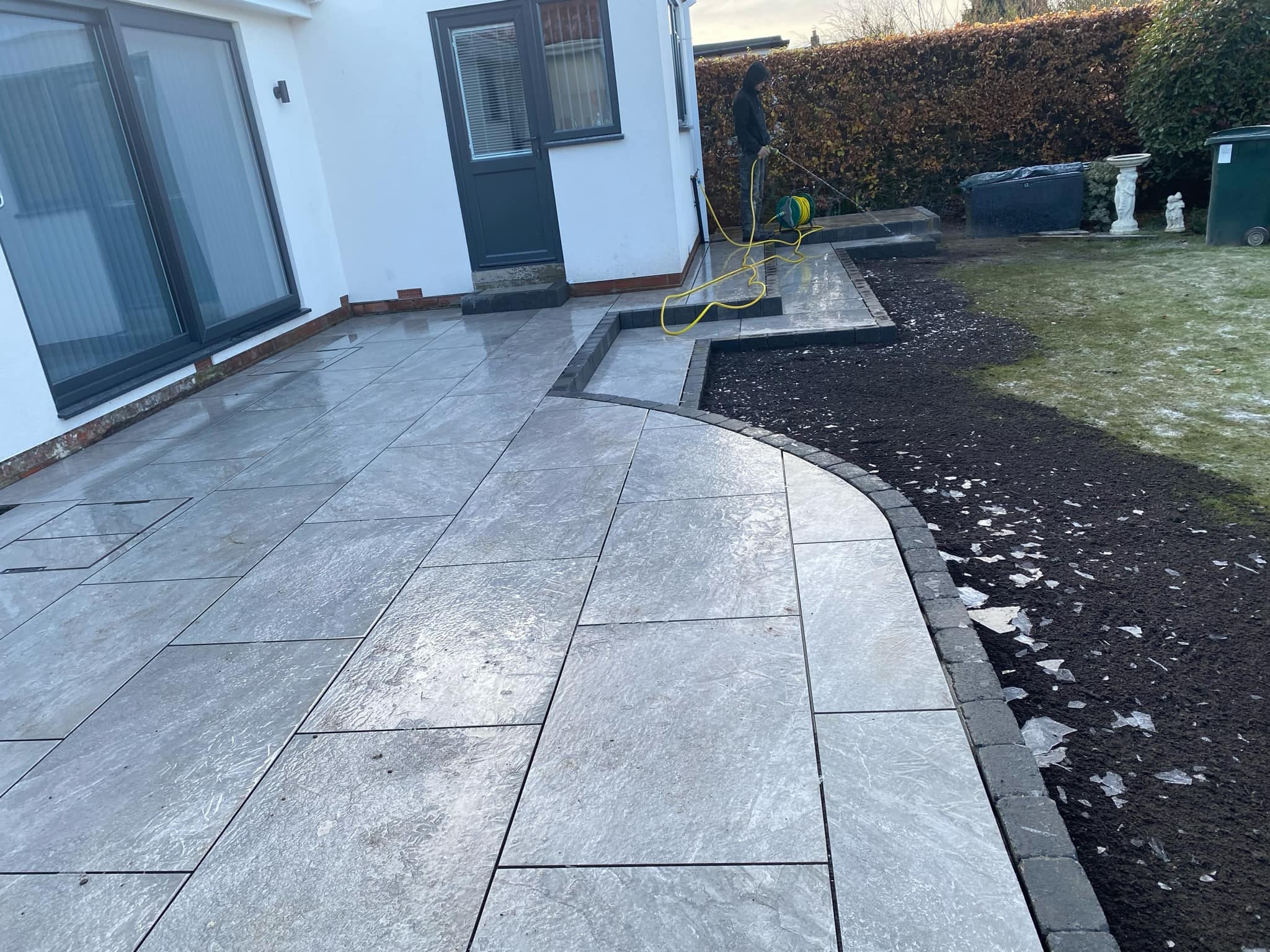
- Edging and Borders: Kerbs or edge restraints are installed to maintain structure and prevent shifting.
- Laying the Surface: Whether using block paving, resin, or another material, careful installation ensures a smooth and even finish.
- Final Touches: Jointing, sealing (if required), and finishing details complete the process.
A professional installer will handle each stage meticulously, ensuring the new driveway or patio meets high-quality standards.
Post-Installation Care and Maintenance
To keep your new surface in top condition, regular maintenance is essential.
- Allow Time for Setting: Some materials, like concrete and resin, require time to fully cure before heavy use.
- Regular Cleaning: Sweeping, power washing, and removing debris help maintain a clean and attractive surface.
- Sealing (If Needed): Some materials benefit from sealing to protect against stains, moisture, and wear.
- Weed Prevention: Using weed-resistant sand or sealants can prevent growth between paving joints.
By following a simple maintenance routine, you can extend the lifespan and preserve the appearance of your driveway or patio.
Transform Your Outdoor Space with Expert Installation
A well-prepared property ensures a smooth and successful driveway or patio installation, enhancing both functionality and kerb appeal. From evaluating space and setting a budget to ensuring proper groundwork and selecting the best materials, preparation plays a key role in achieving a durable and visually appealing result.
An experienced installer can help assess the site, explain suitable options and provide a written scope. Check the proposed construction and responsibilities before accepting the quotation.
Contact M&C Paving Northeast today for a free, no-obligation quote and expert advice on transforming your outdoor space!
Ready to discuss your own project? Contact M&C Paving Northeast to arrange a free site visit and quote.
For a property in Newcastle, see our driveways service in Newcastle for local installation information.
Frequently asked questions
What should I clear before driveway or patio installers arrive?
Agree the clearance list and timing with the contractor before moving or dismantling anything. Furniture, movable planters, vehicles and personal items may need relocating, but removal of existing surfaces or fixed features should follow the agreed scope.
Identify what must stay and how it will be protected. Do not dig around unknown services or remove boundaries on the assumption that it will help, because unplanned preparation can create hazards or interfere with the proposed construction sequence.
How should I prepare for restricted access during installation?
Discuss which routes will remain usable, where equipment and materials will be placed and when parking or pedestrian access may be restricted. Include deliveries, bins, pets and any household mobility needs in the conversation.
Make arrangements before work starts rather than expecting to cross unfinished construction when convenient. Ask how unexpected delays or weather will be communicated, and coordinate with anyone sharing a route so the programme reflects access needs as well as the laying work.
Should I tell the installer about drains, cables and other services?
Provide any information you have about drains, inspection covers, cables, pipes or previous work within the area. It can help the contractor plan investigations and avoid assumptions, but your information is not a substitute for the checks required before excavation.
Do not expose unknown services yourself to demonstrate their position. Agree who is responsible for locating and protecting relevant features, and make sure the new layout preserves appropriate access to inspection points after completion.
What decisions should be agreed before materials are ordered?
Agree the layout, finished levels, chosen products, edges, drainage proposal and treatment of thresholds or inspection covers. Confirm sample selections and any expected colour variation so the order reflects a shared specification.
Identify who must approve changes and how additional work will be costed if conditions differ from the initial assessment. Resolving those decisions early reduces avoidable disruption, rather than leaving essential details to be chosen after excavation or while delivered materials wait on site.
How should I prepare for the period immediately after installation?
Ask for written instructions covering early access, parking, cleaning and any protection needed while the installed products cool, set or cure. Arrange alternative routes or parking around that guidance rather than assuming completion means immediate use.
Obtain the product details and aftercare information before the contractor leaves. Keep the quotation and change records together, and establish how to report a concern so maintenance and any follow-up can be based on the actual installation.
FROM IDEAS TO YOUR OUTDOOR SPACE
Ready to take the next step?
Talk to M&C about the work you have in mind.


