The Real Cost of Cheap Paving Jobs in the Northeast
M&C ADVICE & INSPIRATION
The Real Cost of Cheap Paving Jobs in the Northeast
Plan your outdoor space
with a clearer picture.

Two paving quotations can describe the same-looking driveway and cover very different work. One may include lifting the old surface, rebuilding the supporting layers and dealing with drainage; another may leave those items unclear. Before choosing the lower price, compare what you will actually receive.
Compare the paving construction alongside the finish you want. Put the proposed layers, edges, drainage and waste removal next to each quotation so you can see which items account for the difference.
A low quotation does not prove poor workmanship, and a high one does not prove quality. The expensive mistake is paying for a surface that does not address the site or intended use. This guide explains the omissions and repair costs worth discussing before you commit.
What the Lower Quotation Actually Includes
Price is a reason to ask questions, not a diagnosis of the finished work. Differences in access, area, materials and the amount of existing construction being retained can all affect a quotation. Establish whether each contractor has priced the same scope.
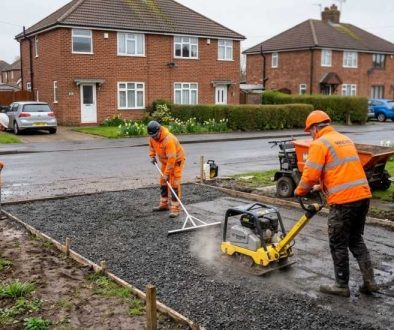
The sub-base is the supporting layer beneath the bedding and surface of a driveway. A proposal should explain the construction for the ground conditions and expected use, including what will happen if excavation reveals unsuitable material. Too little support, unsuitable aggregate or poor compaction can contribute to movement, but the required construction is site-specific.
Identify the actual paving product and the proposed installation system. Words such as “premium” or “budget” do not establish suitability. Compare the supporting layers, bedding, joints, edges and drainage alongside the visible finish.
The Hidden Problems That Appear Weeks Later
Some installation problems become visible only after the surface has been used or wet weather exposes a low point. Record when you first notice a change and contact the installer with photographs rather than assuming that its cause is already known.
Common problems include:
- Sinking or dipping areas, which need investigation of the supporting construction and ground
- Loose or rocking blocks, which shift underfoot
- Cracks in tarmac or resin, often spreading across wide areas
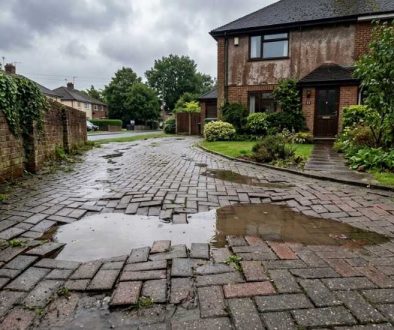
- Poor drainage, leading to puddles and waterlogging
- Weed growth, which can be a maintenance issue and does not by itself prove faulty jointing or edging
A dip, crack or loose unit warrants attention, but its progression and repair depend on the cause and paving system. Photograph the location and extent, note whether it changes after rain or use, and obtain an assessment before agreeing a repair.
Visible symptoms alone do not establish that the whole driveway has failed.
Uneven blocks, open joints or settlement need a cause-based assessment, regardless of what the installation originally cost.

Weather, Ground and Maintenance Need Separate Checks
Rainfall, freezing conditions, ground movement and vehicle use can expose weaknesses in paving construction. They do not establish that every North East garden has the same soil or that every low-priced installation will fail. Assess the actual ground, levels, exposure and intended use.
The proposed surface and supporting construction need a drainage approach suited to the site. Discuss where water will go, how adjoining levels connect and how the edges will be supported. A channel or a material described as permeable does not answer all those questions on its own.
Weeds are a separate point. The Marshalls maintenance guide explains that plants can colonise joints and accumulated debris. Their presence alone is not evidence that a sub-base was omitted. Follow maintenance advice for the installed paving, and distinguish growth from movement, missing joint material or damaged edging.
The True Financial Cost of Fixing Bad Paving
When construction is defective, the cost of correcting it depends on the cause and extent. A local repair and a complete reconstruction are different jobs. Obtain a diagnosis and a written repair scope before comparing the cost with replacement.
Typical repair-related expenses include:
- Lifting and re-laying large sections of block paving
- Rebuilding the sub-base with proper excavation depth
- Replacing cracked resin or tarmac sections
- Adding missing drainage channels
- Correcting poorly installed edging
- Removing and disposing of failed materials entirely
Where the supporting construction is unsuitable across a wide area, extensive lifting or replacement may be necessary. In other cases a local repair can be appropriate. Include removal, disposal, access and reinstatement in the comparison; a new surface alone may leave the original cause unresolved.
Beyond repairs, there’s the cost of living with the problem:
- Cars scraping on uneven sections
- Puddles forming near the entrance
- Moss and algae making surfaces slippery
- Reduced kerb appeal when selling the home
The useful comparison is the cost of the agreed work and its likely maintenance, with exclusions and repair responsibilities made clear.

Safety and Structural Risks to Your Home
Bad paving doesn’t just look unsightly; it can create hazards. Uneven or sinking surfaces become trip risks, especially in frost or rain. For families with children or older relatives, this can be a genuine safety concern.
Water collecting against a building needs investigation of the levels, drainage and damp-proofing details. A puddle does not by itself diagnose foundation damage or an indoor damp problem. If there are signs of building movement or persistent internal damp, obtain an appropriate building assessment alongside the paving advice.
The proposed work should address how the driveway meets the building, thresholds and adjoining ground, rather than treating the surface in isolation.
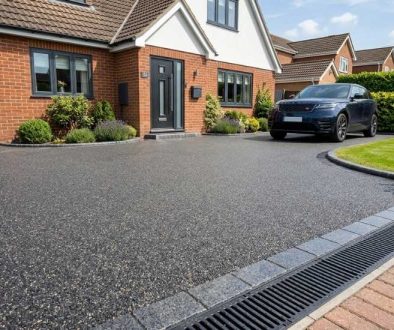
An attractive surface photograph cannot show all of the supporting construction underneath.
How to Spot a Reputable Paving Contractor
Compare written proposals and evidence of relevant work rather than relying on price or a sales promise.
Look for:
- Transparent quotations detailing excavation depth, materials, and drainage plans
- Portfolio of completed work, ideally from homes in the North East
- Verified reviews from local homeowners
- Proper insurance and certifications
- Clear start and finish timelines
- Willingness to answer questions about materials and installation methods
Ask how the proposal addresses ground preparation, drainage and site access. Keep the agreed specification, exclusions, payment arrangements and any guarantee terms with the quotation.
Quality Paving That Saves Money Long-Term
A lower price can be worthwhile when the proposed work is suitable and the scope is clear. What matters is understanding the ground preparation, materials and drainage being supplied. No price point or general workmanship claim establishes a particular service life, freedom from maintenance or protection from every future defect.
If you are comparing plans for Newcastle Patios, discuss the layout, supporting construction and drainage as part of a clear written scope.
Compare the same requirements across quotations and ask for anything unclear to be explained before accepting the work.
For advice on the paving work you are considering, contact M&C Paving Northeast for expert advice and reliable workmanship.
For the wider options, see our Paving Contractors page. The right specification depends on your property and the work agreed at survey.
Ready to discuss your own project? Contact M&C Paving Northeast to arrange a free site visit and quote.
Frequently asked questions
Does the lowest paving quote mean the work will be poor?
No. Price alone does not establish workmanship or suitability. Compare the measured area, excavation, supporting construction, surface product, drainage, edges and removal of waste. One quotation may be lower because its scope is smaller or important items are excluded.
Ask for the differences to be explained in writing, then assess relevant previous work and the proposed arrangements alongside the price.
Do weeds prove that block paving was installed badly?
Not on their own. Plants can establish in joints or debris on the surface, so weeds may be a maintenance issue. Look separately for movement, missing joint material, damaged edges or changes in level.
Follow the paving supplier’s maintenance advice rather than treating weed growth as proof of a missing sub-base. If other symptoms are present, have their cause assessed before deciding what needs repair.
What should a paving quotation make clear?
It should identify the area and intended use, the proposed surface and supporting construction, drainage, edging and treatment of the existing surface. Include access, waste removal, exclusions and arrangements for unexpected ground conditions.
Clarify the programme, payment terms and any guarantee conditions as well. A photograph of a finish or a single total cannot show whether two contractors are offering the same work.
Does a sunken patch mean the entire driveway needs replacing?
A sunken area needs investigation, but it does not automatically justify replacing everything. The cause, extent and installed system determine whether a local repair is sensible or wider reconstruction is needed. Keep photographs and note whether the area changes after rain or vehicle use.
Obtain a written explanation of the proposed repair and how it addresses the cause, including reinstatement of affected edges or drainage.
How can I compare a repair with a replacement quote?
Start with the diagnosed problem and the area affected. A repair quotation should explain what will be lifted, what support will be corrected and how the surface will be reinstated. A replacement quotation should make equally clear what is removed and rebuilt.
Compare disposal, access, drainage and exclusions as well as the finish. Otherwise a cheaper surface treatment may be compared with a much larger reconstruction.
FROM IDEAS TO YOUR OUTDOOR SPACE
Ready to take the next step?
Talk to M&C about the work you have in mind.
Every homeowner loves a good deal — especially when it comes to big outdoor projects like a new driveway or patio. And across the North East, it’s common to see adverts promoting extremely low-priced paving work, promising quick installations and “unbeatable” value. The temptation is understandable. A new driveway can be a significant investment, and saving a few hundred pounds sounds appealing.
But cheap paving isn’t cheap for long. What seems like a bargain often ends up costing far more once the problems start to appear. From sinking surfaces to poor drainage and premature cracking, low-cost installations can create issues that homeowners spend years trying to fix — usually at a much higher price than a proper installation would have cost in the first place.
Understanding what corners are cut during cheap paving jobs, and why these shortcuts lead to long-term expense, can help you make informed decisions before committing to any contractor.
What “Cheap Paving” Really Means
When paving companies advertise unusually low prices, it’s rarely because they’ve mastered a clever cost-saving method. More often, it means critical steps are being skipped. The materials may be lower grade, the sub-base may be insufficient, or the workforce may rush through the job without following best practices.
The most common sign of a cut-price installation is a lack of proper groundwork. The sub-base — the part you can’t see — accounts for most of the driveway’s strength. Cheap installers often dig far too shallow, use the wrong type of aggregate, or fail to compact the sub-base in layers. This reduces labour time, speeds up the job, and makes the price look attractive.
Another sign is the use of inferior materials. Low-quality blocks, tarmac mixes, or resin binders degrade much faster, especially in the North East’s wet and cold climate. These materials may look fine during installation, but their weaknesses show quickly once winter arrives.
Shortcuts save money for the installer — not the homeowner.
The Hidden Problems That Appear Weeks Later
Many issues caused by cheap paving don’t appear on day one. Instead, they develop gradually as the weather changes and vehicles use the surface. This delayed appearance can make homeowners feel misled, especially when the installer is long gone or refuses to return.
Common problems include:
- Sinking or dipping areas, caused by a weak or uneven sub-base
- Loose or rocking blocks, which shift underfoot
- Cracks in tarmac or resin, often spreading across wide areas
- Poor drainage, leading to puddles and waterlogging
- Weed growth, a sign of incorrect jointing or poor edging
These problems don’t stay small. A single dip in block paving can cause surrounding blocks to move, gradually sinking into the weak spot. Tarmac cracks widen as water freezes, and resin surfaces lose strength if the base shifts beneath them.
By the time these issues become noticeable, the driveway’s structural integrity is already compromised.
Why Cheap Work Fails Faster in the North East
The North East climate is not forgiving. Heavy rainfall, cold temperatures, clay-heavy soils, and repeated freeze–thaw cycles all put driveways under significant pressure. Cheap paving jobs rarely account for the regional conditions that influence long-term performance.
A shallow sub-base might survive a dry summer, but the moment winter sets in, moisture works its way into the ground beneath the driveway. When this water freezes, it expands and pushes the surface up. When it thaws, the ground softens and collapses again. This repeated movement accelerates sinking and cracking.
Poor drainage design is another major issue. Water pooling on the surface weakens joints, erodes bedding sands, and encourages moss growth. Block paving with inadequate edge restraint is especially vulnerable during winter, as frost causes side blocks to drift outward.
Simply put: cheap installations are not built to withstand North East weather. Proper depth, correct aggregates, good drainage, and high-quality materials are essential — and these things cost money for a reason.
The True Financial Cost of Fixing Bad Paving
A cheap driveway might save money up front, but the repair costs quickly add up. In many cases, repairs end up costing more than a professional installation would have cost originally.
Typical repair-related expenses include:
- Lifting and re-laying large sections of block paving
- Rebuilding the sub-base with proper excavation depth
- Replacing cracked resin or tarmac sections
- Adding missing drainage channels
- Correcting poorly installed edging
- Removing and disposing of failed materials entirely
For severe failures — especially resin or tarmac laid on inadequate bases — the entire surface may need replacing. Homeowners often find themselves paying twice: once for the cheap installation, and again for the professional repair.
Beyond repairs, there’s the cost of living with the problem:
- Cars scraping on uneven sections
- Puddles forming near the entrance
- Moss and algae making surfaces slippery
- Reduced kerb appeal when selling the home
Cheap paving is rarely a saving — it’s a deferred expense.
Safety and Structural Risks to Your Home
Bad paving doesn’t just look unsightly; it can create hazards. Uneven or sinking surfaces become trip risks, especially in frost or rain. For families with children or older relatives, this can be a genuine safety concern.
Water pooling near the house can also cause bigger structural issues. Poor drainage directs rainwater toward foundations, leading to damp problems inside the property. In extreme cases, this can affect interior walls and flooring.
Driveways should protect a home — not threaten it. A poorly installed driveway can become a long-term liability.
How to Spot a Reputable Paving Contractor
Avoiding the cost of cheap paving starts with choosing the right installer. Reputable contractors won’t rush work, skip essential steps, or promise unrealistic prices.
Look for:
- Transparent quotations detailing excavation depth, materials, and drainage plans
- Portfolio of completed work, ideally from homes in the North East
- Verified reviews from local homeowners
- Proper insurance and certifications
- Clear start and finish timelines
- Willingness to answer questions about materials and installation methods
Most importantly, a trustworthy contractor will prioritise ground preparation — the part cheap installers often avoid.
Quality Paving That Saves Money Long-Term
The appeal of cheaper paving jobs is understandable, but the long-term risks and hidden costs far outweigh the initial savings. A well-installed driveway or patio is a decades-long investment, not a temporary fix. Quality workmanship ensures strength, drainage, safety, and durability, even in the North East’s demanding climate.
Homeowners who want paving that lasts often choose professionally installed Newcastle Patios, where proper groundwork, quality materials, and correct drainage help prevent the costly repairs that cheap installations often create.
Choosing a reputable installer is the most reliable way to protect your property, your budget, and your peace of mind.
For high-quality paving installations that stand the test of time, contact M&C Paving Northeast for expert advice and reliable workmanship.