
Top Winter Maintenance Tips for Driveways and Patios in the Northeast

M&C ADVICE & INSPIRATION
Top Winter Maintenance Tips for Driveways and Patios in the Northeast
Plan your outdoor space
with a clearer picture.

The route to the bins still gets used when the garden furniture has been put away. Leaves collect by the back step, rain finds the low spots and the paving stays damp for longer. A winter check should start with those everyday routes, then look at the joints, surface and drainage around them.
If these checks reveal a patio that needs repair or a different layout, our North Shields patio service explains how we assess existing paving, steps, levels and access. The driveway checks in this guide remain relevant to the wider frontage.
Across the North East, winter care needs to suit the surface already in place. Keep the useful inspection and drainage checks below, but choose cleaners, ice treatments and any coating for the actual paving product. A patio and a driveway may need different care even when they sit beside the same house.
Inspect and Prepare Your Outdoor Surfaces
Early inspection of your driveways and patios is crucial for identifying potential problems before the harsh winter weather sets in. Cracks in concrete, loose paving stones, or drainage issues can quickly worsen under freezing conditions, leading to more extensive damage. Regular maintenance ensures that your outdoor spaces are ready to withstand the challenges of winter and remain safe for daily use.
Here are some key steps to prepare your surfaces:
Check for cracks and damage: Photograph changing cracks, loose joints and rocking units. A surface filler will not correct movement underneath, so arrange an assessment where the paving is unstable or the damage keeps returning.
Test and clear drainage systems: Ensure water is directed away from your driveway or patio to prevent pooling and freezing. Clear gutters and drainage channels of leaves, dirt, or debris.
Loose paving stones: Keep clear of unstable slabs and have the cause assessed before they are relaid. Moving the visible slab alone may leave a failed bed or drainage problem underneath.
For more comprehensive care, consider enlisting the help of a professional. Experts can assess your surfaces for hidden vulnerabilities and recommend tailored solutions, such as sealing or reinforcement. Professional assessments not only enhance durability but also save you from costly repairs in the future, ensuring your outdoor areas remain resilient and functional throughout the winter months.
Ensure Proper Drainage
Proper drainage is essential to protect driveways and patios from the damaging effects of winter weather. Poor drainage can lead to water pooling on surfaces, which, when frozen, expands and causes cracks or structural weakening. Over time, this can result in costly repairs and unsafe conditions for homeowners.
To ensure effective drainage, follow these practical tips:
Clear gutters and drains: Regularly remove leaves, dirt, and debris from gutters, drainage channels, and nearby grates to prevent blockages. Blocked systems can cause water to overflow and pool on your outdoor surfaces.
Check water runoff: Observe how water flows off your driveway or patio during rainfall. Ensure it moves away from your property and does not collect in low-lying areas.
Grade surfaces appropriately: Ensure your driveway or patio has the correct slope to direct water away from your home and other critical areas.
For long-term solutions, consider installing drainage channels, soakaways, or permeable paving materials. These features effectively manage water runoff, reducing the risk of surface pooling and freezing. Investing in professional advice and installation ensures your outdoor spaces are better equipped to handle the challenges of winter, enhancing their durability and safety.
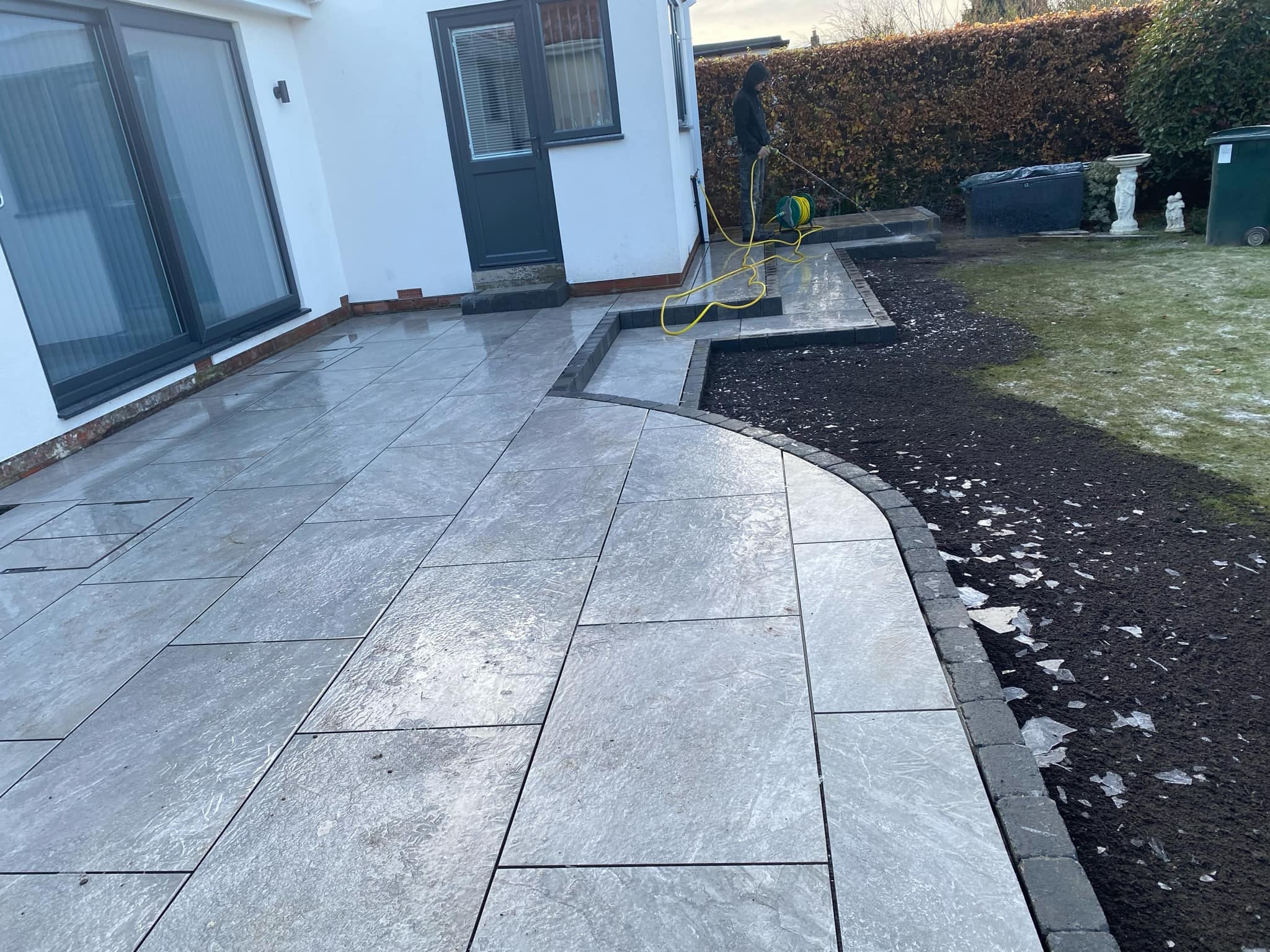
Prevent Ice Build-Up and Enhance Safety
Snow and ice can make the route to the house, gate or shed hazardous. Clear loose snow with tools suitable for the surface and choose any grit or de-icer according to the paving manufacturer’s guidance. Some products are unsuitable for particular concrete or stone finishes. Cleaning can also leave water that freezes again, so plan the work around the conditions and keep an alternative route available.
Regular snow and ice removal is also essential to minimise slip hazards. Use a plastic shovel or broom to gently clear surfaces, avoiding metal tools that could scratch or chip the material. Taking these simple steps can ensure your outdoor areas remain safe and accessible throughout winter.
Seal and Protect Your Driveway or Patio
Sealing is not an automatic winter job. Some paving products may benefit from a compatible treatment, while others do not require one. A coating cannot repair loose slabs, a failed supporting layer or poor drainage. Identify the paving and any previous treatment before deciding whether sealing is appropriate, and follow the product’s preparation, weather and application requirements.
If sealing is recommended for your installed product, ask for the compatible treatment and application conditions. Avoid treating a winter-care checklist as evidence that every driveway or patio should be sealed.

Cleaning and Regular Maintenance During Winter
Sweep away leaves and loose soil before they build up around steps, joints and drainage points. For deeper cleaning, use the guidance for the installed paving and jointing. A powerful jet can damage some finishes or remove joint material. Choose a suitable day, test a discreet area where the supplier advises it, and avoid creating a wet access route that may freeze.
Routine maintenance not only keeps your outdoor spaces looking pristine but also extends their lifespan by preventing long-term wear and tear. Consistent care during winter is a simple yet effective way to protect your property.
Additional Protective Measures
Check the places hidden by pots, storage boxes and furniture as well as the main paved area. Keep drainage points accessible and move items only where it is safe to do so. A mat or cover can conceal trapped debris or a changing surface, so lift and inspect it periodically. Record new movement rather than loading or probing an unstable area to test it.
Even in extreme weather, routine upkeep—such as clearing snow promptly and inspecting for damage—ensures your outdoor spaces remain safe and durable. These proactive measures enhance their resilience and longevity, providing peace of mind during the winter months.
Protect Your Outdoor Spaces This Winter with Expert Care
A useful winter routine is manageable: clear debris, observe rainfall, check the routes you still use and deal with changing defects. Keep product-specific care instructions with the paving records so that a well-meant treatment does not create another job.
Proper care during winter provides long-term savings and peace of mind, ensuring that your driveways and patios remain safe for daily use, even in challenging conditions. For homeowners in the Northeast, M&C Paving Northeast offers expert advice and maintenance services tailored to the local climate. Contact their professional team today to keep your outdoor spaces in top condition throughout the season.
For other connected garden work, see our North Shields services.
For the selected product’s care guidance, see Marshalls’ technical information. Use the guidance for your own paving and jointing where the product is different.
For the related installation options, see our patio installation service information.
For the wider options, see our Patio Installation page. The right specification depends on your property and the work agreed at survey.
Ready to discuss your own project? Contact M&C Paving Northeast to arrange a free site visit and quote.
Frequently asked questions
What should I check on a patio before winter?
Start with the route you still use: the back step, gate, bins and shed. Clear loose leaves, look for damaged joints or moving slabs, and observe where rain collects. Keep clear of unstable areas.
Photographs taken from the same position help show whether a defect is changing. These observations help focus an assessment without assuming that every crack needs the same repair.
Does every patio need sealing before frost?
No. Sealing depends on the paving product, the treatment already present and the supplier’s guidance. Some surfaces do not need a coating, and an incompatible product can change their appearance or performance.
A sealer will not stabilise a rocking slab or correct poor drainage. Establish what is installed and address those defects before considering whether any treatment would be useful.
Can I pressure-wash the patio in winter?
Choose the method for the paving and jointing, then consider the weather and the route people need to use afterwards. A powerful jet can remove joint material or mark some surfaces. Follow the supplier’s guidance, including any test area.
Avoid leaving cleaning water where it may freeze. If the paving is loose or damaged, obtain advice before aggressive cleaning makes the problem worse.
Which de-icer is suitable for garden paving?
Use the instructions for the actual paving product rather than treating all stone and concrete alike. Manufacturers restrict some salts on particular finishes, and residues can affect nearby materials or planting. Clear loose snow with suitable tools where safe, and follow the chosen treatment’s directions.
If the paving cannot be identified, seek product advice before experimenting with a household remedy or a strong chemical.
Why does a puddle return after the drain is cleared?
A blockage is only one possible cause. The surface may have moved, levels may direct water into a hollow, or the wider drainage arrangement may need attention. Note where the water comes from and how long it remains after rain.
Share that record with the contractor. Repeated cleaning or adding jointing material will not necessarily correct a problem below the visible paving.
FROM IDEAS TO YOUR OUTDOOR SPACE
Ready to take the next step?
Talk to M&C about the work you have in mind.


