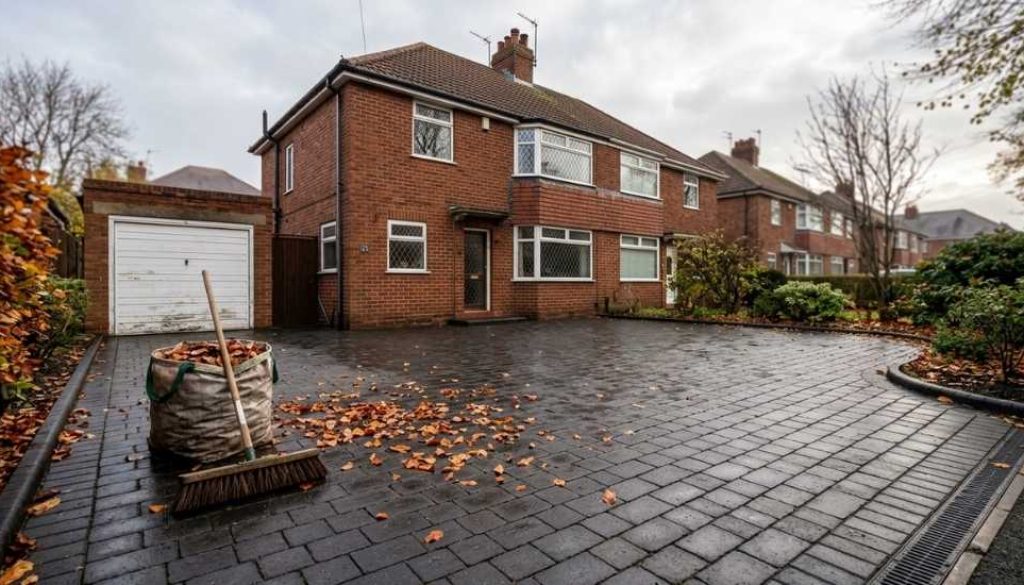
How to Prepare Your Driveway for Autumn in Sunderland
Autumn rarely announces itself politely on this coast. When Storm Arwen came through in November 2021, gusts hit 98mph in Northumberland and more than 240,000 homes across the North East and Cumbria lost power. Part of what made it so damaging was the direction: the wind came from the north, the side nothing was braced for.
Driveways fail the same way, from the angle nobody checks. Water gets underneath, sits there through the first frost, and lifts what looked perfectly solid in August. A few hours spent on your driveway in Sunderland now prevents most of it.
What Autumn Actually Does to Paving
Four things arrive together, and they compound each other.
- Leaves: they block channel drains and gullies, then rot down into a slippery organic film that stains and feeds moss.
- Standing water: anywhere water sits, it soaks into the sub-base and softens it.
- Freeze-thaw: trapped water expands as it freezes, opening hairline cracks into real ones over a few cycles.
- Salt and grit: helpful on ice, harsh on jointing, pointing and unsealed surfaces.
None of these breaks a driveway on its own. Together, across a single winter, they can undo a surface that had years of life left in it. That is why the work is worth doing before the weather arrives rather than after the damage shows.
Start With Where the Water Goes
Drainage is the single highest-value check, so do it first and do it in the rain.
Wait for a decent downpour, then go outside and watch. You are looking for:
- Puddles that remain more than twenty minutes after the rain stops.
- Water running to the house rather than away from it.
- Gullies and channel drains overflowing or backing up.
- Water crossing the pavement onto the road, which is not permitted.
- Damp patches on the wall near the drive, which suggest levels sit too high.
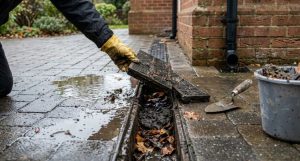
Clear every gully grate and channel drain of silt and leaf matter. Lift the grate, scoop the debris, flush it through with a hose. Blocked drainage causes more autumn damage than any other single fault, and it takes ten minutes to rule out.
If puddles keep returning in the same spot, the falls or the sub-base are the problem, and drainage work is worth pricing before winter rather than after.
Clean It Properly, in the Right Order
Cleaning comes before any repair or sealing, and the sequence matters.
- Sweep off leaves, grit and loose debris.
- Treat moss and algae with a proper patio or driveway cleaner, and give it the dwell time on the label.
- Wash down with a pressure washer on a wide fan nozzle, held well back and moving constantly.
- Let the surface dry fully, ideally over two or three dry days.
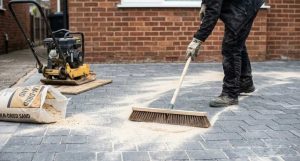
- Re-sand block paving joints once dry, brushing kiln-dried sand in until the joints are full.
Keep the pressure washer sensible. Held close on a pinpoint setting it strips jointing sand, erodes sandstone and tears the surface off tarmac. Most driveway damage blamed on winter actually starts with an over-enthusiastic autumn clean.
Repairs Worth Doing Before It Turns Cold
Small faults are cheap in September and expensive in February.
- Block paving: reset any rocking or sunken blocks, replace cracked ones, and refill joints. Re-fix loose edge restraints, since spreading edges let the whole surface creep.
- Tarmac: fill potholes and seal open cracks. Water sitting in a crack over winter is what turns it into a pothole by spring.
- Concrete and imprinted concrete: fill cracks and check the sealer coat. Bare, unsealed concrete absorbs water and salt.
- Resin bound: patch any loose or worn areas, and clear surface debris so the permeable structure keeps draining.
- Edges and kerbs: re-bed anything loose, as edges take the most load and fail first.
Anything structural, such as ruts that keep coming back or sunken areas that reappear after every fix, points to the base rather than the surface. That is a repair job worth getting looked at properly.
Sealing: What It Does and What It Does Not
Sealing gets oversold, so it helps to be clear.
A sealer helps with stain resistance, colour, weed suppression in joints and stabilising jointing sand. It does not fix drainage, level a sunken surface, repair a failing base or add structural strength.
Practical points:
- Only seal a surface that is clean, fully dry and above roughly 10 degrees, so late summer and early autumn are the window.
- Block paving takes a joint-stabilising sealer. Imprinted concrete needs resealing every few years to hold colour and protection.
- Resin bound and most tarmac do not need sealing, and sealing permeable surfaces can block the drainage you paid for.
- Never seal over damp, as trapped moisture causes a milky bloom.
Look Beyond the Paving Itself
Plenty of driveway problems begin somewhere other than the driveway.
- Downpipes and gutters: a blocked gutter tips water straight onto the paving in one concentrated spot, which is where you will find the worst frost damage every time.
- Overhanging trees and shrubs: cut them back now. Less leaf fall means less blocked drainage, and more light reaching the surface means less moss.
- Lawn and border levels: soil creeping over the edge of the paving traps water against it and encourages weeds along the joint.
- The dropped kerb: check the crossing point for cracked or sunken kerbs, since these take the full weight of every vehicle entering.
- Gate and garage thresholds: look for water tracking inwards, which usually means levels or falls need adjusting.
Ten minutes on these costs nothing and removes the causes rather than the symptoms.
Your Autumn Checklist
Work through it in this order:
- Watch the drive during heavy rain and note where water sits.
- Clear gullies, channel drains and downpipe outlets.
- Sweep leaves, and keep sweeping through October and November.
- Treat moss and algae, then wash down gently.
- Re-sand block paving joints once dry.
- Fix cracks, potholes, rocking blocks and loose edges.
- Seal only where suitable, and only on a dry surface.
- Cut back overhanging branches that drop leaves and block light.
- Stock grit rather than rock salt where the surface is sensitive.
When It Needs More Than Maintenance
Some signs mean the drive has passed the point where cleaning helps. Ruts or dips that return within months, blocks rocking across a wide area, water pooling against the house, tarmac breaking up in several places, or edges spreading outwards all point to the sub-base rather than the surface. Patching those buys a season at most.
M&C Paving Northeast has been repairing and installing driveways, block paving and patios across Sunderland, Blyth, Newcastle and Northumberland for more than 25 years with an in-house team. Every estimate is free and written.
FAQs
For all your paving and landscaping services…
Call us today – 0191 743 2048