Why Winter Is the Smartest Time to Rebuild a Sinking Driveway
A sinking driveway rarely fixes itself. In fact, winter is often the season when underlying problems become most visible and most damaging. Whilst many homeowners delay major work until spring, colder months can be the most practical and effective time to address subsidence properly. Understanding why driveways sink and how winter conditions expose structural faults helps explain why rebuilding sooner, rather than later, is often the smarter choice.
What Causes a Driveway to Sink in the First Place
Driveway subsidence usually begins beneath the surface. Poorly compacted sub-bases, inadequate drainage, and ground movement all contribute to gradual sinking over time.
Water plays a central role. Rain seeps through cracks or joints and saturates the ground below. As the sub-base softens, it loses its ability to support weight evenly. Vehicles passing over these weakened areas accelerate settlement, leading to visible dips and uneven sections.
In winter, this process speeds up. Freeze–thaw cycles cause the ground to expand and contract repeatedly, further destabilising already compromised foundations.
Why Winter Reveals Problems More Clearly
Cold weather does not create subsidence overnight, but it exposes existing weaknesses faster than any other season. Prolonged rainfall saturates the ground, whilst freezing temperatures cause trapped moisture to expand.
As the ground freezes, it lifts slightly. When it thaws, it settles unevenly. This repeated movement highlights areas where the base has failed. What may have looked like a minor dip in autumn often becomes a noticeable slope or depression by mid-winter.
Winter conditions make it easier to identify:
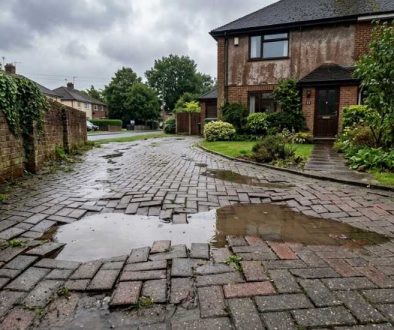
- Areas where water consistently pools
- Sections that soften under vehicle weight
- Edges that begin to spread or collapse
- Paving that shifts after frost
These visible signs provide valuable information for accurate repairs.
The Risk of Waiting Until Spring
Delaying repairs until warmer weather often allows damage to worsen. Continued freeze–thaw cycles deepen voids beneath the driveway, increasing the extent of groundwork required later.
As winter progresses:
- Small dips become deeper depressions
- Cracks widen and spread
- Drainage problems intensify
- Base layers erode further
By spring, what could have been a targeted rebuild may require full excavation and replacement over a larger area. Acting during winter can limit the scope of work and reduce long-term costs.
Why Rebuilding Is Better Than Surface Patching
Sinking driveways are often patched temporarily with resurfacing or infill. Whilst this may improve appearance briefly, it does not address the root cause.
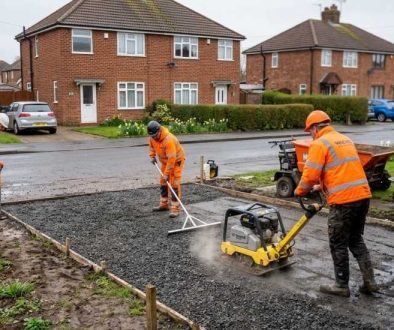
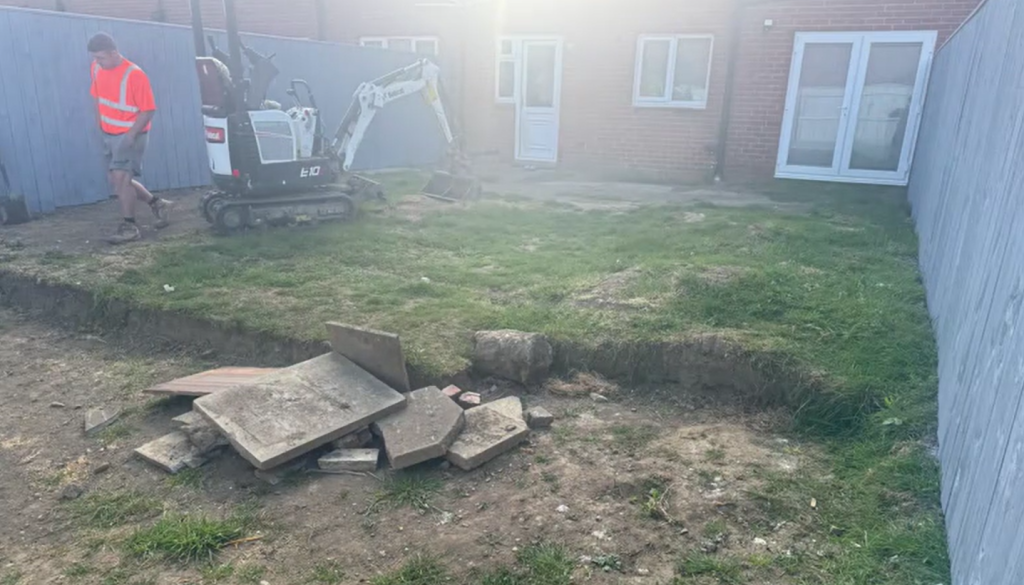
True rebuilding involves removing the affected area, reinstating the sub-base, correcting drainage, and relaying the surface. Winter conditions help installers identify how water is behaving beneath the driveway, allowing drainage solutions to be designed more effectively.
Rebuilding during winter ensures:
- Saturated ground conditions are addressed directly
- Drainage is tested under real weather conditions
- Weak base layers are fully replaced
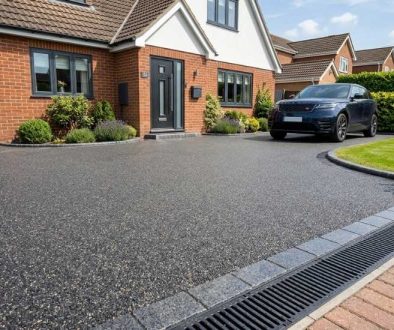
- Long-term stability is restored
Surface repairs alone rarely survive another winter once subsidence has begun.
Winter Ground Conditions and Base Preparation
Contrary to common belief, professional groundwork does not stop in winter. Experienced installers adapt techniques to colder conditions and plan work around weather windows.
Working during winter allows teams to:
- See how water moves through the site naturally
- Identify drainage failures that are invisible in dry weather
- Compact base materials under realistic moisture conditions
A sub-base installed correctly during winter is well-prepared for the demands of spring and summer use.
Drainage Improvements Are More Effective in Winter
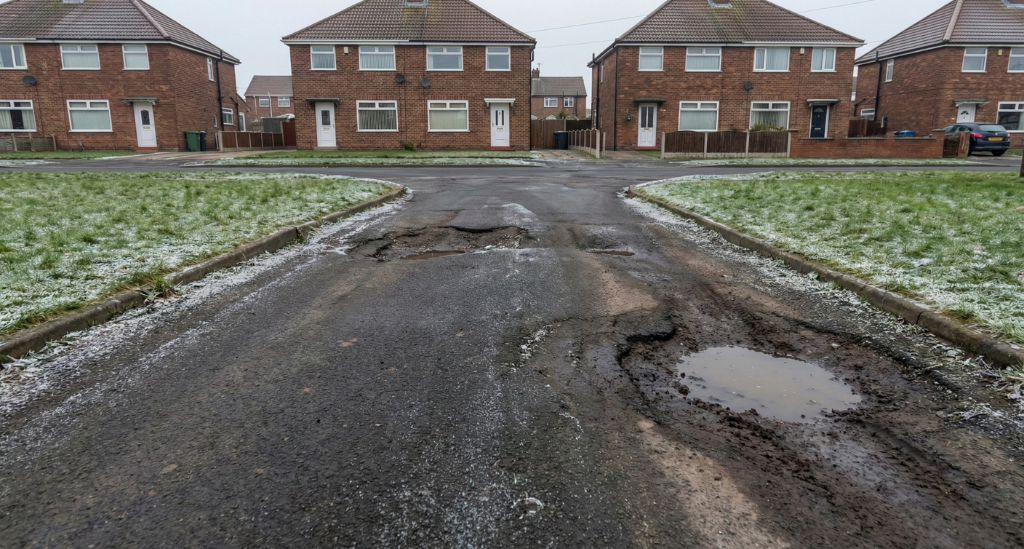
Drainage issues are often the hidden cause of subsidence. In winter, heavy rainfall and slow evaporation make drainage failures obvious.
Standing water, repeated ice patches, and saturated borders all indicate where improvements are needed. Rebuilding during winter allows drainage solutions to be designed and tested under peak water conditions rather than assumed dry-weather behaviour.
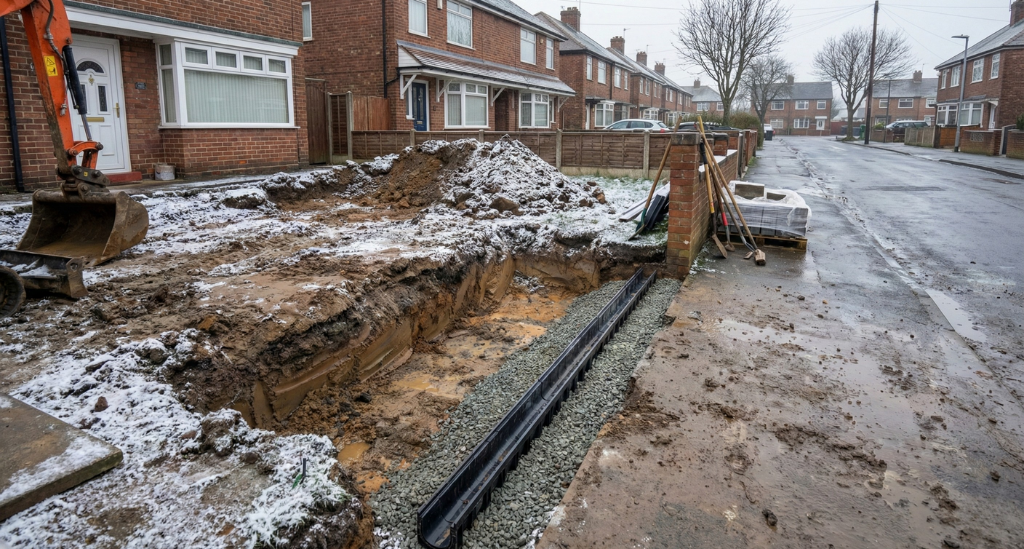
Effective drainage improvements during a rebuild may include:
- Adjusting driveway gradients
- Installing new drainage channels or soakaways
- Replacing compacted or washed-out base layers
- Improving edge restraints to prevent lateral spread
These changes protect the driveway against future winter damage.
Minimising Disruption Compared to Spring Projects
Spring is a popular time for outdoor projects, which often leads to longer wait times and scheduling delays. Winter rebuilds are frequently completed more efficiently due to better availability and clearer project timelines.
Whilst weather can influence scheduling, professional teams plan around conditions to minimise disruption. Completing work during winter also ensures the driveway is ready for heavier use in spring and summer without further intervention.
Homeowners benefit from:
- Faster project start times
- Reduced seasonal demand pressures
- Completion before peak outdoor months
This practical advantage is often overlooked.
Long-Term Cost Benefits of Winter Rebuilds
Addressing subsidence early prevents further deterioration and reduces future repair costs. Rebuilding during winter limits the damage caused by ongoing freeze–thaw cycles and water saturation.
A properly rebuilt driveway:
- Maintains level surfaces year-round
- Reduces recurring repair needs
- Improves drainage performance
- Protects surrounding structures and landscaping
Investing at the right time often costs less than repeated short-term fixes.
When Winter Rebuilding Makes the Most Sense
Winter is particularly well suited to rebuilding when:
- Driveways show active sinking or movement
- Drainage problems worsen during heavy rain
- Water consistently pools or freezes
- Previous surface repairs have failed
Professional assessment confirms whether rebuilding is necessary and ensures the correct scope of work is planned.
A Stronger Driveway Starts with Acting at the Right Time
Sinking driveways rarely improve without intervention. Winter reveals the true extent of subsidence and provides the ideal conditions to correct underlying problems properly. Rebuilding during colder months limits further damage, improves drainage performance, and prepares the driveway for long-term use.
Professional workmanship ensures stability regardless of season. M&C Paving Northeast provides expert driveway rebuilds designed to withstand winter conditions and prevent recurring subsidence. If your driveway is sinking or uneven, contact M&C Paving Northeast to restore safety, structure, and confidence before the damage gets worse.