Planning Outdoor Work Around British Weather: What Homeowners Get Wrong
British weather is not dramatic. It is inconsistent. That inconsistency is where most outdoor project mistakes begin.
Homeowners often delay work for “better weather” or rush installation during a dry week without considering ground conditions, temperature stability, or seasonal soil behaviour. The result is not always immediate failure, but it often shortens the lifespan of patios, paths, and driveways.
Outdoor work should not be scheduled based on sunshine alone. It should be planned around ground temperature, moisture levels, curing conditions, and seasonal patterns.
Here is what homeowners commonly misunderstand.
Mistake 1: Waiting For “Perfect” Summer Conditions
Many assume summer is the only safe time for paving.
In reality, high heat can create its own problems:
- Rapid moisture evaporation from mortar
- Surface drying before proper curing
- Increased shrinkage in certain materials
- Installer pressure due to peak-season demand
Very hot spells can cause mortar beds to dry too quickly, reducing bond strength. Resin installations can also become more challenging if surface temperatures climb too high.
Spring and early autumn often provide more stable working conditions. Moderate temperatures allow materials to cure at a controlled rate and reduce stress on both base and surface.
Timing is about stability, not sunshine.
Mistake 2: Ignoring Ground Saturation After Rain
A dry surface does not mean dry ground.
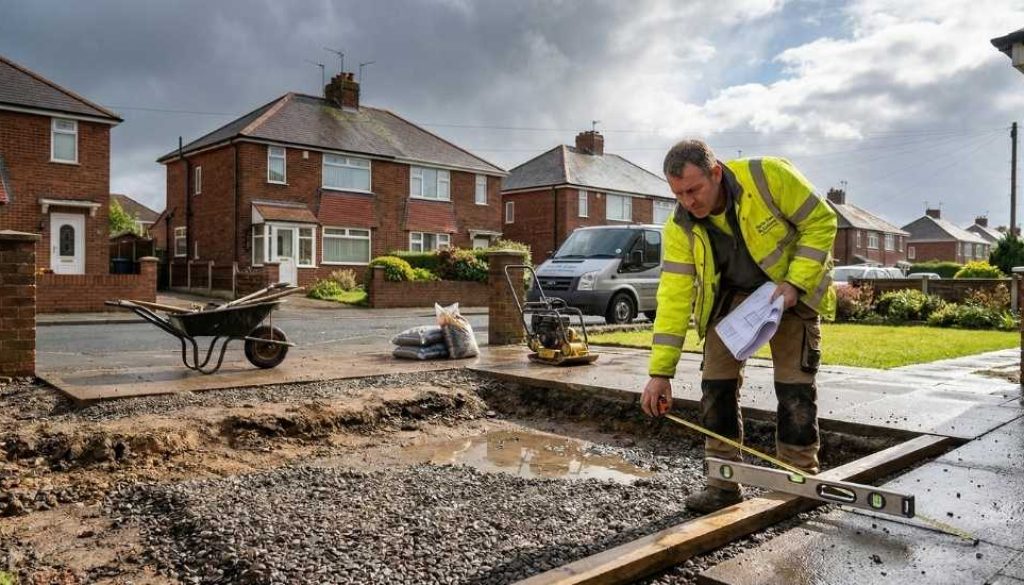
After prolonged rainfall, soil beneath lawns and old patios may remain saturated for days. Excavating or laying sub-base on overly wet ground compromises compaction.
When sub-base layers are installed onto unstable, waterlogged soil:
- Compaction becomes uneven
- Settlement risk increases
- Drainage flow becomes unpredictable
Proper contractors assess ground moisture before beginning groundwork. Sometimes a short delay protects long-term stability.
Starting too soon after heavy rain is one of the most common scheduling errors.
Mistake 3: Underestimating Freeze-Thaw Damage
Winter installation is not automatically unsafe. The issue is freezing during curing.
When mortar or bedding layers freeze before setting fully, expansion weakens structure. That damage may not show immediately but can reduce durability.
Cold-weather risks include:
- Frozen sub-base layers
- Slowed curing times
- Surface instability
- Joint cracking
However, early winter or late winter work can still proceed safely if temperatures remain above critical thresholds and weather is monitored carefully.
It is temperature consistency that matters most.
Mistake 4: Assuming Quick Turnarounds Beat Seasonal Planning
Many homeowners delay booking until spring, creating a seasonal rush.
Peak demand periods often mean:
- Limited availability
- Pressure for quick starts
- Compressed installation timelines
Rushed scheduling increases the temptation to begin work during marginal weather windows.
Planning outdoor work several months ahead allows contractors to monitor conditions and choose appropriate start dates. It also reduces the risk of compromises made to meet tight deadlines.
Outdoor work benefits from patience and forward planning.
Mistake 5: Forgetting How Autumn Affects Ground Conditions
Autumn is often ideal for installation, yet misunderstood. While rainfall increases, soil temperatures remain relatively stable after summer. That warmth helps curing processes and compaction.
The key consideration is drainage preparation. If leaves block channels or natural fall is inadequate, water management becomes critical before winter.
Autumn installations, when properly managed, often outperform rushed late-summer builds done in excessive heat. Weather awareness beats calendar assumptions.
Mistake 6: Believing All Materials React The Same
Different surfaces respond differently to temperature and moisture.
For example:
- Resin-bound surfaces require controlled humidity and temperature ranges
- Porcelain patios demand precise levelling and correct adhesive curing
- Block paving relies heavily on sub-base stability
- Tarmac is temperature-sensitive during laying
Choosing materials without considering seasonal conditions can create avoidable complications.
Professional installers plan installation methods according to forecasted conditions, not just availability.
Mistake 7: Ignoring Drainage Before Winter Arrives
One of the most costly mistakes is completing a patio or driveway without verifying drainage performance before winter.
Standing water combined with freezing temperatures accelerates:
- Surface cracking
- Joint erosion
- Sub-base washout
- Edge movement
Outdoor work should include drainage checks before seasonal change.
A driveway that performs well in September may behave very differently in January if water management is poor.
What Smart Weather Planning Actually Looks Like
Planning outdoor work properly involves:
- Monitoring extended forecasts, not just weekly outlooks
- Assessing soil moisture before excavation
- Allowing curing time appropriate to temperature
- Building adequate fall for drainage
- Scheduling with seasonal demand in mind
Professional installers do not gamble on single dry days. They plan around patterns.
British weather is unpredictable, but ground science is not.
Why Proper Site Assessment Matters More Than Season
The most important factor is not the month on the calendar. It is how well the groundwork responds to conditions.
A thorough site assessment evaluates:
- Soil composition
- Drainage behaviour
- Exposure to prevailing weather
- Shade and moisture retention
- Frost vulnerability
These factors determine scheduling and material choice.
At M&C Paving Northeast, planning begins with site conditions, not assumed seasonal rules. Stable groundwork and correct drainage allow patios and driveways to perform across all British seasons.
Plan Around Conditions, Not Hope
Outdoor projects fail when decisions are based on convenience instead of condition. Rain, frost, and heat are manageable when accounted for. Problems arise when they are ignored.
If you are considering upgrading your outdoor space, explore our Sunderland patios or driveway services to see how we design and install durable surfaces built for North East conditions. Discuss the timing with our contractor who evaluates ground moisture, temperature trends, and drainage before setting a start date.
Book a proper site assessment and plan your outdoor work around real conditions, not guesswork.