Why Driveways Fail at the Edges First (And How to Prevent It)
Driveway edges are almost always the first areas to show signs of failure. Crumbling tarmac, sinking block paving, and cracking concrete typically begin at the perimeter long before the centre of the driveway is affected. This is not a coincidence. Edge failure is usually a symptom of structural weaknesses, water movement, and poor restraint rather than simple surface wear. Understanding why edges fail first helps homeowners address problems early and avoid wider driveway damage.
Why Driveway Edges Are Structurally Weaker
The edges of a driveway experience different forces compared to the centre. Whilst the middle is supported evenly by surrounding material, edges are often exposed on one side.
Common reasons edges are weaker include:
- Reduced lateral support
- Less compacted ground along borders
- Exposure to soil movement from adjacent gardens
- Drainage runoff collecting at the perimeter
Without sufficient support, edges are more vulnerable to movement when the ground becomes saturated or freezes during winter.
How Water Concentrates at Driveway Edges
Water naturally flows toward the edges of a driveway. Rainfall, surface runoff, and melting frost are all directed outward by gradients designed to move water away from buildings.
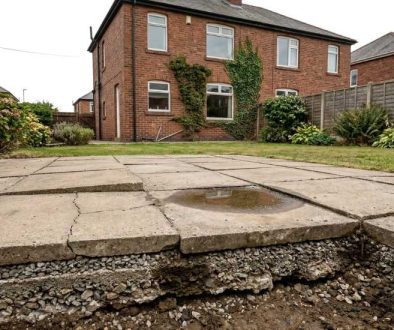
When drainage is inadequate, this water has nowhere to go. It collects along the edges, soaking into the ground beneath. During winter, this moisture freezes and expands, pushing edge materials outward or upward. When it thaws, the ground settles unevenly, leaving gaps, cracks, or sinking sections.
Over time, repeated saturation weakens the base beneath the edge, even if the centre of the driveway remains stable.
Edge Restraints and Why They Matter
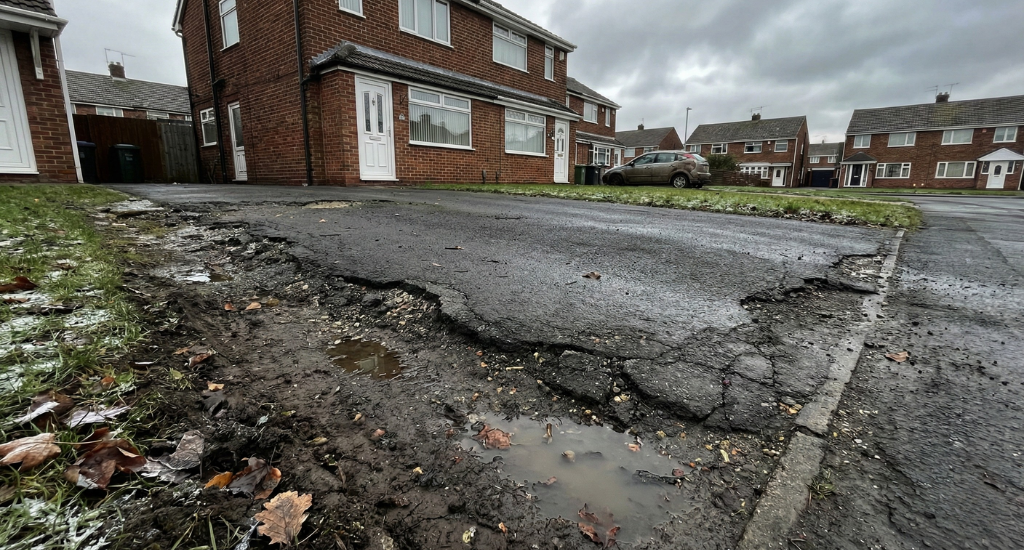
Edge restraints are critical for maintaining driveway stability. They prevent surfaces from spreading outward under load and help lock base layers in place.
When edging is missing, poorly installed, or has shifted over time, the driveway surface loses lateral support. This allows blocks to move, tarmac to crack, or concrete slabs to separate. Once the edge starts to fail, the damage often progresses inward.
Signs of failing edge restraints include:
- Gaps opening between the driveway and borders
- Blocks spreading or tilting outward
- Cracks forming parallel to the edge
Proper edge restraint is one of the most effective ways to prevent early driveway failure.
Why Vehicle Weight Accelerates Edge Damage
Driveway edges are often driven over more than homeowners realise. Turning wheels, parking close to borders, and delivery vehicles place concentrated pressure on the perimeter.
When combined with weak ground conditions, this pressure causes edges to sink faster than the rest of the driveway. In winter, saturated soil amplifies this effect, as the ground loses strength and compacts under weight.
Over time, repeated loading at the edges leads to visible dips, cracking, and surface separation.
Block Paving Edge Failures Explained
Block paving is particularly sensitive to edge issues. Each block relies on surrounding units and edge restraints to stay in position.
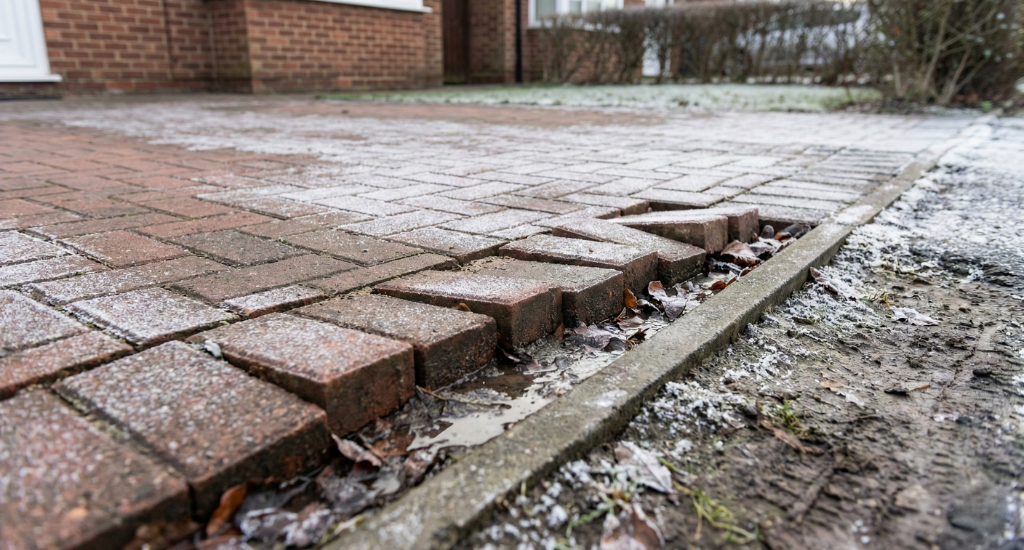
When water washes jointing sand away at the edges, blocks lose support and begin to move. Frost then worsens the problem by forcing blocks apart. Once edge movement starts, it often spreads across larger sections of the driveway.
Early signs include uneven lines along borders, loose blocks near edges, and widening gaps between blocks and edging.
Tarmac and Concrete Edge Breakdown
Tarmac and concrete driveways also tend to fail at the edges first, but the damage appears differently.
Tarmac edges may crumble or break away once water penetrates beneath the surface. Concrete edges often crack when unsupported ground shifts beneath them. In both cases, edge damage usually indicates underlying base failure rather than surface wear alone.
Ignoring these signs allows water to penetrate further beneath the driveway, accelerating deterioration.
How Proper Groundwork Prevents Edge Failure
Preventing edge failure starts below the surface. A strong sub-base, compacted correctly to the edges, provides the foundation needed to resist movement.
Effective prevention includes:
- Adequate excavation depth across the full width
- Proper compaction extending to driveway borders
- Solid edge restraints set on a stable concrete footing
- Drainage designed to move water away from edges
When these elements are in place, edges perform as reliably as the rest of the driveway.
Why Early Repairs Make a Big Difference
Edge damage rarely improves on its own. Small cracks and movement at the perimeter allow water to enter, which accelerates failure.
Addressing edge issues early often involves targeted repairs rather than full reconstruction. Reinstating edging, improving drainage, and stabilising the base can stop damage from spreading inward.
Delaying repairs usually leads to wider subsidence and higher costs later.
Protecting Your Driveway From the Outside In
Driveway edge failure is a warning sign, not a cosmetic issue. It indicates problems with support, drainage, or installation that will eventually affect the entire surface if ignored. Understanding why edges fail first allows homeowners to act before damage spreads.
Professional assessment identifies whether repairs or rebuilding are needed and ensures the underlying cause is addressed properly. M&C Paving Northeast provides expert driveway repairs, edge reinstatement, and groundwork designed to withstand North East weather conditions.
If your driveway edges are cracking, sinking, or spreading, contact us at M&C Paving Northeast to prevent further damage and protect your driveway long term.