What Causes Driveways to Sink in Winter (And How Groundwork Prevents It)
A driveway that sinks during winter is rarely suffering from a surface problem. Cold weather, heavy rain, and saturated ground expose weaknesses beneath the paving that were already present. What looks like a sudden dip or slope is usually the result of months or years of underlying failure finally revealing itself. Understanding why driveways sink in winter helps homeowners avoid short-term fixes and focus on solutions that actually last.
Why Winter Is When Sinking Becomes Visible
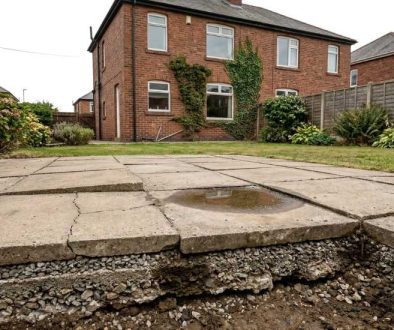
Winter creates the perfect conditions for subsidence to show. Prolonged rainfall saturates the ground, reducing its ability to support weight. At the same time, freeze–thaw cycles cause the soil to expand and contract repeatedly.
As moisture freezes, it lifts the ground slightly. When it thaws, the ground settles unevenly. This movement highlights weak spots in the sub-base, causing the driveway surface above to drop, slope, or crack. Areas that looked stable in summer often fail once winter stress sets in.
Poor Sub-Base Depth and Its Long-Term Impact
The sub-base is the foundation of any driveway. If it is too shallow, poorly compacted, or made from unsuitable materials, it will struggle to support the surface during winter.
Inadequate sub-base depth allows moisture to penetrate and remain trapped beneath the driveway. As the ground softens, vehicle weight compresses weak areas further, leading to visible sinking.
Common sub-base issues include:
- Insufficient excavation depth
- Inconsistent compaction
- Use of low-quality or contaminated materials
- Failure to account for soil type
Once winter exposes these weaknesses, surface repairs alone will not stop continued movement.
Water Retention Beneath Paving Surfaces
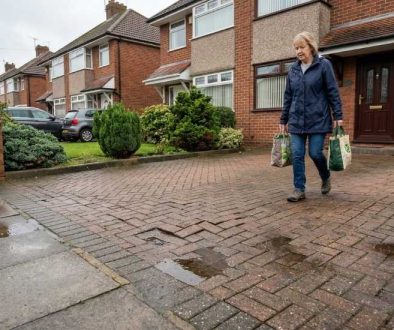
Water retention is one of the leading causes of winter subsidence. When water cannot drain away efficiently, it accumulates beneath the driveway and weakens the supporting layers.
In winter, saturated ground stays wet for longer due to slow evaporation. This persistent moisture reduces load-bearing strength and increases freeze–thaw movement. Driveways without proper drainage are far more likely to sink during colder months.
Signs water retention is contributing to sinking include:
- Repeated puddles in the same areas
- Ice forming in identical spots after frost
- Soft ground along edges or borders
Managing water movement is critical to preventing further damage.
Compaction Failures and Winter Movement
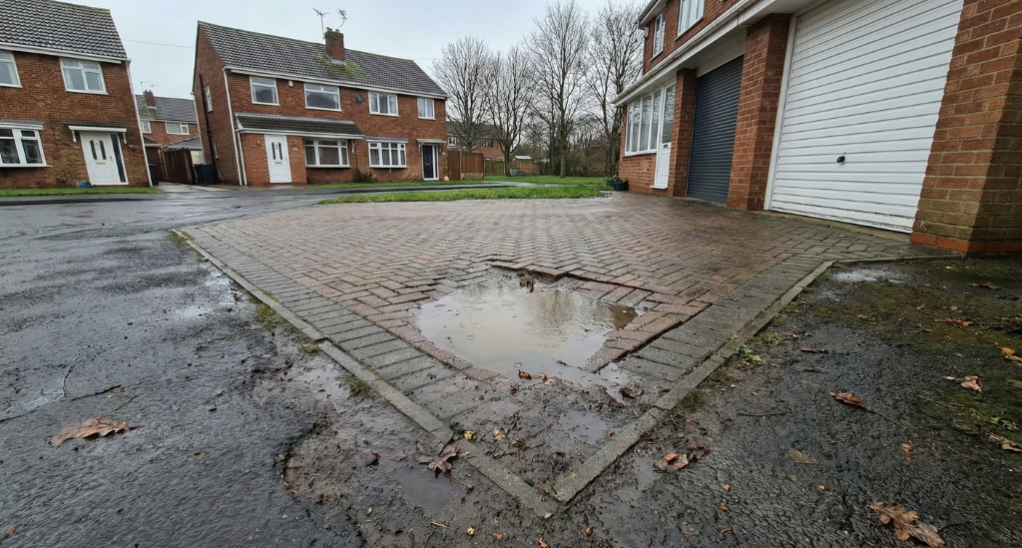
Proper compaction locks the sub-base together, creating a stable platform for the surface above. When compaction is rushed or uneven, voids remain within the base layers.
During winter, water fills these voids. As temperatures fluctuate, freeze–thaw cycles force the material to shift, causing the driveway to settle unpredictably. This is why sinking often appears uneven rather than across the entire surface.
Compaction failures are difficult to detect until winter stress exposes them. Once movement begins, it tends to worsen with each cold season unless corrected properly.
Why Surface Fixes Do Not Solve Structural Problems
Sinking driveways are often temporarily patched with resurfacing or infill. Whilst these fixes may improve appearance briefly, they do not address the underlying cause.
Surface-only repairs fail because:
- The weakened sub-base remains untreated
- Water continues to collect beneath the surface
- Freeze–thaw movement continues each winter
As a result, the driveway sinks again, often in the same location. Lasting repairs require rebuilding from the ground up, not covering over the problem.
The Role of Proper Drainage in Preventing Subsidence
Drainage works hand-in-hand with groundwork. Even a well-built sub-base will fail if water is allowed to accumulate.
Effective drainage includes:
- Correct surface gradients
- Free-draining base materials
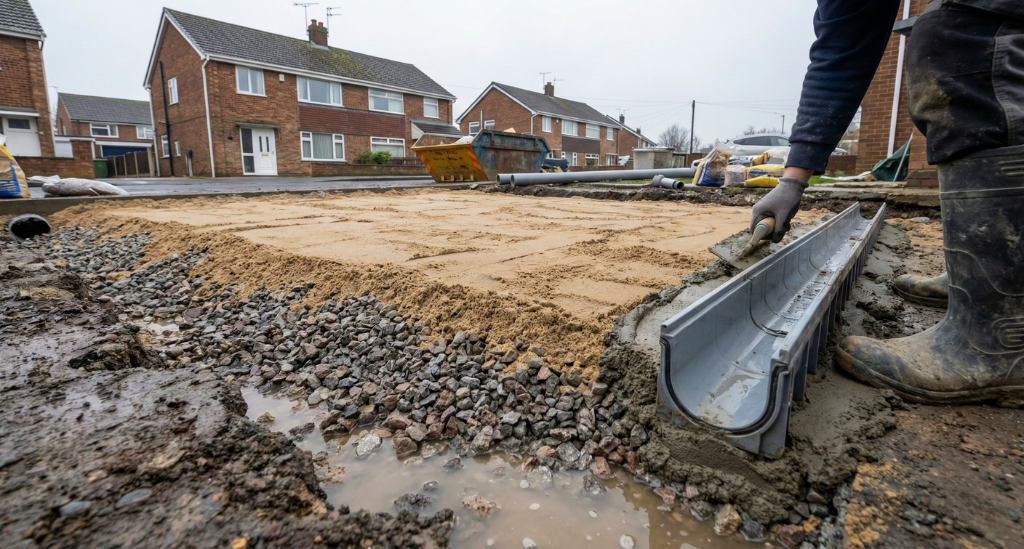
- Drainage channels or soakaways where needed
- Secure edge restraints to prevent lateral spread
By controlling where water goes, drainage reduces saturation and stabilises the ground beneath the driveway during winter.
How Proper Groundwork Stops Winter Sinking
Proper groundwork addresses the causes of subsidence, not just the symptoms. This involves removing unstable material, rebuilding the sub-base to the correct depth, and ensuring water drains away effectively.
A correctly constructed driveway base:
- Supports vehicle loads evenly
- Resists saturation during heavy rain
- Limits freeze–thaw movement
- Maintains surface levels year-round
Winter conditions help confirm whether groundwork has been done correctly, making them a valuable testing period rather than a barrier to quality work.
When Rebuilding Is the Right Solution
Rebuilding becomes necessary when sinking affects multiple areas or continues despite previous repairs. Winter inspections make it easier to identify whether issues are localised or structural.
Rebuilding is often the best option when:
- Large sections show movement or dipping
- Drainage failures are widespread
- Previous surface repairs have not held
Addressing these issues properly restores stability and prevents recurring winter damage.
A Stable Driveway Starts Below the Surface
Winter sinking is not a mystery problem. It is the result of poor sub-base construction, trapped water, and inadequate drainage finally reaching a tipping point. Surface fixes may hide the issue temporarily, but only proper groundwork prevents long-term failure.
Correct preparation protects driveways against winter conditions year after year. M&C Paving Northeast provides expert driveway rebuilds and groundwork designed to prevent sinking and withstand North East winters. If your driveway is showing signs of movement or subsidence, professional assessment ensures the problem is solved properly, not just covered up. Contact us today.