Tarmac Driveways For Busy North East Homes In July
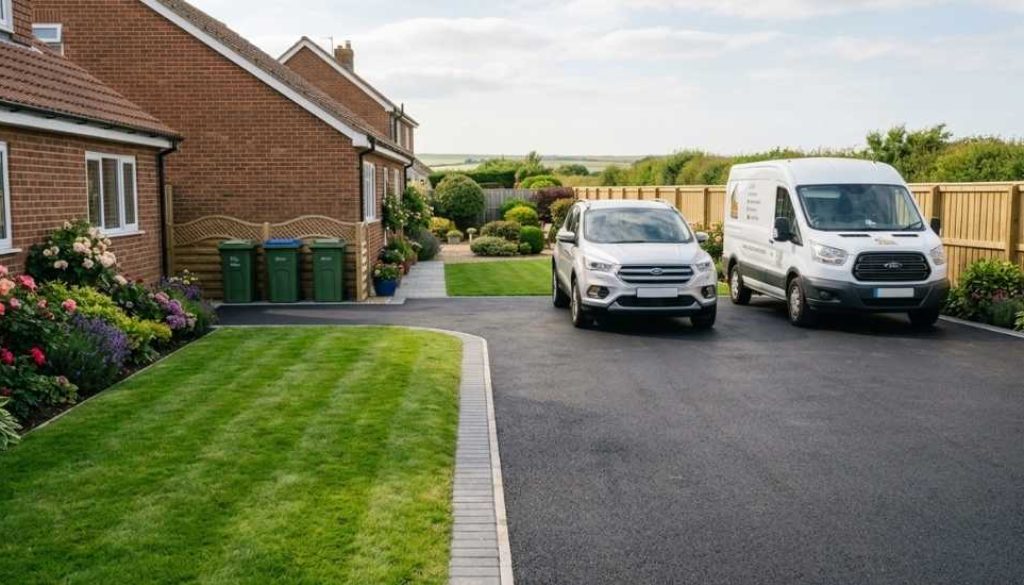
A busy household is hard on a driveway. Two cars shuffling in and out, a work van that needs room, bins wheeled to the kerb twice a week, and kids and deliveries crossing it all day.
By July, when the drive is in constant use, the cracks and potholes of a worn surface start to feel like a daily annoyance.
Tarmac earns its keep here. It is one of the most practical surfaces going for homes that never really sit still, and this guide explains why.
Why Busy Homes Keep Choosing Tarmac
Tarmac has a reputation as the sensible choice, and for a working household that is exactly the point. It handles heavy, repeated use without fuss.
M&C Paving Northeast describe tarmac as a cost-effective, practical surface known for strength and reliability, and well suited to busy households and larger driveways. That matches how most families actually live.
A surface that shrugs off constant traffic, dries quickly after rain, and needs little looking after frees you up to worry about everything else on a full day.
Built From the Same Stuff as the Roads
Here is the detail that explains tarmac’s toughness, and it began with a happy accident. Once you know the story, the material makes sense.
In 1901 a Nottinghamshire surveyor named Edgar Purnell Hooley was walking near an ironworks in Denby, Derbyshire, when he spotted a stretch of road that was oddly smooth and dust-free.
A barrel of tar had burst across it, and someone had thrown waste slag over the mess to tidy it up. The traffic had pressed it into a hard, rut-free surface. Hooley patented the idea in 1902 and called it tarmac.
Your driveway, in other words, is built from the same recipe engineers chose to carry cars across entire towns. It was born to take a beating from wheels, which is precisely what a busy home needs.
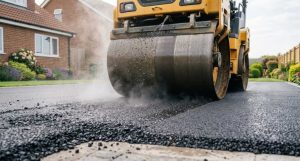
What Makes Tarmac Practical For Family Life
The appeal comes down to how it behaves day to day. For a household that treats the drive as a working surface rather than a showpiece, the strengths line up neatly:
- Copes with weight and repetition — cars, vans, and daily comings and goings do not faze it
- Smooth and even underfoot — no loose stones to scatter, easy for prams, bikes, and bins
- Quick to install — larger frontages can be surfaced faster than most block or resin jobs
- Budget-friendly — one of the more affordable ways to cover a big area properly
- Low upkeep — a wash-down and the occasional check is usually all it asks for
- Clean access — a flat, sealed surface keeps mud and mess out of the house
For a larger frontage that has to park more than one vehicle, tarmac covers the ground economically without leaving you with a patchy, high-maintenance finish.
Tarmac Compared With Other Surfaces
Tarmac is not the only option, and the right choice depends on what you value most. A quick comparison helps you weigh it up.
- Tarmac — best for value, speed, and heavy everyday use across a big area
- Block paving — more decorative and repairable brick by brick, though slower to lay and pricier
- Resin-bound — smooth and modern with excellent drainage, sitting at the premium end
- Imprinted concrete — patterned and hard-wearing, a middle path on looks and cost
If kerb appeal is your top priority, block paving or resin may tempt you. If the job is to cover a busy, well-used drive reliably and keep costs sensible, tarmac usually wins the argument. A good installer will talk you through the trade-offs honestly rather than pushing the dearest finish.
Why the Base Matters More Than the Surface
The part you can see is only half the job. Whether a tarmac drive lasts five years or twenty-five comes down to what sits underneath.
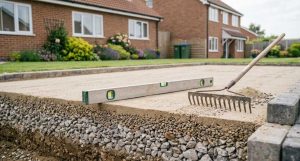
Tarmac is only as good as the foundation it is laid on. A properly dug-out, compacted sub-base spreads the load of every vehicle and lets water drain away instead of pooling and working into the surface.
Skip that groundwork and even the best tarmac will crack, sink, or ripple under a car’s weight before long.
This is where an experienced in-house team pays off, because they build the layers correctly and do not cut corners where nobody looks. It is the difference between a drive that ages gracefully and one that needs patching within a couple of winters.
Is July a Smart Time to Lay Tarmac?
Timing does affect tarmac, and summer works in your favour. Warm, dry conditions are close to ideal for laying it.
Tarmac needs to be laid hot and then compacted, so mild dry weather helps it bed down and cure evenly without rain interfering. A July slot also means the drive is ready for the busiest stretch of the year, when you are ferrying cars in and out for holidays, visitors, and school runs.
The one catch is demand. Summer is peak season for driveway work across the region, so booking your slot early keeps you ahead of the queue.
If you are also planning easier access from the road, it is worth asking about a dropped kerb at the same time so both jobs are handled together.
Book Your Tarmac Driveway With M&C
M&C Paving Northeast install tarmac and other driveway surfaces across Blyth, Newcastle upon Tyne, Northumberland, and the wider North East. With more than 25 years behind the team, work carried out in-house, and free no-obligation quotes, you get one accountable crew from dig-out to final roll.
A tarmac drive is one of the most sensible upgrades a busy home can make. It takes the daily grind of cars, vans, and bins in its stride, keeps mess outside where it belongs, and does it all at a fair price. If your current surface is cracked, uneven, or simply worn out, July is a good month to sort it.
See the full range on our driveway contractors page or request a free quote through our contact page.
Get booked in before the summer diary fills.
FAQs
For all your paving and landscaping services…
Call us today – 0191 743 2048