How July Weather Affects New Driveway Installation
July is a popular month for outdoor improvement work across the North East. Longer daylight hours can help projects move efficiently, yet heat, sudden showers, ground moisture, and curing times may all influence the final result.
A professional driveway installation North East homeowners can rely on starts with understanding the weather, the ground, and the chosen surface. Summer offers strong working conditions when every stage is timed correctly.
Why July Is Popular For Driveway Work
July often gives contractors longer working days and fewer frost-related delays. This can make excavation, base preparation, edging, and surface installation easier to organise.
A new driveway can improve access, parking, drainage, and the appearance of the frontage before autumn arrives.
Warm weather still needs planning. North East summers can shift quickly from dry heat to heavy rain. A reliable contractor plans around forecasts rather than treating July as one long dry spell.
How Heat Affects Driveway Materials
High temperatures can change how driveway materials behave during installation.
Tarmac can soften in strong heat, especially before it has fully settled. It needs correct rolling, careful timing, and controlled use after installation. Heavy vehicles, sharp stands, or turning tyres can leave marks.
Resin-bound systems require close temperature control. The resin and aggregate must be mixed and laid within a limited working period. Hot weather can shorten that window, so each section must be prepared before mixing begins.
Concrete can lose moisture quickly. If the surface dries faster than it cures, cracking or uneven finishing may follow. Controlled curing helps the slab gain strength gradually rather than drying like a wet towel on a radiator.
Block paving reacts differently because the blocks are manufactured before installation. The main concerns are the base, bedding layer, and jointing sand.
Sudden Showers Can Interrupt Critical Stages
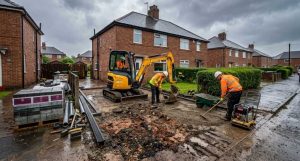
A summer shower may seem harmless, but timing matters. Rain during excavation can saturate exposed soil. Rain during base preparation can make compaction difficult. Rain during resin or concrete installation can damage the finish.
Good contractors monitor local forecasts and avoid starting weather-sensitive stages when heavy rain is likely. They may complete excavation and drainage first, then wait for a suitable dry window before laying the surface.
Water must stay out of layers that need to remain stable, clean, or dry.
Base Preparation Matters More Than Sunshine
The finished driveway is visible, but its performance depends heavily on what sits underneath. July sunshine cannot correct a shallow, uneven, or poorly compacted base.
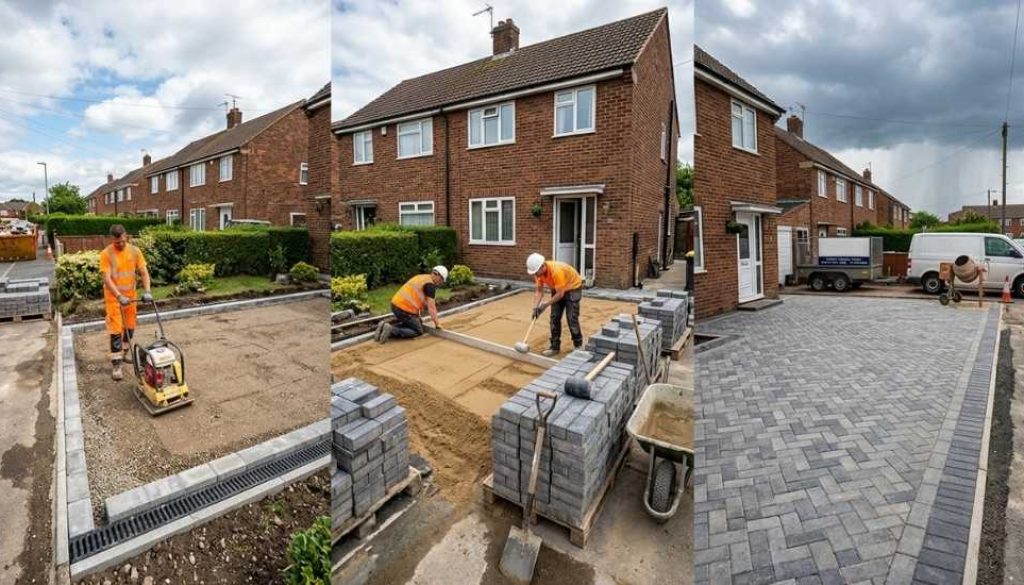
A strong installation normally includes:
- Excavation to the required depth
- Removal of weak soil
- A compacted sub-base laid in layers
- Correct falls to guide surface water
- Secure edging to hold the driveway
- Drainage channels where required
Dry weather can help excavation and compaction, although extremely dry ground may become hard to work. Clay soil may shrink during hot periods, then expand when wetter weather returns. Experienced installers assess the ground rather than relying on the calendar.
Curing Times Should Shape Your Plans
A fresh driveway may look complete before it is ready for normal use. Curing and settling times vary by material, weather, depth, and product specification.
Concrete needs a protected curing period before taking vehicle weight. Resin-bound surfaces also need time to harden fully. Tarmac can often be used sooner, although it remains vulnerable during very hot weather. Block paving can generally take traffic once compaction and jointing are complete.
Ask when you can walk, park, turn, or place heavy objects on the surface. Following those instructions protects the finish during its most vulnerable stage.
Arrange alternative parking before work begins. Keeping vehicles away for the recommended period is easier when access has been planned.
Choosing The Right Surface For Summer Installation
Each driveway material has different strengths, maintenance needs, and installation requirements.
Block Paving
Block paving offers flexible design, clear edging, and access for future repairs. Summer installation works well when the bedding layer stays dry and jointing sand is applied in suitable conditions.
Resin-Bound Surfacing
Resin-bound driveways provide a smooth, modern finish with permeability over the correct base. Temperature, moisture, and mixing times must be controlled carefully.
Tarmac
Tarmac suits larger areas and busy driveways. Warm conditions can support installation, although very high temperatures may increase early marks or softening.
Concrete
Concrete provides a strong surface with several finish options. Summer work requires proper curing methods to reduce rapid moisture loss and cracking.
How Contractors Plan Around July Conditions
Professional planning starts before machinery arrives. A site visit helps identify access limits, drainage, ground levels, utility covers, walls, steps, and boundaries.
The team may adjust the schedule around rainfall or extreme heat. This can include starting earlier, protecting prepared areas, delaying a final pour, or dividing resin work into manageable sections.
Clear communication matters. Homeowners should know which stages depend on dry weather, how delays are handled, and when the surface is safe to use.
Questions To Ask Before Booking
Before approving a quote, ask practical questions about how the driveway will be built:
- What depth will be excavated?
- Which sub-base material will be used?
- How will drainage be managed?
- What happens if rain interrupts the work?
- How long before vehicles can use it?
- Is the work completed in-house?
- What guarantee covers the installation?
These questions help separate a full installation from a thin surface upgrade that may struggle after its first wet winter.
Book A Driveway Built For North East Weather
July can be an excellent time to install a driveway, provided heat, showers, ground conditions, and curing periods are handled correctly. Strong preparation supports the surface through summer rain, winter frost, and daily vehicle use.
M&C Paving Northeast brings more than 25 years of experience to block paving, resin, tarmac, and concrete driveways. Our in-house team focuses on correct levels, drainage, durable materials, and dependable workmanship.
Call 0191 580 2596 to arrange a free quote for driveway installation in the North East.
FAQs
For all your paving and landscaping services…
Call us today – 0191 743 2048