The Hidden Impact Of Ground Movement On Patios And Paths
A patio rarely fails overnight. It begins subtly. A slight dip near the corner. A hairline crack across a slab. A joint that keeps losing sand. Most homeowners assume it is surface wear.
In reality, movement below the surface is usually responsible.
Ground movement affects patios and garden paths across the North East, particularly where soil composition, drainage issues, or seasonal weather shifts are involved. What looks like minor cosmetic change often signals structural instability developing underneath.
Understanding how and why this happens is the first step towards preventing it.
What Ground Movement Actually Means
Ground movement refers to changes in soil volume or stability beneath a paved surface.
This can occur due to:
- Clay expansion and shrinkage
- Excessive moisture retention
- Poor drainage
- Freeze-thaw cycles
- Inadequate compaction
- Organic material decomposition
In clay-heavy areas, soil expands when saturated and contracts during dry periods. That repeated cycle creates pressure beneath rigid patio slabs.
Think of it like placing tiles on a sponge that subtly swells and shrinks with the weather. Over time, the surface above cannot remain perfectly level.
Ground movement is gradual, which is why early signs are often dismissed.
If ground movement has already affected your outdoor surface, exploring professionally installed Sunderland Patios can help ensure the new base, drainage, and paving structure are built to resist future shifting.
Seasonal Weather in the North East and Its Role
British weather contributes heavily to sub-surface instability.
During prolonged rainfall, the ground becomes saturated. If drainage is inadequate, water lingers beneath patios. In winter, freezing temperatures cause trapped moisture to expand.
The freeze-thaw process is particularly damaging:
- Water enters small gaps beneath slabs.
- Temperatures drop and water freezes.
- Expansion lifts the slab slightly.
- Thawing allows it to settle unevenly.
Repeat this across multiple winters and minor shifts become visible dips or cracks.
Patios built without proper sub-base depth are especially vulnerable.
Warning Signs Homeowners Often Miss
Ground movement rarely announces itself clearly at first. Early indicators include:
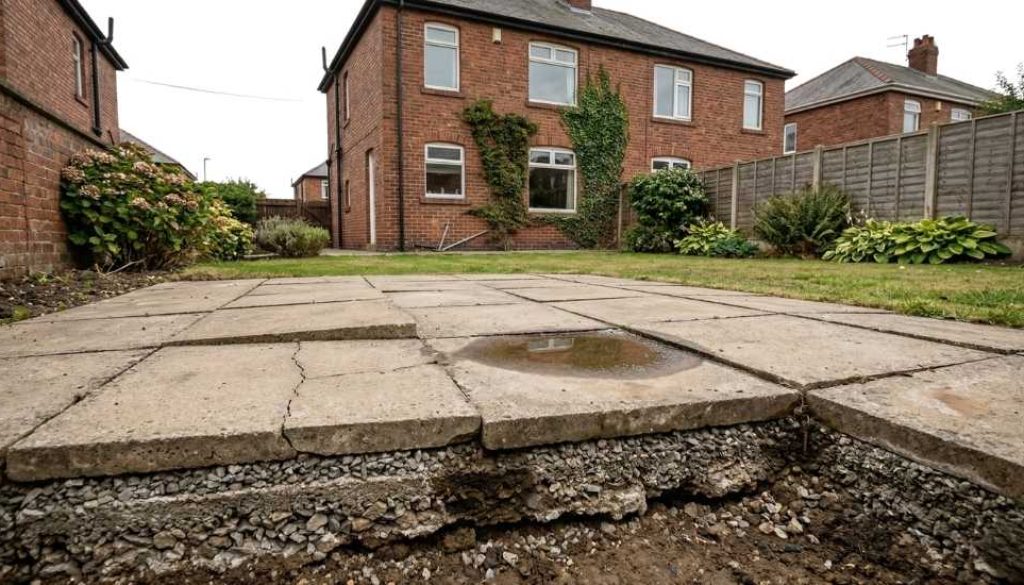
- Slight rocking slabs
- Persistent joint erosion
- Fine cracks across multiple tiles
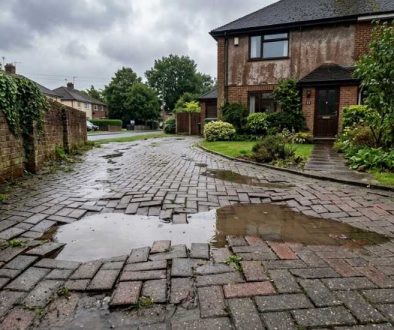
- Uneven puddle formation
- Small gaps forming at edges
Homeowners often top up jointing compound or re-point slabs without addressing the underlying cause.
If multiple slabs show minor movement, the issue is unlikely to be isolated. It usually indicates sub-base instability or drainage failure. Catching this early can prevent wider reconstruction.
Subtle settlement and shifting slabs are common issues we identify during Sunderland patios assessments, particularly where drainage and sub-base preparation were overlooked.
The Role of Sub-Base Depth and Compaction
The sub-base is the structural foundation of a patio.
It distributes weight evenly and protects against soil shift. If it is too thin or poorly compacted, movement beneath transfers directly to the surface.
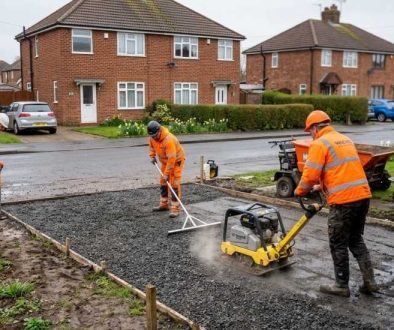
Professional installation typically involves:
- Full excavation to stable ground
- Installation of a geotextile membrane where required
- Layered MOT Type 1 sub-base
- Mechanical compaction in stages
- Sharp sand or mortar bed preparation
Skipping layers or reducing depth to save cost compromises stability.
A patio is only as strong as what supports it. Surface materials cannot compensate for weak groundwork.
Drainage Failures and Soil Saturation
Water is the primary driver of sub-surface movement.
If patios are laid without correct fall, water collects beneath slabs. Over time, this softens soil and weakens compaction.
Common drainage-related causes include:
- Incorrect slope away from property
- Blocked or absent drainage channels
- Poor permeability planning
- Low points near steps or thresholds
Soil that remains consistently wet loses structural strength. That creates settlement zones, especially in frequently walked areas.
Proper drainage planning during installation dramatically reduces this risk.
Tree Roots and Organic Influence
Ground movement is not always weather-related.
Nearby trees and large shrubs draw moisture from soil, particularly in dry spells. This causes localised shrinkage. When moisture returns, the soil expands again.
Roots themselves can also displace sub-base layers.
Professional assessments consider:
- Proximity to mature trees
- Root growth patterns
- Soil moisture fluctuation
Ignoring vegetation influence often leads to recurring repair issues.
Why Surface Repairs Rarely Solve the Problem
Replacing a cracked slab without addressing the base is temporary. If ground movement continues, the new slab will shift again. Surface patching treats symptoms, not cause.
Long-term solutions may involve:
- Localised excavation
- Rebuilding affected sub-base sections
- Correcting drainage direction
- Installing improved edge restraints
A proper inspection determines whether the issue is isolated or systemic.
Paths Versus Patios: Why Narrow Areas Fail Faster
Garden paths are particularly vulnerable to movement. Because they are narrow, any edge instability affects the entire width quickly. Without strong edge restraints, spreading occurs under regular foot traffic.
Paths also often run alongside lawns or planting beds where soil moisture fluctuates significantly. This combination increases the likelihood of minor movement turning into visible misalignment.
Strong edging and adequate base depth are essential in narrow installations.
How Professional Site Assessments Prevent Movement
Preventing ground movement issues begins before installation.
A thorough site assessment should evaluate:
- Soil composition
- Natural slope and drainage behaviour
- Proximity to trees
- Existing surface condition
- Load expectations
- Excavation depth required
Professional installers build according to site conditions rather than using a standard depth for every property.
That tailored groundwork is what allows patios and paths to remain level across seasons.
When to Consider Rebuilding Rather Than Repairing
If movement is minor and localised, targeted repair may suffice.
However, consider full reconstruction when:
- Multiple areas show settlement
- Drainage problems are widespread
- The original installation lacks adequate depth
- Surface cracking is recurring
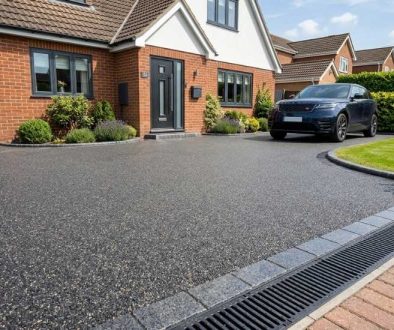
Rebuilding with correct excavation and drainage design protects your investment long-term.
Repeated patching often costs more over several years than addressing the issue properly once.
Build For Stability Beneath the Surface
A patio should feel solid underfoot in all seasons. It should not rock, dip, or hold water after rainfall.
Ground movement is predictable when soil, drainage, and compaction are not managed correctly. It is also preventable with proper groundwork.
At M&C Paving Northeast, every patio and path begins with a thorough site assessment and correctly specified base layers. Stability is built from the ground up.
If you have noticed uneven slabs, recurring cracks, or shifting paths, it may be time for a professional inspection. Book a proper assessment before minor movement becomes major reconstruction.