Is Your Driveway Ready for 2026? A January Inspection Checklist
January is one of the most revealing months for driveway condition. Winter weather exposes weaknesses that often stay hidden during drier seasons. Frost, heavy rain, and slower drainage all place stress on surfaces and the ground beneath them. A simple inspection at the start of the year helps homeowners understand whether their driveway is coping well or heading towards costly repairs later in the year.
This checklist focuses on the areas most likely to fail after winter weather and helps identify when a small repair is enough and when more extensive work makes better long-term sense.
Checking Surface Cracks and Breaks
Surface cracks are often the first visible sign of winter stress. In January, these cracks deserve closer attention because freeze–thaw cycles cause them to widen quickly.
Walk the full length of the driveway and look for cracks that have changed since autumn. Pay attention to areas where cracks intersect or branch out, as these often indicate movement beneath the surface rather than simple surface wear.
Cracks that suggest developing problems include:
- Cracks that widen after frost
- Multiple cracks concentrated in one area
- Cracks near drainage points or edges
Surface-level cracking may be repairable, but when cracks continue to grow, further investigation is needed.
Identifying Base Movement Beneath the Surface
Not all problems are visible as cracks. Base movement often shows itself through subtle changes in level or firmness.
Stand in different areas of the driveway and feel for movement underfoot. When parking, notice whether one side of the vehicle sits lower than the other. These changes often become more obvious during winter when the ground is saturated and unstable.
Signs of base movement include:
- Shallow dips or uneven sections
- Driveway areas that feel softer after rain
- Gradual slopes forming where the surface was once level
Base movement is a structural issue and should not be ignored, even if the surface still looks intact.
Inspecting Edging and Border Stability
Edging plays a critical role in keeping driveway surfaces secure. During winter, edging is often the first area to fail.
Check whether edging stones or kerbs have shifted, cracked, or started to lean outward. Movement at the edges allows the main surface to spread, increasing the risk of sinking and cracking across the driveway.
Common winter-related edging issues include:
- Gaps forming between edging and surface
- Borders sinking into surrounding ground
- Edges cracking after repeated freezing
Loose or failing edging usually indicates underlying ground movement that needs addressing.
Observing Drainage Flow After Rainfall
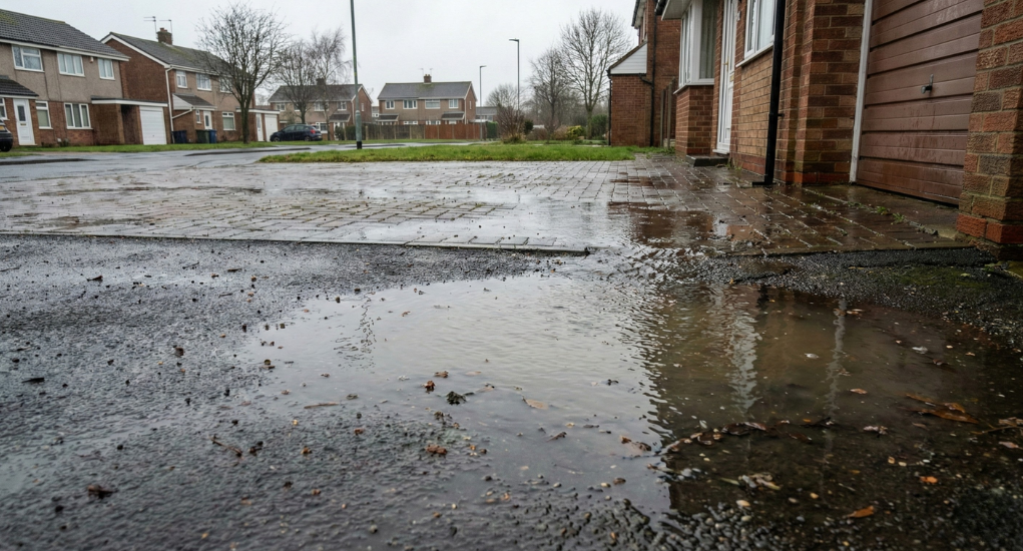
January rainfall provides ideal conditions to assess drainage performance. After heavy rain, observe how water behaves across the driveway.
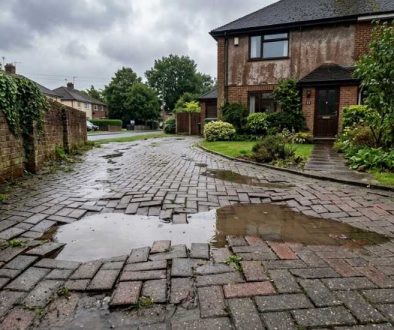
Water should flow away smoothly and disperse without pooling. Areas where water lingers often point to blocked drainage, incorrect gradients, or compacted base layers.
Pay close attention to:
- Puddles that remain long after rain stops
- Water flowing towards the house rather than away
- Repeated ice formation in the same locations
Drainage issues worsen throughout winter and often contribute directly to surface damage and subsidence.
Checking Joints and Surface Integrity on Block Paving
Block paving requires stable joints to perform well in winter. January inspections should include a close look at jointing sand and block alignment.
Freeze–thaw cycles wash sand from joints and allow blocks to move. This movement may feel minor at first but can spread quickly once support is lost.
Warning signs include:
- Gaps widening between blocks
- Blocks rocking when walked on
- Uneven lines or lifting near edges
These issues are easier to correct early before widespread re-laying becomes necessary.
Assessing Tarmac and Concrete Condition
Tarmac and concrete driveways often show winter damage differently from block paving. January inspections should focus on surface texture and firmness.
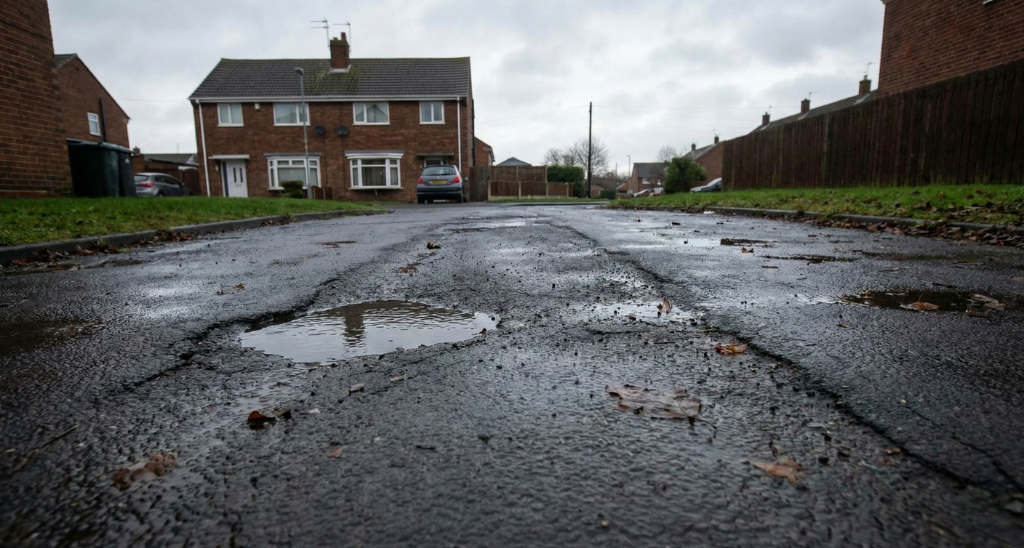
On tarmac, look for soft spots, cracking patterns, and edge breakdown. These often signal water penetration beneath the surface. Concrete surfaces may show flaking, fine cracking, or reduced traction after frost.
Any change in surface strength or texture suggests winter damage is progressing and should be addressed promptly.
When a Repair Is Enough and When Replacement Makes Sense
Not every issue requires full replacement. January inspections help determine whether problems are localised or structural.
Repairs are usually sufficient when:
- Damage is limited to small surface areas
- Base layers remain stable
- Drainage issues are minor and correctable
Replacement or rebuilding may be necessary when:
- Large areas show movement or sinking
- Drainage failure is widespread
- Previous repairs have repeatedly failed
Understanding this distinction prevents unnecessary expense and ensures long-term stability.
Why January Inspections Save Time and Money
January is an ideal time to inspect because winter conditions expose real-world performance. Issues that appear minor in summer often become obvious once the ground is saturated and temperatures fluctuate.
Early inspections allow homeowners to:
- Address small issues before they escalate
- Plan work without spring scheduling pressure
- Avoid emergency repairs later in the year
Proactive assessment leads to better outcomes and fewer surprises.
Starting 2026 With a Driveway That Is Fit for Purpose
A January driveway inspection provides clarity. It reveals whether surfaces are coping with winter stress or heading towards further deterioration. Surface cracks, base movement, edging stability, and drainage flow all offer valuable insight into what action is needed.
Professional assessment ensures problems are diagnosed correctly and fixed at the right level. M&C Paving Northeast provides expert driveway inspections, repairs, and reinstatement work designed for North East conditions.
If you want to start 2026 with confidence in your driveway’s safety and durability, contact M&C Paving Northeast for professional guidance and early intervention.