Winter Driveway Damage: What North East Homeowners Should Fix Before Spring
Winter is the harshest test a driveway faces. In the North East, repeated frost, heavy rain, and fluctuating temperatures place constant pressure on driveway surfaces and the ground beneath them. What starts as minor wear in early winter can quickly develop into structural damage by the time spring arrives. Knowing what to fix now, rather than waiting for warmer weather, helps homeowners avoid higher repair costs and more disruptive work later.
How Winter Conditions Accelerate Driveway Damage
Cold weather alone does not cause most driveway failures. The real issue is the combination of moisture and freezing temperatures. Rainwater enters cracks, joints, and porous surfaces, then freezes overnight. As water freezes, it expands, forcing materials apart. When temperatures rise, the ice melts, allowing even more water to enter the weakened areas.
This freeze–thaw cycle repeats throughout winter, gradually widening cracks, loosening blocks, and weakening sub-base layers. In the North East, where temperatures often hover around freezing, this process happens frequently and aggressively.
Frost Heave and Why Surfaces Begin to Shift
Frost heave occurs when moisture in the ground beneath a driveway freezes and expands. As the ground lifts, driveway surfaces move with it. When the ground thaws, it rarely settles back evenly.
This movement is especially noticeable on driveways with:
- Inadequate sub-base depth
- Poor compaction during installation
- Trapped moisture beneath the surface
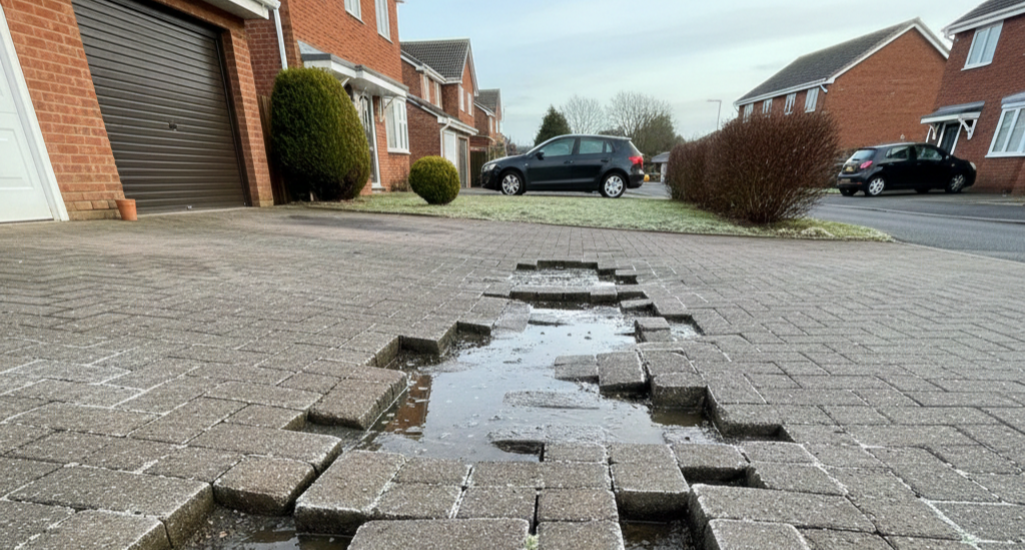
Block paving is particularly vulnerable. Frost can push blocks upward or sideways, leaving uneven surfaces and widened joints. Over time, this shifting creates trip hazards and allows more water to enter, accelerating further damage.
Cracks That Should Never Be Ignored in Winter
Small cracks are easy to dismiss, especially when they appear cosmetic. During winter, however, cracks are an open invitation for water ingress.
Once moisture enters a crack, freeze–thaw cycles force it to widen and deepen. On tarmac and concrete driveways, this often leads to surface splitting and eventual pothole formation. On block paving, cracks around edges or restraints can indicate spreading and base movement.
Cracks that need attention before spring include:
- Cracks that grow wider after frost
- Clusters of cracks forming in one area
- Cracks near drainage points or edges
Early repairs at this stage are far less invasive than full resurfacing later.
Drainage Failures After Heavy Winter Rain
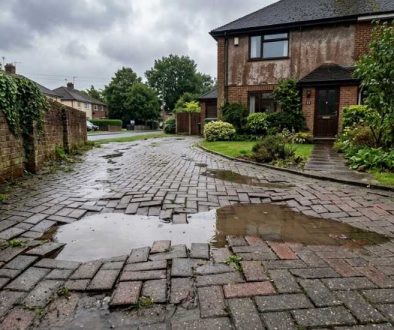
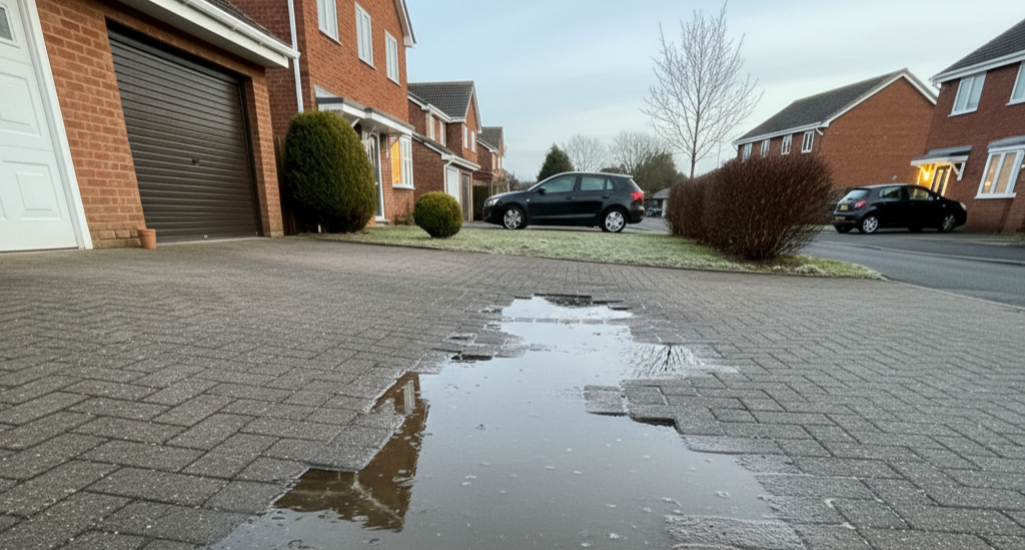
Drainage problems often become obvious during winter. Prolonged rainfall and slow evaporation expose areas where water cannot escape efficiently.
Standing water is more than an inconvenience. When water pools on a driveway:
- It increases freeze–thaw stress
- It softens the sub-base beneath the surface
- It accelerates cracking and sinking
Repeated pooling usually indicates incorrect gradients, blocked drainage channels, or a failing base. If water regularly sits in the same areas, winter is the best time to address it, as conditions reveal exactly how water is behaving on and beneath the surface.
Why Sinking Areas Should Be Fixed Now
A sinking driveway is a clear sign that the ground beneath has lost stability. Winter moisture saturates the soil, reducing its load-bearing capacity. As vehicles pass over these weakened areas, the surface begins to dip or slope.
Many homeowners wait until spring to address sinking, but this delay allows the problem to worsen. Continued freeze–thaw movement deepens voids beneath the driveway, increasing the amount of excavation required later.
Fixing sinking areas during winter often means:
- Smaller repair zones
- Less disruption
- Lower overall costs
Ignoring them risks widespread subsidence by spring.
Loose and Uneven Block Paving After Frost
Block paving relies on tight joints and stable edge restraints. Winter conditions test both.
As moisture freezes in the joints, it forces blocks apart. Thawing washes jointing sand into the base layers, leaving blocks unsupported. This results in movement underfoot, uneven lines, and gaps that trap more water.
Signs block paving needs attention before spring include:
- Blocks rocking or lifting after frost
- Gaps widening between blocks
- Uneven edges forming along borders
These issues rarely resolve without intervention and tend to spread across the driveway if ignored.
Surface Breakdown on Tarmac and Concrete
Tarmac and concrete driveways often show winter damage through surface deterioration rather than visible movement at first.
On tarmac, winter damage may appear as:
- Fine cracking that spreads quickly
- Soft patches under vehicle weight
- Edge crumbling where water collects
Concrete driveways may show:
- Surface flaking or scaling
- Hairline cracks becoming more pronounced
- Reduced traction due to surface wear
Addressing these signs early prevents deeper structural failure that requires full replacement.
Why Early Fixes Cost Less Than Spring Repairs
Winter repairs are often smaller, more targeted, and less expensive than spring remedial work. Acting early limits the damage caused by ongoing freeze–thaw cycles and prolonged saturation.
By spring, unresolved issues often require:
- Deeper excavation
- Larger affected areas
- Replacement of base layers
- More extensive resurfacing
Early intervention protects both the driveway and the surrounding property, including paths, steps, and drainage systems.
What Homeowners Can Check Before Spring Arrives
Homeowners can identify many winter issues with a simple inspection during or after heavy rain.
Key things to look for include:
- Persistent puddles or slow-draining areas
- New cracks or widening joints
- Uneven surfaces or subtle dips
- Ice forming repeatedly in the same locations
Noticing these signs early allows for timely professional assessment before damage escalates.
Acting Now Protects Your Driveway Long Term
Winter exposes the weaknesses hidden beneath driveway surfaces. Frost heave, shifting blocks, and drainage failures all worsen if left unaddressed until spring. Fixing problems now prevents further deterioration and reduces long-term repair costs.
Professional assessment ensures the right issues are addressed properly, not just covered over. M&C Paving Northeast provides expert driveway repairs, drainage solutions, and reinstatement work designed for North East winter conditions.
If your driveway is showing signs of winter damage, contact us at M&C Paving Northeast to fix problems early and protect your property before spring arrives.