
The Hidden Costs of Poor Patio Installation: What You’re Really Paying For

M&C ADVICE & INSPIRATION
The Hidden Costs of Poor Patio Installation: What You’re Really Paying For
Plan your outdoor space
with a clearer picture.

Two patio quotes can describe the same area and still cover quite different work. One may include lifting the old paving, rebuilding the supporting layers and finishing the steps. The other may cover little beyond the new slabs. The hidden cost appears when a missing job becomes unavoidable after work has begun.
For a North Shields property, compare these items with the scope described on our patio installation service page. Keep any existing sound paving in the discussion: a repair, extension and complete replacement are different jobs.
Upfront Savings, Long-Term Losses
Saving money is a natural priority, but choosing the lowest quote for patio installation can lead to problems that cost significantly more in the long run. Inexperienced contractors may use inferior materials, skip crucial groundwork steps, or rush the installation process to cut costs.
The result? A patio that looks fine at first glance but quickly begins to show signs of wear, misalignment, or instability. Repairs, replacements, and ongoing maintenance soon start to add up—turning your initial ‘saving’ into a financial drain.
Structural Failures and Safety Risks
One of the most common issues with poor patio installation is structural failure. Uneven paving, shifting slabs, or sunken sections often stem from inadequate ground preparation or poor workmanship. These problems are not just cosmetic—they pose real safety risks.
Loose or unstable surfaces can cause trips and falls, particularly for children or older family members. And if the patio is attached to a building, structural issues can even lead to foundational damage or water ingress into adjacent indoor spaces.
Drainage Problems and Water Damage
A properly installed patio should include a well-considered drainage plan. Without this, water can collect in low areas or run off toward your property, leading to water damage, erosion, or mould growth.
Patios with incorrect slope, missing drainage channels, or poorly compacted sub-bases often suffer from pooling, which compromises the patio’s integrity and can also affect surrounding garden areas. In regions like the North East, where heavy rainfall is common, these issues can escalate rapidly.
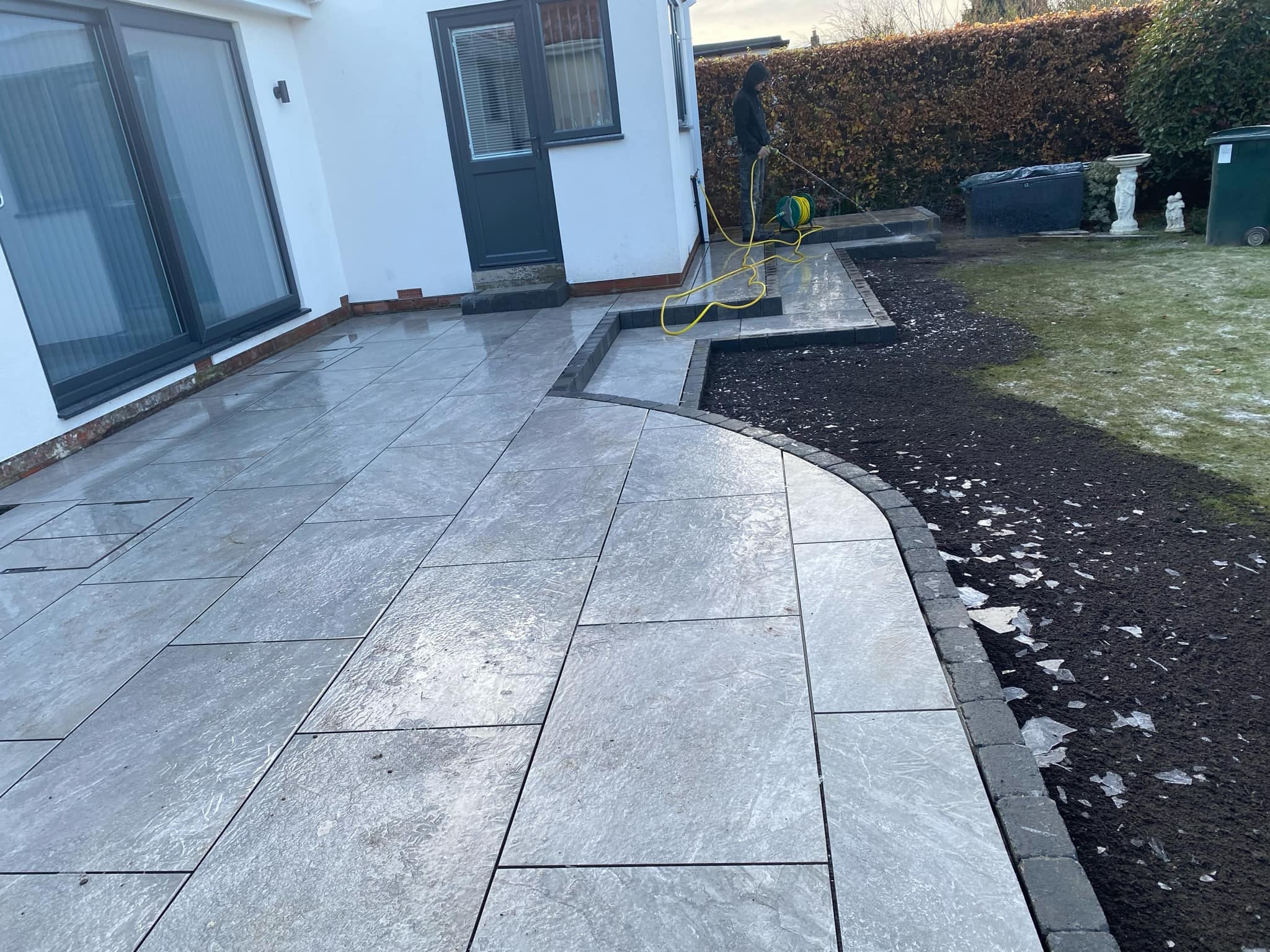
Reduced Property Value
A useful patio can appeal to a buyer, while visible defects may prompt questions about repairs. That does not establish a particular increase or reduction in the property’s value. Treat resale as a property-specific question and judge the work first on its condition, usability and agreed scope.
Where a survey identifies movement or drainage defects, price the appropriate remedy rather than guessing at a resale penalty. A clear explanation of what needs fixing is more useful than a promise that any new paving will pay for itself.
Frequent Repairs and Ongoing Maintenance
Low-quality installation work often leads to an ongoing cycle of patch-up repairs. From re-levelling sunken areas to replacing cracked slabs, the need for constant maintenance becomes a time-consuming and costly burden.
Sealing is not required for every patio. The relevant questions are whether the paving and jointing suit the setting, whether installation follows the selected system, and what aftercare the supplier recommends. A sealer cannot compensate for unstable slabs or an unresolved rainfall route.
Limited Material Lifespan
Subpar installation often goes hand-in-hand with inferior material choices. Budget patios may use lower-grade concrete, thin slabs, or discount pavers that aren’t designed to last. These materials may initially look acceptable but degrade quickly under regular use and exposure.
An unsuitable laying system or a poorly prepared supporting layer can leave slabs unstable. Establish the cause before paying for a coating, new jointing or replacement units. Correcting the visible finish without addressing movement underneath can lead to another repair.

Non-Compliance with Building Standards
Planning and building requirements depend on the property and proposal, including changes to levels, drainage and any associated structures. Confirm what applies to the actual work. A contractor’s quotation is not evidence that every necessary permission or consent has been obtained.
Unqualified installers might not follow these regulations, leaving homeowners liable for correcting the work later. Whether it’s having to redo parts of the patio or dealing with water run-off complaints from neighbours, the hidden legal and financial implications can be considerable.
Loss of Enjoyment and Functionality
A patio should serve as a welcoming space to relax, entertain, or dine outdoors. However, if it becomes a constant source of frustration—due to puddles, cracks, or uneven seating areas—it fails to serve its intended purpose.
Instead of enhancing your lifestyle, a poorly installed patio becomes a daily annoyance. From shifting furniture to navigating unstable paving, the inconvenience can completely undermine your investment and enjoyment of your outdoor space.
Avoiding These Costs with Professional Installation
Many of the issues mentioned above stem from one root cause: cutting corners on quality. The truth is that a properly installed patio, using the right materials and techniques, not only looks better but saves money over time. When installed by experienced professionals, patios are more durable, weather-resistant, and compliant with regulations.
Reliable installers take time to plan the layout, ensure proper drainage, and use proven construction methods that result in long-term stability. They also provide aftercare advice and sometimes guarantees—giving you confidence that the job has been done right.
Secure Your Investment with Trusted Installation Experts
A useful quotation makes the scope visible. Compare removal and disposal, excavation, supporting layers, paving, bedding, jointing, edges, drainage and the way the patio meets the house and garden. Clarify exclusions and agree how unexpected work will be priced before it starts.
M&C Paving Northeast offers expert patio installations tailored to the needs of local homeowners. With a reputation for craftsmanship, durability, and attention to detail, their team ensures every project meets the highest standards from the ground up. For a patio that adds genuine value and beauty to your home, trust the professionals who understand what matters most.
Contact M&C Paving Northeast today for a free consultation and get your project started with a team you can rely on.
For other connected garden work, see our North Shields services.
For the related installation options, see our patio installation service information.
For the wider options, see our Patio Installation page. The right specification depends on your property and the work agreed at survey.
Ready to discuss your own project? Contact M&C Paving Northeast to arrange a free site visit and quote.
Frequently asked questions
What should a patio quotation include?
Look for the agreed area and paving product, removal and disposal, excavation, supporting layers, bedding, jointing, edges and drainage. Steps, covers and connections to the house or lawn should be identified too.
Check access arrangements, exclusions and the process for variations. A total becomes easier to compare when you can see which jobs it buys and which remain outside the quoted work.
Is the cheapest patio quote always a bad choice?
No. A lower price can be reasonable, but compare the scope before judging value. One quotation may reuse suitable existing construction while another allows for a full rebuild. Ask what supports each approach and whether the same paving and finishing details are included.
The useful question is what work is proposed for your garden, rather than whether a price is high or low in isolation.
Can I save money by keeping the old patio base?
Sometimes, where an assessment finds it suitable for the new paving and intended use. Existing levels, stability and drainage matter as well as its visible condition. Ask how the retained construction has been assessed and which uncertainties remain.
Compare that proposal with reconstruction on clear assumptions. Covering recurring movement may postpone the repair bill rather than remove the need for the work.
Will a new patio increase the value of my house?
A useful outdoor space may appeal to buyers, but there is no guaranteed return from choosing a particular slab or paying for an installation. Condition, layout and the wider property all matter.
If resale is the main reason for the project, seek property-specific advice. For the quotation itself, focus on the work you need, the budget and how the finished space will be used.
What if extra work is found after excavation?
The quotation should explain how unexpected findings and variations are handled. Ask for the reason, proposed work, price and any timing change before the affected work proceeds. Photographs can help explain what has been found.
Agree the change in writing so both parties understand it. A clearly described variation is easier to assess than a larger invoice arriving after an unpriced decision has already been made.
FROM IDEAS TO YOUR OUTDOOR SPACE
Ready to take the next step?
Talk to M&C about the work you have in mind.
Adding a patio is one of the most effective ways to enhance outdoor living space, boost kerb appeal, and increase the value of your property. However, the benefits depend heavily on the quality of the installation. While cutting corners might seem like a budget-friendly move, the hidden costs of poor patio installation often outweigh any initial savings. For homeowners in the North East, understanding what you’re really paying for can help avoid costly mistakes.
Upfront Savings, Long-Term Losses
Saving money is a natural priority, but choosing the lowest quote for patio installation can lead to problems that cost significantly more in the long run. Inexperienced contractors may use inferior materials, skip crucial groundwork steps, or rush the installation process to cut costs.
The result? A patio that looks fine at first glance but quickly begins to show signs of wear, misalignment, or instability. Repairs, replacements, and ongoing maintenance soon start to add up—turning your initial ‘saving’ into a financial drain.
Structural Failures and Safety Risks
One of the most common issues with poor patio installation is structural failure. Uneven paving, shifting slabs, or sunken sections often stem from inadequate ground preparation or poor workmanship. These problems are not just cosmetic—they pose real safety risks.
Loose or unstable surfaces can cause trips and falls, particularly for children or older family members. And if the patio is attached to a building, structural issues can even lead to foundational damage or water ingress into adjacent indoor spaces.
Drainage Problems and Water Damage
A properly installed patio should include a well-considered drainage plan. Without this, water can collect in low areas or run off toward your property, leading to water damage, erosion, or mould growth.
Patios with incorrect slope, missing drainage channels, or poorly compacted sub-bases often suffer from pooling, which compromises the patio’s integrity and can also affect surrounding garden areas. In regions like the North East, where heavy rainfall is common, these issues can escalate rapidly.
Reduced Property Value
Whilst a well-designed patio can be a selling point, a poorly installed one has the opposite effect. Potential buyers often view signs of patio damage or poor workmanship as a red flag for deeper property issues, especially when they start to consider the poor patio installation costs they might have to cover after purchase.
Cracked surfaces, poor drainage, or visible subsidence can suggest neglect or substandard improvements, lowering perceived property value. Even if you’re not planning to sell immediately, a bad patio job could become an obstacle when it comes time to move on.
Frequent Repairs and Ongoing Maintenance
Low-quality installation work often leads to an ongoing cycle of patch-up repairs. From re-levelling sunken areas to replacing cracked slabs, the need for constant maintenance becomes a time-consuming and costly burden.
Proper sealing may also be skipped during poor installations, leaving surfaces exposed to the elements. In the North East’s variable climate, this can accelerate the rate of deterioration, resulting in more frequent cleaning, moss removal, or staining—all of which incur further costs.
Limited Material Lifespan
Subpar installation often goes hand-in-hand with inferior material choices. Budget patios may use lower-grade concrete, thin slabs, or discount pavers that aren’t designed to last. These materials may initially look acceptable but degrade quickly under regular use and exposure.
Poor sealing or incorrect bedding can also allow water to seep into porous materials, causing cracks during freezing conditions. This dramatically reduces the patio’s lifespan, forcing premature replacement far earlier than expected.
Non-Compliance with Building Standards
In some cases, poor installation doesn’t just result in inconvenience—it can break the rules. Many local councils have guidelines or building regulations relating to garden levels, drainage, or environmental impact.
Unqualified installers might not follow these regulations, leaving homeowners liable for correcting the work later. Whether it’s having to redo parts of the patio or dealing with water run-off complaints from neighbours, the hidden legal and financial implications can be considerable.
Loss of Enjoyment and Functionality
A patio should serve as a welcoming space to relax, entertain, or dine outdoors. However, if it becomes a constant source of frustration—due to puddles, cracks, or uneven seating areas—it fails to serve its intended purpose.
Instead of enhancing your lifestyle, a poorly installed patio becomes a daily annoyance. From shifting furniture to navigating unstable paving, the inconvenience can completely undermine your investment and enjoyment of your outdoor space.
Avoiding These Costs with Professional Installation
Many of the issues mentioned above stem from one root cause: cutting corners on quality. The truth is that a properly installed patio, using the right materials and techniques, not only looks better but saves money over time. When installed by experienced professionals, patios are more durable, weather-resistant, and compliant with regulations.
Reliable installers take time to plan the layout, ensure proper drainage, and use proven construction methods that result in long-term stability. They also provide aftercare advice and sometimes guarantees—giving you confidence that the job has been done right.
Secure Your Investment with Trusted Installation Experts
Choosing quality over shortcuts is always the smarter option when it comes to patio installation. The hidden costs of poor workmanship—whether in repairs, lost value, or reduced enjoyment—can quickly turn your dream garden into a regret.
M&C Paving Northeast offers expert patio installations tailored to the needs of local homeowners. With a reputation for craftsmanship, durability, and attention to detail, their team ensures every project meets the highest standards from the ground up. For a patio that adds genuine value and beauty to your home, trust the professionals who understand what matters most.
Contact M&C Paving Northeast today for a free consultation and get your project started with a team you can rely on.


