Block Paving Borders That Make Small Driveways Work Harder
For homeowners comparing block paving driveways North East wide, borders are more than a decorative trim. They shape the driveway, protect the edges, guide the eye, and help the surface work better under daily use.
On a small frontage, that detail can turn a plain parking spot into a sharper, more practical entrance.
A good border is like the hem on a well-made coat. It may look simple, but without it, the whole thing starts to lose shape.
Block Paving Driveways North East: Why Borders Matter
A small driveway usually has limited room for turning, bin access, foot traffic, and parked cars. Borders help define those areas without adding clutter.
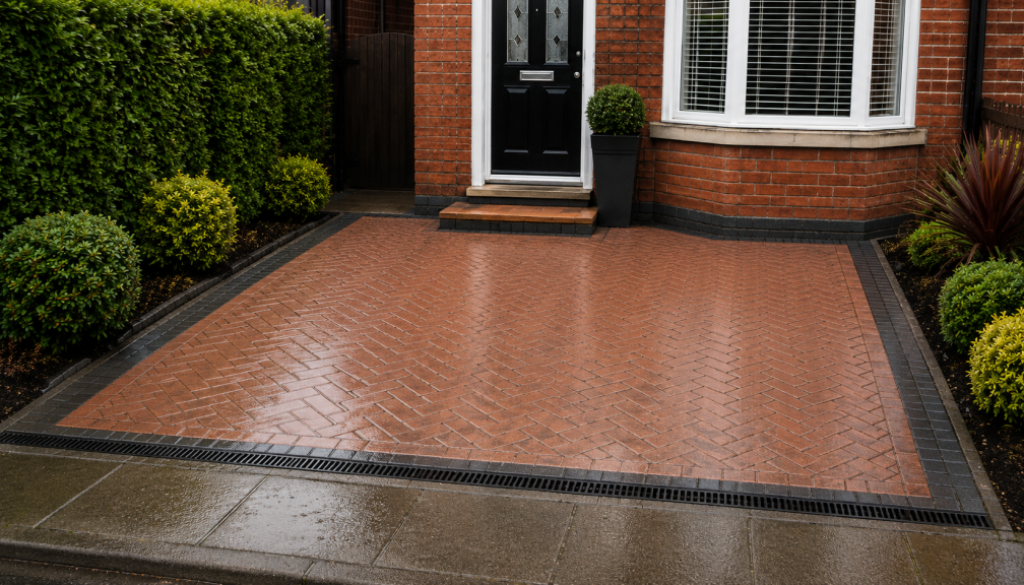
Block paving borders can frame the main surface, separate the driveway from planting areas, and give tyres a clearer edge to follow. They also make the layout feel more intentional, especially on compact North East properties with narrow front gardens, low walls, steps, or shared boundaries.
A border can help with:
- Clear parking lines
- Stronger driveway edges
- Neater transitions to paths
- Cleaner joins beside lawns or gravel
- Better visual shape
- A more finished front entrance
Make Parking Feel Less Cramped
Small driveways often fail because the layout ignores how people actually park. A car does not simply sit on a surface. It needs enough space to turn in, open doors, avoid walls, and move past steps or bins.
Block paving borders can help guide this movement. A darker edge can show where the parking bay begins and ends.
A contrasting block line can separate the car space from a walking route. A curved border can soften a tight turn and stop the driveway looking boxy.
Use Borders to Frame the Driveway
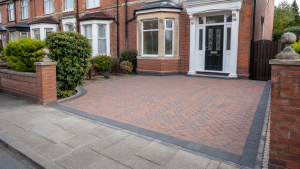
A driveway border can make a small frontage look more balanced. It works like a picture frame, holding the surface together and drawing attention to the clean shape of the entrance.
The main block colour can stay simple, while the border adds definition. Grey blocks with a charcoal edge can look smart and modern. Warm-toned blocks with a darker border can suit red-brick homes. A double border can add detail without overwhelming the space.
The goal is control. Too many colours or patterns can make a small driveway feel busy. A clear border gives structure while keeping the overall look tidy.
Good design choices include:
- One main block colour
- One border colour
- Simple patterns for compact areas
- Clean edges around walls and paths
- Neat joins near steps and doors
Protect Edges From Daily Wear
Driveway edges take a lot of pressure. Tyres turn near them, feet cross them, bins roll over them, and water collects beside them. On a small driveway, that wear is concentrated into fewer square metres.
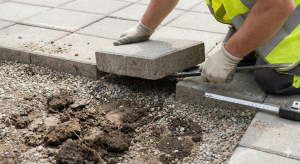
A proper block paving border helps hold the surface in place. It supports the outer edge, reduces movement, and keeps the blocks from spreading into nearby soil, gravel, or lawn.
This is especially important where the driveway meets:
- A garden bed
- A public pavement
- A path
- A wall or fence
- A dropped kerb
- A lawn edge
If the edge is weak, the rest of the surface can start to move. First, one corner dips. Then a few blocks loosen. Then weeds and water start getting into the joints. The repair grows from a small edge problem into a bigger surface issue.
M&C Paving Northeast builds driveways with preparation, levels, and strong edge detail in mind, so the finished surface has proper support from the base up.
Plan Drainage Before the Pattern
Borders can help guide water movement when they are planned with the right levels. They can frame drainage channels, separate paved areas from planting, and help define the fall of the driveway.
Before choosing a pattern, the driveway should be checked for:
- Where rainwater currently sits
- How the surface should fall
- Whether drainage channels are needed
- How the driveway meets the pavement
- Whether water moves away from the property
Link Borders With Paths, Steps, and Kerbs
A small driveway rarely sits alone. It usually has to meet a front path, doorstep, wall, gate, pavement, or dropped kerb. Borders can make those joins cleaner and safer.
A neat block edge beside a step can make the entrance look finished. A border around a path can show where people should walk. A clean join near a dropped kerb can make the driveway feel planned from road to door.
This is useful for North East homes where front gardens have been adapted over time. One area may be old concrete, another may be loose gravel, and another may have tired slabs. Block paving borders can bring those pieces together.
M&C Paving Northeast also works with dropped kerbs, driveways, patios, fencing, and landscaping, which helps when the front of the property needs more than one surface sorting.
Make a Small Driveway Feel Finished
Block paving borders can give a small driveway better shape, better strength, and a cleaner daily layout. They help with parking, protect the edges, support drainage planning, and make the front of the home look more complete.
The best results come from proper groundwork, clear levels, strong edging, and a design that suits the property. A small driveway needs careful planning because there is no spare space to hide poor choices.
If your driveway feels cramped, tired, or unfinished, M&C Paving Northeast can assess the space and explain the best block paving options for your home.
Call our team to book a local quote and make your small driveway work harder.
FAQs
For all your paving and landscaping services…
Call us today – 0191 743 2048