What to Check Before Replacing an Old Patio in Blyth
An old patio can start with small issues: one loose slab, a puddle after rain, a cracked corner, or moss that keeps coming back. Over time, those small problems can make the garden feel less safe, less tidy, and harder to use.
Before replacing an old patio in Blyth, it helps to check what has actually failed. Some patios only need cleaning or minor repair. Others have deeper problems with the base, drainage, levels, or layout. A clear check now can help you avoid repeating the same issues with the new patio.
Look For Uneven or Sinking Patio Areas
Uneven paving is one of the clearest signs that an old patio needs attention. A patio should feel steady underfoot. If the slabs dip, rock, or sit at different heights, the surface may already be moving.
Check for:
- Sunken slabs in the middle of the patio
- Raised edges near doors, paths, or steps
- Low areas where water collects
- Uneven transitions into the lawn
- Wobbly slabs under furniture
- Gaps that keep opening between paving
Sinking areas are often linked to the base underneath the patio. If the ground was poorly prepared, weak, or uneven, the paving can start to settle. Once that happens, relaying one or two slabs may only improve the problem for a short time.
Trip hazards are also worth taking seriously. Even a small raised edge can become a problem near a back door, side path, or seating area.
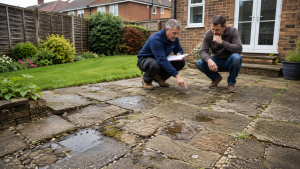
Check If Cracks Are Getting Worse
Cracks do not always mean a full patio replacement is needed. Older slabs can develop small marks from weather, age, or general wear. The bigger concern is when cracks spread, widen, or keep returning after repairs.
Look closely at:
- Cracks running through several slabs
- Broken edges around steps or borders
- Cracks beside joints or drainage areas
- Repaired sections that have opened again
- Concrete areas that have split or lifted
These signs can point to movement underneath the patio. If the base has shifted, filling the cracks may only hide the issue for a short time.
A few damaged slabs may be simple to replace. However, if cracked areas appear across the patio, a full replacement may give you a better chance to rebuild the space properly.
Watch For Standing Water After Rain
Drainage should be checked before any old patio is replaced. After rain, water should move away from the house and across the patio in a controlled way. It should not sit in puddles for hours.
Standing water can cause several problems:
- Slippery paving
- Moss and algae growth
- Staining
- Damp corners near walls
- Water running towards the house
- Faster wear around joints and edges
Poor drainage is often caused by incorrect levels. A patio needs a slight fall so rainwater moves in the right direction. If the surface is too flat or slopes the wrong way, water will sit where it should not.
Drainage channels may also be needed near doors, steps, walls, or low garden areas. If the old patio already has pooling water, the new design should solve that issue before the surface is laid.
Test Loose Slabs, Edges, and Joints
Loose slabs can make a patio feel unsafe and unfinished. If a slab rocks when you step on it, the bedding underneath may have failed. If several slabs move, the problem may be wider than one loose paving stone.
Walk across the patio and check:
- Does any slab move underfoot?
- Are the joints crumbling?
- Are weeds growing through wide gaps?
- Are the edges breaking into the lawn?
- Are border sections loose or missing?
Edges matter because they help hold the patio together. Once the edges weaken, the paving can spread, dip, or break away. This is common where patios meet lawns, soil, flower beds, or older paths.
If loose slabs keep returning after repair, the issue may be underneath rather than on the surface.
Look at the Patio Base
The patio surface is only the part you can see. The base underneath is what helps the patio stay firm, level, and reliable.
A weak base can lead to:
- Sinking slabs
- Cracks
- Loose paving
- Poor drainage
- Uneven furniture placement
- Repeated repairs
Old patios may have been laid over weak ground, old concrete, uneven soil, or a poorly compacted sub-base. If those problems are left in place, a new surface can start to fail again.
A proper patio replacement may involve removing the old paving, checking the sub-base, improving drainage, and preparing the ground correctly before the new material is installed.
Ask Whether the Layout Still Works
Replacing an old patio is also a chance to improve how the garden works. Some patios fail because of age. Others simply no longer suit the home.
Ask these questions before choosing the same layout again:
- Is the patio large enough for your furniture?
- Does it connect well to the back door?
- Are the steps comfortable and safe?
- Is there enough space to walk around chairs?
- Does the patio link properly to the lawn or path?
- Is there room for planters, storage, or garden features?
A patio can look tidy and still feel awkward. If the shape is too narrow, too far from the house, or poorly connected to the rest of the garden, replacement gives you the chance to make the space more practical.
Consider Whether Cleaning Or Repairs Are Enough
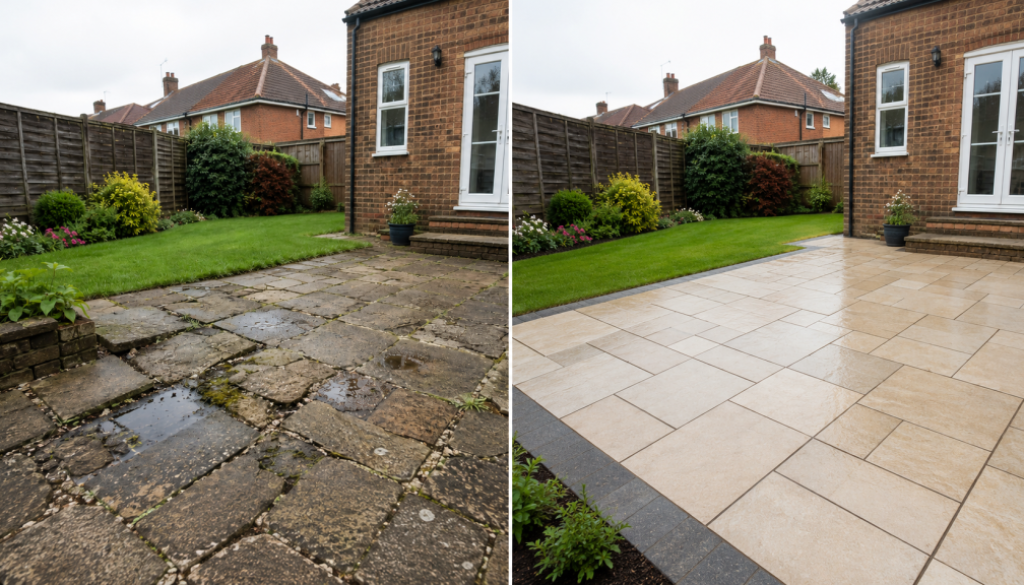
Full replacement is not always the first answer. Some patios can be improved with cleaning, repointing, resealing, or replacing a few damaged slabs.
A repair may be enough when:
- Only one or two slabs are loose
- The patio still drains well
- The base feels stable
- The damage is mostly cosmetic
- The layout still works for the garden
Replacement is usually more practical when:
- Several areas have sunk
- Water pools after rain
- Cracks keep returning
- Edges are breaking away
- The patio feels unsafe
- Repairs no longer last
This check helps you avoid spending money on short-term fixes when the patio really needs to be rebuilt.

Choose Better Materials For The New Patio
If replacement is the right choice, material selection matters. The best patio material should suit the house, garden, budget, and maintenance level you want.
Porcelain paving works well for a clean, modern finish. It is often chosen by homeowners who want a tidy surface that is easier to maintain.
Natural sandstone gives a softer and more traditional garden look. Its texture and colour variation can suit many Blyth homes, especially where the patio connects with planting or lawn areas.
Limestone paving can create a deeper natural finish. It can work well where homeowners want a more understated look.
Block paving is useful for shaped patios, borders, curves, and patterns. It can also help tie the patio into paths, steps, or driveway details.
Gravel or decorative stone can suit informal garden areas, but it may be less practical under dining furniture or seating that needs a stable surface.
Plan the Finishing Details Before Work Starts
The finishing details can make a new patio look complete. They also affect how easy the patio is to use.
Plan these details early:
- Edging
- Steps
- Drainage channels
- Borders
- Raised beds
- Path connections
- Level changes
- How the patio meets the house
Good edging helps hold the shape of the patio. Steps make level changes safer. Borders and planting can soften the hard surface and help the patio feel part of the garden.
These details are harder to add neatly once the patio is finished, so it is better to include them in the plan from the start.
Speak to Local Patio Contractors First
If your old patio has loose slabs, poor drainage, cracked areas, or uneven levels, local patio contractors in Blyth can check the groundwork, layout, material options, and finishing details before replacement begins.
A professional contractor from M&C Paving Northeast can help identify why the old patio failed and what should change in the new design, from the sub-base and drainage to the layout and material choice.
Final Thoughts
Replacing an old patio should start with a clear look at the problems you already have. Cracks, loose slabs, standing water, sinking areas, and awkward access all give useful clues about what needs to change.
A new patio can make a Blyth garden feel safer, cleaner, and easier to enjoy. When the base, drainage, layout, and finishing details are planned properly, the finished patio can serve the home well for years.
FAQs
For all your paving and landscaping services…
Call us today – 0191 743 2048