Signs Your Driveway Needs Winter Repair Before It Gets Worse
Winter exposes weaknesses in driveways faster than any other season. Cold temperatures, excess moisture, and repeated freeze–thaw cycles place constant pressure on surfaces and base layers. What may look like minor wear at the start of winter can quickly develop into structural damage if ignored. Recognising early warning signs allows homeowners to act before repairs become more disruptive and expensive.
Small Cracks That Widen in Cold Weather
Hairline cracks often seem harmless, especially on tarmac or concrete driveways. During winter, however, these small openings allow moisture to penetrate beneath the surface.
As temperatures drop, trapped water freezes and expands, forcing cracks to widen. Each thaw allows more moisture to enter, accelerating deterioration. By the time spring arrives, what began as a surface crack may have spread deeper into the structure, weakening the driveway’s load-bearing ability.
Cracks that grow wider, branch out, or appear in clusters are a clear signal that winter repair should not be delayed.
Uneven Surfaces and Subtle Sinking
A driveway does not need to collapse visibly to indicate a problem. Slight dips, sloping areas, or uneven sections often point to sub-base movement beneath the surface.
Winter rain and melting frost saturate the ground below. If the base layers were poorly compacted or have been eroded over time, the weight of vehicles can cause sections to sink. This movement tends to worsen during winter when the ground repeatedly freezes and softens.
Early signs include:
- One wheel sitting lower than the other when parked
- Paving blocks that rock underfoot
- Sections where water consistently pools
Addressing these changes early helps prevent widespread subsidence.
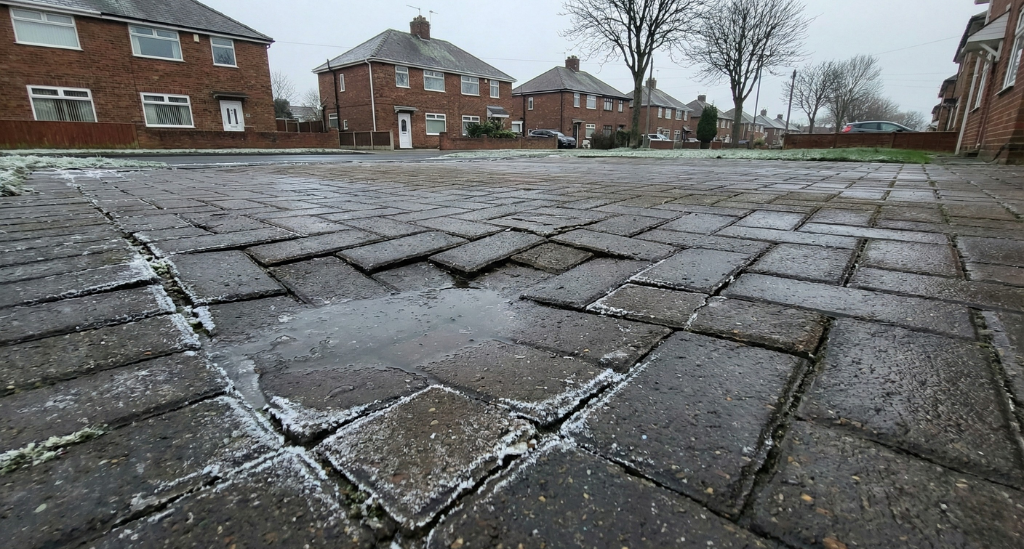
Standing Water and Persistent Puddles
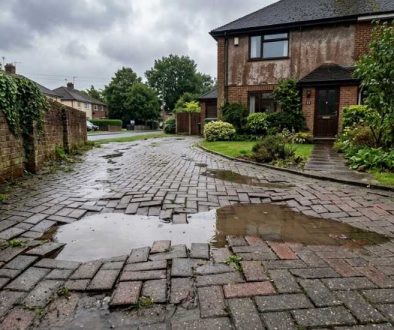
Water should drain away from a driveway shortly after rainfall. When puddles remain long after rain has stopped, drainage is likely compromised.
During winter, standing water becomes particularly damaging. Repeated freezing turns puddles into expanding ice patches that stress the surface material and surrounding joints. This process often leads to cracking, surface lifting, and edge failure.
Persistent pooling usually indicates:
- Inadequate driveway gradients
- Blocked or failing drainage channels
- Compacted or washed-out sub-base layers
Ignoring water retention during winter allows freeze–thaw damage to intensify.
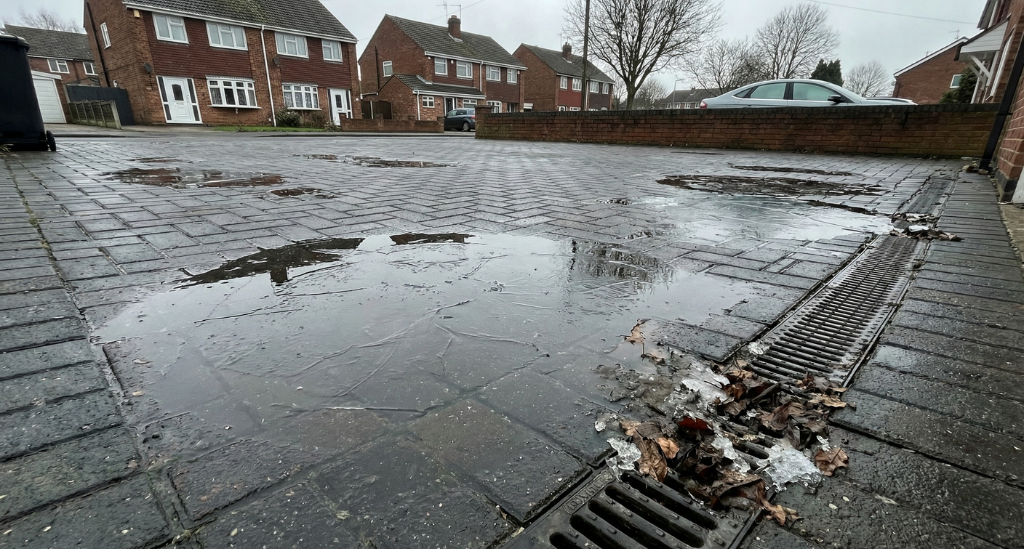
Loose or Moving Block Paving
Block paving relies on tight joints and a stable base to remain level. Winter conditions quickly expose weaknesses in this system.
Moisture entering joints freezes and pushes blocks apart. As jointing sand washes out during thawing, blocks lose lateral support. This results in movement underfoot, uneven lines, and visible gaps.
Signs that block paving needs winter repair include:
- Gaps widening between blocks
- Blocks lifting or shifting after frost
- Uneven edges forming near borders
- Increased weed growth once temperatures rise
These issues rarely resolve on their own and tend to spread if left untreated.
Soft Spots or Crumbling Tarmac
Tarmac surfaces often show winter damage through texture changes. Areas that feel softer underfoot or appear rougher than surrounding sections may be failing beneath the surface.
Water penetration followed by freezing weakens the bond between tarmac layers. When vehicles pass over these weakened spots, the surface begins to deform. This can lead to crumbling edges, shallow potholes, or widespread surface breakdown.
Soft spots are a strong indicator that the base below is saturated and unstable. Winter repairs at this stage are far less extensive than full resurfacing later.
Surface Flaking and Scaling on Concrete
Concrete driveways can suffer visible surface damage during winter, particularly when moisture and de-icing salts are involved.
Water enters fine cracks and freezes, causing the top layer to flake or scale away. This not only affects appearance but also reduces surface strength and traction. As damage progresses, deeper cracks and slab movement often follow.
Concrete showing:
- Flaking patches
- Powdery residue on the surface
- Cracks spreading across slabs
should be assessed promptly to prevent further deterioration.
Ice Forming in the Same Areas Repeatedly
Ice patterns provide useful clues about underlying problems. When ice forms repeatedly in the same locations, it often indicates trapped moisture or poor drainage beneath the surface.
These frozen areas expand and contract throughout winter, stressing materials and joints. Over time, the surrounding surface weakens, leading to cracks or movement even after the ice melts.
Recurring ice patches near entrances, slopes, or drainage points suggest the need for corrective work before conditions worsen.
Edges Breaking Down or Spreading Apart
Driveway edges are particularly vulnerable during winter. Without proper edge restraints, surfaces can spread laterally as the ground freezes and thaws.
Edge damage often begins subtly, with slight spreading or cracking along borders. As winter progresses, unsupported edges may crumble or sink, allowing further water ingress.
This is especially common where:
- Driveways meet soft landscaping
- Edging was poorly installed
- Heavy vehicles frequently use the surface
Early intervention helps preserve the integrity of the entire driveway.
Why Winter Repairs Are Often Overlooked
Many homeowners assume driveway repairs should wait until warmer months. In reality, winter is when damage accelerates most rapidly.
Cold weather hides early warning signs under frost or snow. Reduced outdoor use also means problems go unnoticed until spring reveals more severe deterioration. By then, repairs may require deeper excavation and higher costs.
Addressing issues as soon as they appear helps prevent:
- Base layer failure
- Widespread surface collapse
- Drainage-related erosion
Winter repairs are often smaller and more targeted when handled promptly.
When Professional Assessment Becomes Essential
While some surface issues appear cosmetic, winter conditions often reveal deeper structural problems. Professional assessment identifies whether damage is limited to the surface or involves the underlying base and drainage.
Experienced installers can determine:
- Whether repairs or partial replacement are sufficient
- How drainage improvements can prevent recurrence
- Which materials perform best under winter conditions
Timely expert input prevents unnecessary expense and repeat damage.
Acting Early Protects Your Driveway and Your Property
Winter does not cause driveway damage overnight. It exposes existing weaknesses and accelerates deterioration through repeated freeze–thaw cycles and moisture saturation. Cracks, movement, pooling water, and surface breakdown are all signs that repairs should not be postponed.
Addressing these issues early preserves safety, appearance, and long-term value. M&C Paving Northeast provides professional winter driveway repairs, drainage solutions, and reinstatement work tailored to North East conditions. If your driveway is showing signs of winter stress, contact M&C Paving Northeast to prevent small issues from becoming major repairs.