How to Plan a Patio That Works in Sunderland Gardens
A good patio should feel like a natural part of the garden, not just a paved area placed outside the back door.
For many homeowners, patio planning in Sunderland means thinking about more than the paving material. The layout, drainage, access, garden size, and long-term maintenance all affect how useful the finished space will be.
Sunderland homes vary from compact terraces to larger family properties, so the right patio design depends on the space you have and how you want to use it. A small garden may need a simple seating area with clean edges, while a larger garden may suit zones for dining, planting, and relaxing.
Before any slabs are laid, it helps to understand what makes a patio practical, durable, and easy to live with.
Start With How You Will Use The Patio
The best patio design starts with purpose. A patio used for outdoor dining will need a different layout from one designed for a quiet morning coffee or a low-maintenance seating area.
Think about how the space will be used most often. For example:
- A dining patio needs enough room for a table, chairs, and movement around the furniture.
- A family patio may need space for children, pets, and everyday foot traffic.
- A quiet seating area can be smaller but should feel comfortable and sheltered.
- A barbecue area needs practical access from the house and enough space around the cooking area.
It is easy to focus on the paving style first, but size and layout matter more at the planning stage. A beautiful patio can still feel awkward if chairs hit the wall, doors cannot open fully, or people have to step onto the lawn to move around the table.
For smaller Sunderland gardens, simple shapes often work best. A neat square or rectangular patio can make the space feel more ordered. Curved edges, contrasting borders, and mixed paving can work well, but too many features may make a compact garden feel busy.
Choose the Right Position in the Garden
Before choosing the patio position, look at the garden across the day. Notice where the sun falls, where the shade sits, and whether any part of the garden feels more private.
Some Sunderland gardens can feel exposed, especially in open or breezy areas, so shelter from fencing, walls, or planting may help the patio feel more comfortable.
You should also think about how the patio looks from inside the home. Since you may see it every day through the window, the layout should improve the view as well as the garden’s function.
Plan Drainage Before the Patio Is Laid
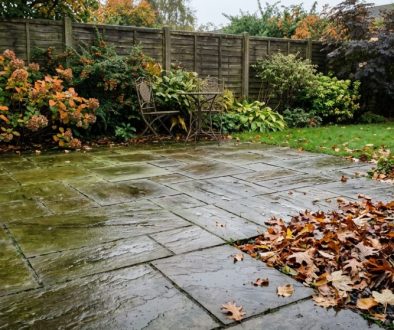
Drainage is one of the most important parts of patio planning in Sunderland. The North East gets plenty of wet weather, so water needs somewhere sensible to go. If drainage is ignored, the patio may collect puddles, become slippery, or send water towards the house.
A well-built patio should have the correct fall, which means the surface is laid at a slight angle so rainwater moves away from important areas. This is especially important near doors, walls, and thresholds.
Poor drainage can lead to:
- Standing water on the surface
- Algae growth in shaded areas
- Loose or uneven paving
- Damp areas near the house
- Water collecting in low corners of the garden
The base is just as important as the visible paving. If the ground is not prepared properly, the patio can settle, sink, or become uneven over time. In some gardens, drainage channels may be needed to guide water away safely.
This is one reason patio installation should not be judged by the finished surface alone. A patio may look good on day one, but the real test is how it handles rain, use, and seasonal changes.
Match Patio Materials to the Property
The right patio material should suit the home, the garden, and the level of maintenance you are comfortable with. There is no single best material for every Sunderland property.
Indian Sandstone
Indian sandstone is often chosen for traditional gardens because it has natural colour variation and texture. It can work well with brick homes, older properties, and gardens where a softer, more natural finish is preferred.
Porcelain
Porcelain is popular for modern patios because it has a clean, consistent appearance. It is often chosen by homeowners who want a smart, low-maintenance surface. It can suit newer homes or gardens with a more contemporary design.
Natural Stone
Natural stone can add character and depth to a garden. It works well where the aim is to create a patio that feels connected to planting, walls, and existing outdoor features.
Block Paving
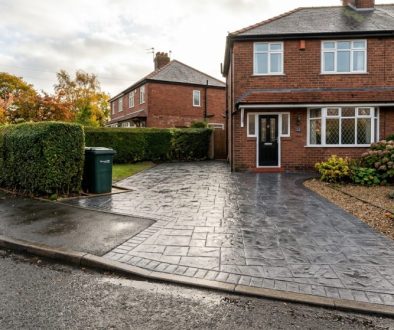
Block paving gives more flexibility with patterns, borders, and shapes. It can be useful when the patio needs to connect with paths, driveways, or other paved areas.
Concrete Slabs
Concrete slabs can be a practical choice for simple patios, especially where budget and function are priorities. The key is choosing a finish that suits the property rather than making the garden feel too plain.
Think About Size Before Choosing A Design
A patio should be large enough to use properly, but it should not overpower the garden. One common mistake is making the patio too big because it seems more practical. In reality, a large paved area can feel empty if there is not enough planting, edging, or furniture to soften it.
For dining areas, allow space behind the chairs so people can move comfortably. For a small seating area, a compact patio may be enough if the furniture is chosen carefully.
In narrow gardens, a simple patio shape can help keep the space balanced. In wider gardens, the patio may benefit from borders, raised beds, or a step down into the lawn to stop it feeling flat.
Use Edging and Steps to Make the Patio Feel Finished
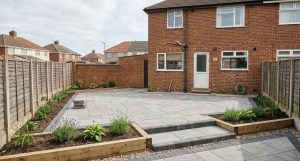
The details around the patio can make a big difference to the final result. Edging helps define the paved area and can make the patio look more complete. It can also help hold materials in place and create a cleaner transition between paving, lawn, gravel, or planting.
Steps may be needed if the garden has a level change. This is common in some properties where the back door, lawn, and garden area do not sit at the same height. Poorly planned steps can feel awkward or unsafe, so they should be included early in the design.
Useful finishing details can include:
- Block borders
- Raised beds
- Low retaining edges
- Gravel strips
- Matching paths
- Step transitions
- Planting around the patio edge
These features do not need to be complicated. Even a simple border can make a patio feel more intentional and connected to the rest of the garden.
Keep Maintenance in Mind From the Start
Every patio needs some level of care. The amount of maintenance depends on the material, garden position, shade, drainage, and how often the space is used.
Shaded patios may be more likely to develop algae, especially during damp months. Gardens with overhanging trees may need more regular sweeping. Lighter paving can brighten a small garden, but it may show marks more easily than darker tones.
Porcelain is often chosen for easier cleaning, while natural stone may need more care depending on the finish. Jointing is also important because poor joints can allow weeds to grow or water to sit between slabs.
Simple maintenance habits can help protect the patio:
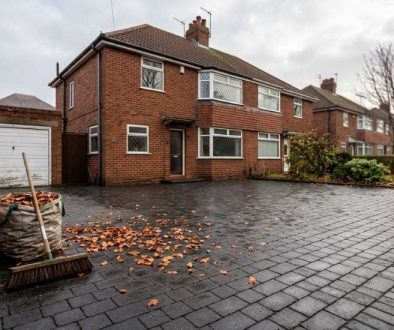
- Sweep leaves and debris regularly.
- Clean spills before they settle.
- Keep drainage channels clear.
- Remove weeds before they spread.
- Check for movement or loose areas after winter.
Planning for maintenance does not mean avoiding attractive materials. It simply means choosing a surface that suits your lifestyle.
When Should You Contact Patio Contractors In Sunderland?
Some homeowners know exactly what they want before speaking to a contractor. Others only know that the garden feels tired, uneven, or difficult to use. Both starting points are fine.
It is worth contacting a patio contractor when the garden has drainage problems, uneven ground, awkward levels, or limited access. Professional advice can also help when you are unsure which material will suit the property.
A contractor can look at the garden properly and advise on base preparation, water movement, layout, edging, and realistic costs. This is especially useful if the patio will sit close to the house or connect with steps, paths, or retaining features.
For homeowners ready to move from ideas to a proper quote, M&C Paving Northeast offers professional patio contractors in Sunderland who can help with design, groundwork, drainage, materials, and full installation.
If you are planning a new patio in Sunderland, speak to M&C Paving Northeast for practical advice, material guidance, and a professional installation that suits your garden.
FAQs
For all your paving and landscaping services…
Call us today – 0191 743 2048