How Freeze–Thaw Cycles Damage Driveways in Winter
Winter places unique stress on driveways across the North East. Repeated freezing nights followed by milder daytime temperatures create conditions that slowly weaken surfaces from the inside out. What begins as a barely visible crack or slight movement can develop into structural damage by the time spring arrives. Understanding how freeze–thaw cycles work helps homeowners spot risks early and avoid costly repairs later.
What Freeze–Thaw Cycles Actually Mean
Freeze–thaw cycles occur when moisture enters small gaps in a driveway surface, freezes as temperatures drop, then thaws as conditions warm again. This expansion and contraction happens repeatedly throughout winter, especially in regions where temperatures fluctuate around zero.
Water expands by roughly nine percent when it freezes. Inside cracks, joints, and pores, that expansion forces surrounding materials apart. When the ice melts, the space does not fully return to its original state. Over time, each cycle widens cracks, loosens blocks, and weakens the sub-base beneath the surface.
Why Winter Weather Accelerates Driveway Damage
Cold temperatures alone are not the main problem. It is the combination of moisture, freezing conditions, and traffic that accelerates deterioration. Rain, melting snow, and frost all introduce water into vulnerable areas of a driveway.
Once the surface structure is compromised, vehicle weight adds pressure to already weakened sections. Even light traffic can worsen cracking or cause sinking when the sub-base loses stability. This is why damage often becomes more noticeable during or immediately after winter.
How Block Paving Is Affected by Freeze–Thaw Cycles
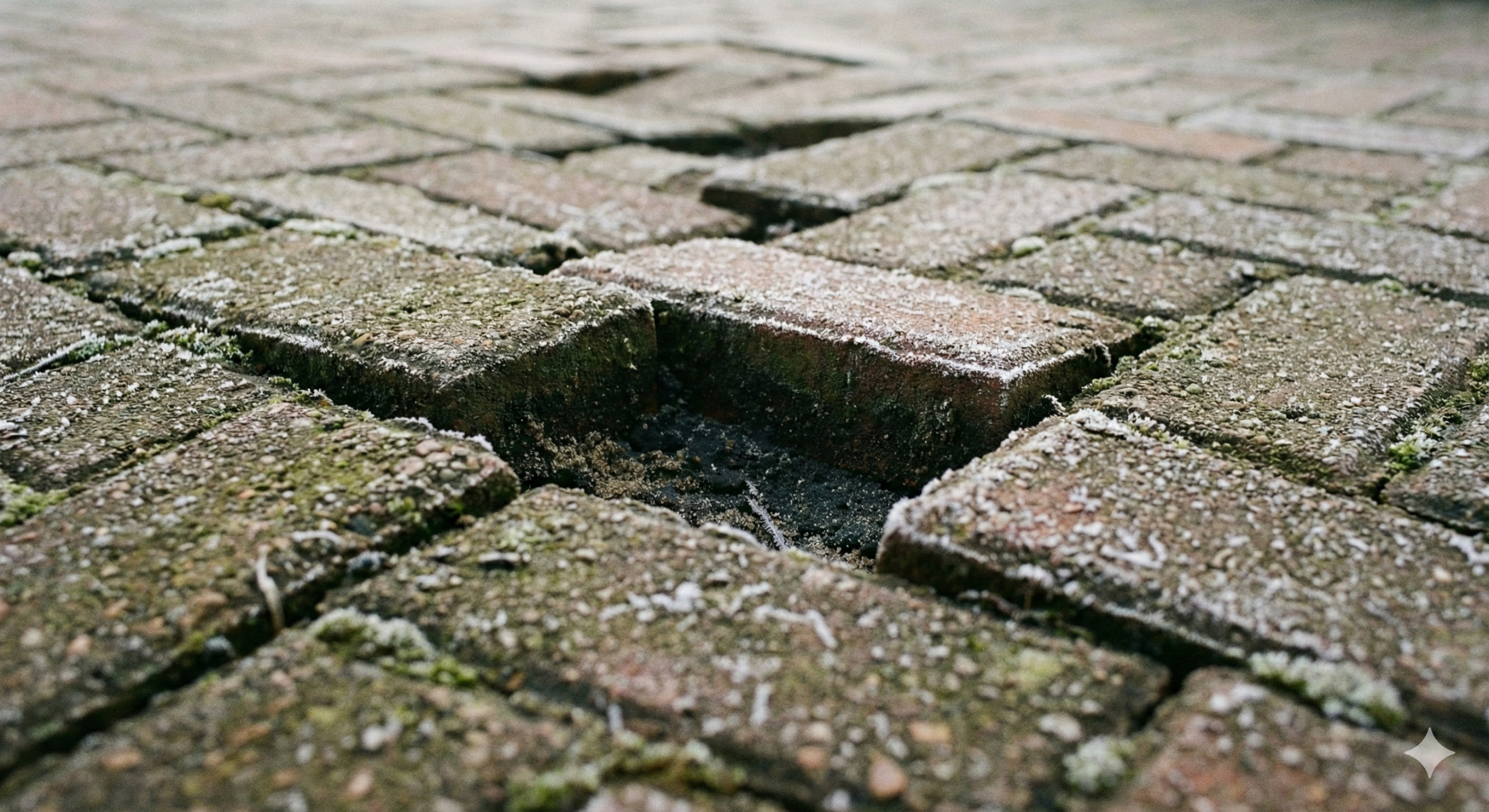
Block paving is durable, but it relies on jointing sand and a stable base to remain level. Freeze–thaw cycles disrupt both.
Moisture trapped between joints freezes and pushes blocks apart. As the sand loosens, blocks begin to shift, creating uneven surfaces and gaps. When thawing occurs, water drains into the base layers, washing out support material and causing sinking or rocking blocks.
Common winter-related issues with block paving include:
- Loose or uneven blocks
- Widening joints and sand loss
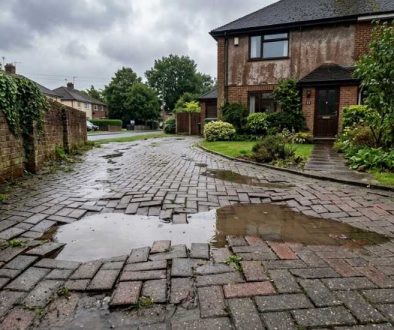
- Surface dips where water collects
- Increased weed growth once temperatures rise
Left unaddressed, these issues can spread across larger sections of the driveway.
The Impact on Tarmac Driveways
Tarmac is flexible compared to concrete, but it is still vulnerable to freeze–thaw damage when cracks appear. Small surface fractures allow water to penetrate below the surface.
As temperatures drop, trapped water freezes and expands, forcing cracks to widen. Repeated cycles weaken the bond between layers, leading to surface breakup, potholes, and edge crumbling. Once the base becomes saturated, the tarmac above loses support and starts to deform under weight.
Winter damage to tarmac often shows as:
- Spiderweb cracking
- Soft or sunken areas
- Potholes forming near edges or drains
- Surface fading combined with rough texture
These issues tend to worsen quickly if ignored through the colder months.
Concrete Driveways and Freeze–Thaw Stress
Concrete is strong but rigid, which makes it particularly sensitive to freeze–thaw cycles. Unlike flexible materials, concrete cannot absorb expansion well once cracking begins.
Water enters hairline cracks and freezes, exerting pressure that causes surface flaking or deeper fractures. De-icing salts can worsen this process by accelerating surface breakdown and increasing moisture penetration.
Typical winter-related concrete damage includes:
- Surface scaling or flaking
- Visible cracking across slabs
- Uneven slab movement
- Reduced traction due to surface wear
Once concrete slabs shift or crack significantly, repairs become more complex.
Drainage Problems That Make Freeze–Thaw Damage Worse
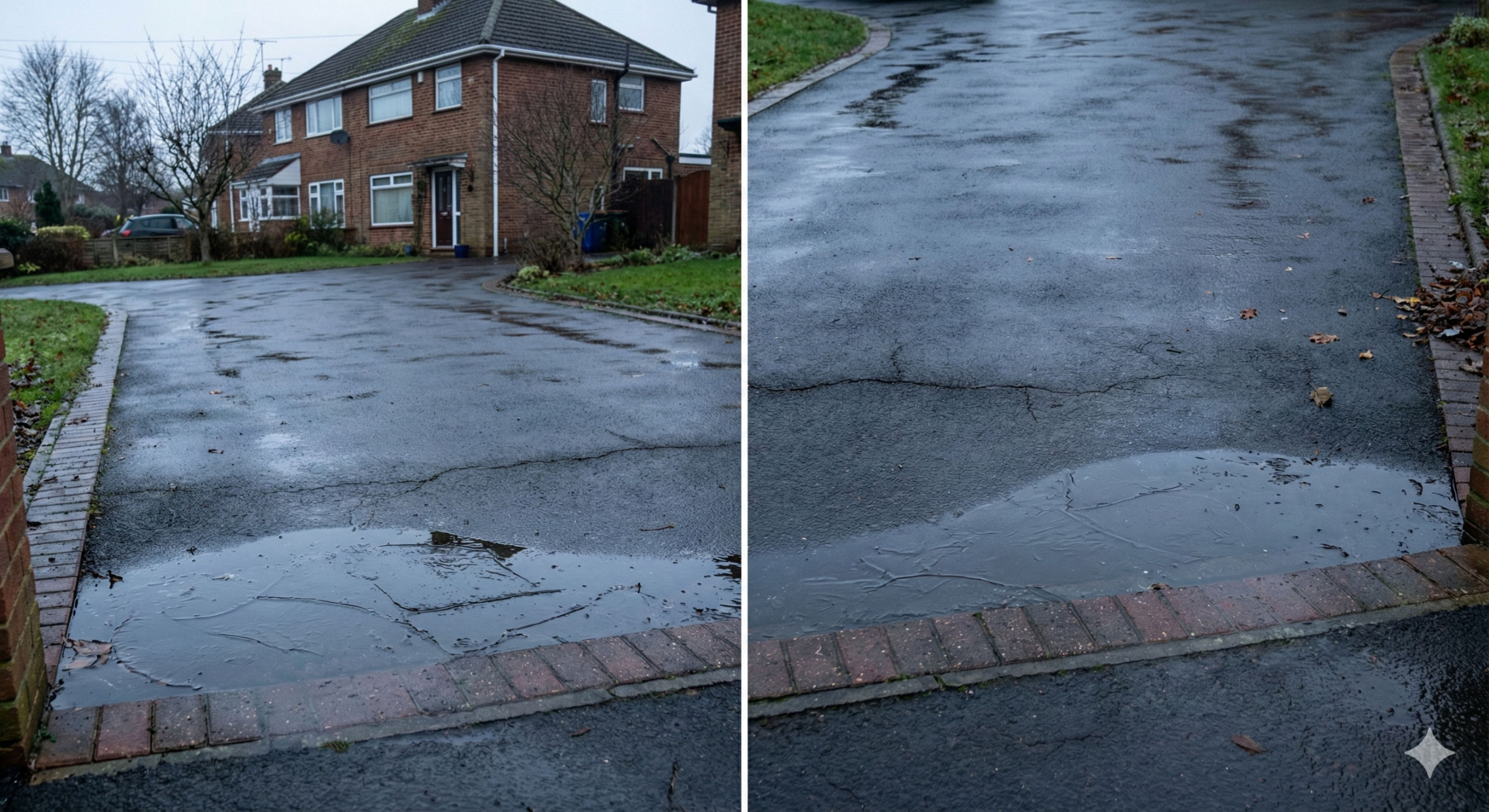
Poor drainage is one of the biggest contributors to winter driveway damage. When water cannot drain away efficiently, it sits on or beneath the surface, increasing exposure to freezing conditions.
Blocked gullies, incorrect gradients, or compacted sub-bases trap moisture where it does the most harm. Areas where water pools are often the first places to crack or sink during winter.
Signs drainage is contributing to freeze–thaw damage include:
- Persistent puddles after rain
- Ice forming repeatedly in the same areas
- Moss or algae growth along edges
- Saturated ground beside the driveway
Why Damage Often Goes Unnoticed Until Spring
Many homeowners do not realise their driveway has been compromised until warmer weather arrives. Snow cover, frost, and reduced outdoor use can hide early warning signs during winter.
When temperatures rise, weakened areas settle unevenly, cracks become more visible, and surface failures accelerate. By this stage, repairs may require more extensive groundwork than if the issue had been addressed earlier.
How Proper Installation Reduces Freeze–Thaw Damage
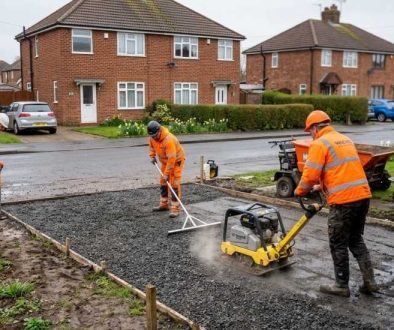
The best defence against winter damage is correct installation from the outset. A well-prepared sub-base, appropriate materials, and effective drainage all play critical roles in resisting freeze–thaw stress.
Professional installation ensures:
- Correct depth and compaction of base layers
- Proper gradients for water runoff
- Suitable jointing materials for winter conditions
- Strong edge restraints to prevent movement
These elements significantly improve winter performance.
Protecting Your Driveway Against Winter Damage
Freeze–thaw cycles are one of the most damaging forces driveways face in the North East. What starts as minor surface wear can quickly escalate into structural problems when moisture, freezing temperatures, and traffic combine. Understanding these risks allows homeowners to act before damage becomes extensive.
Professional inspection and timely repairs help preserve both safety and appearance. M&C Paving Northeast provides expert driveway repair, drainage solutions, and reinstatement work designed for harsh winter conditions.
If your driveway is showing signs of cracking, movement, or poor drainage, contact M&C Paving Northeast to protect your property before winter damage worsens.