Artificial Grass in Winter: Care Tips for a Year-Round Lawn
Winter changes the way every garden looks and feels. Natural lawns turn patchy, muddy, and dull. Pathways become slippery, and the soil underneath becomes heavy with moisture. Yet artificial grass stands out in winter for the opposite reasons — it stays green, clean, and usable even as temperatures drop.
Still, whilst artificial grass is low-maintenance, it isn’t no-maintenance. The colder months introduce challenges such as frost, leaf build-up, and reduced sunlight that can affect how the lawn looks and performs. A few simple habits can make sure your artificial grass stays fresh, bright, and comfortable to use throughout winter — without the mud, mess, or seasonal stress that natural turf brings.
Whether your garden is used by children, pets, or simply for relaxing, winter is the season when the benefits of artificial grass are most noticeable. This guide explains how to care for your lawn so it remains in its best condition all year.
How Artificial Grass Performs in Cold Weather
Artificial grass is designed to handle a range of weather conditions. Unlike natural turf that becomes waterlogged or dormant, synthetic fibres remain upright and resilient in winter.
The key advantage is drainage. Quality artificial grass systems include a permeable backing that allows water to pass through into the sub-base below. Even during heavy winter rain, this prevents surface pooling and keeps the lawn usable. The drainage layer also helps stop frost from clinging to the base for long periods.
Cold temperatures do make the fibres slightly firmer, but this effect is temporary and harmless. When temperatures rise again, the grass softens naturally. Unlike natural turf, it doesn’t develop bare patches, mud spots, or areas of die-back.
Another benefit is that artificial grass doesn’t rely on sunlight to stay green. As daylight hours shorten, natural grass struggles to photosynthesise, but artificial grass looks the same regardless of seasonal light changes.
Common Winter Problems and How to Handle Them
Although artificial grass handles winter well, certain seasonal issues can still appear. Fortunately, each one is easy to manage with simple care.
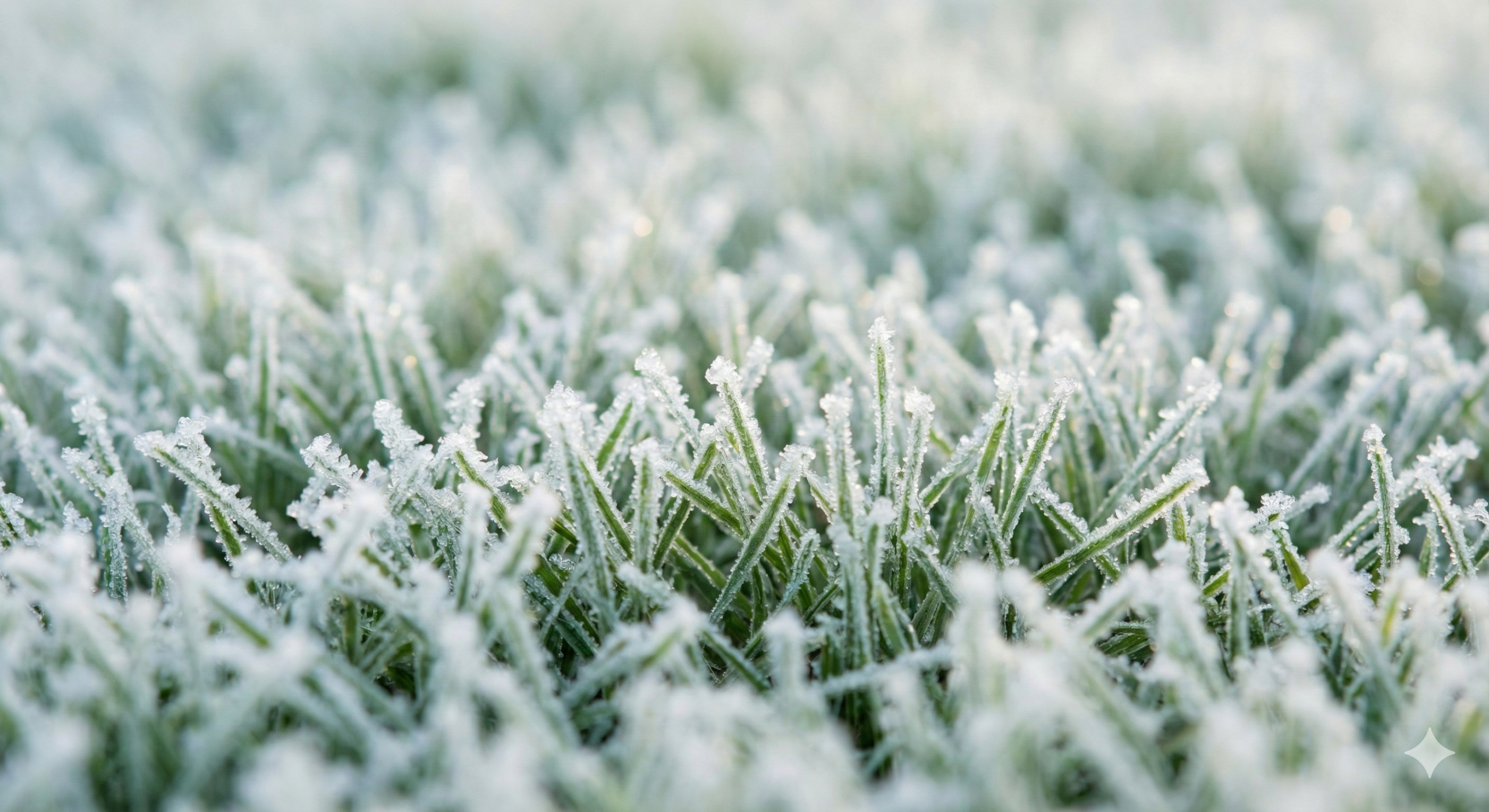
Frost is the most common. When the lawn freezes, the fibres stiffen and become less flexible. This is normal, but it’s best to avoid walking on the lawn until the frost thaws naturally. Pressure on frozen fibres can temporarily flatten them, although brushing restores them once the ice melts.
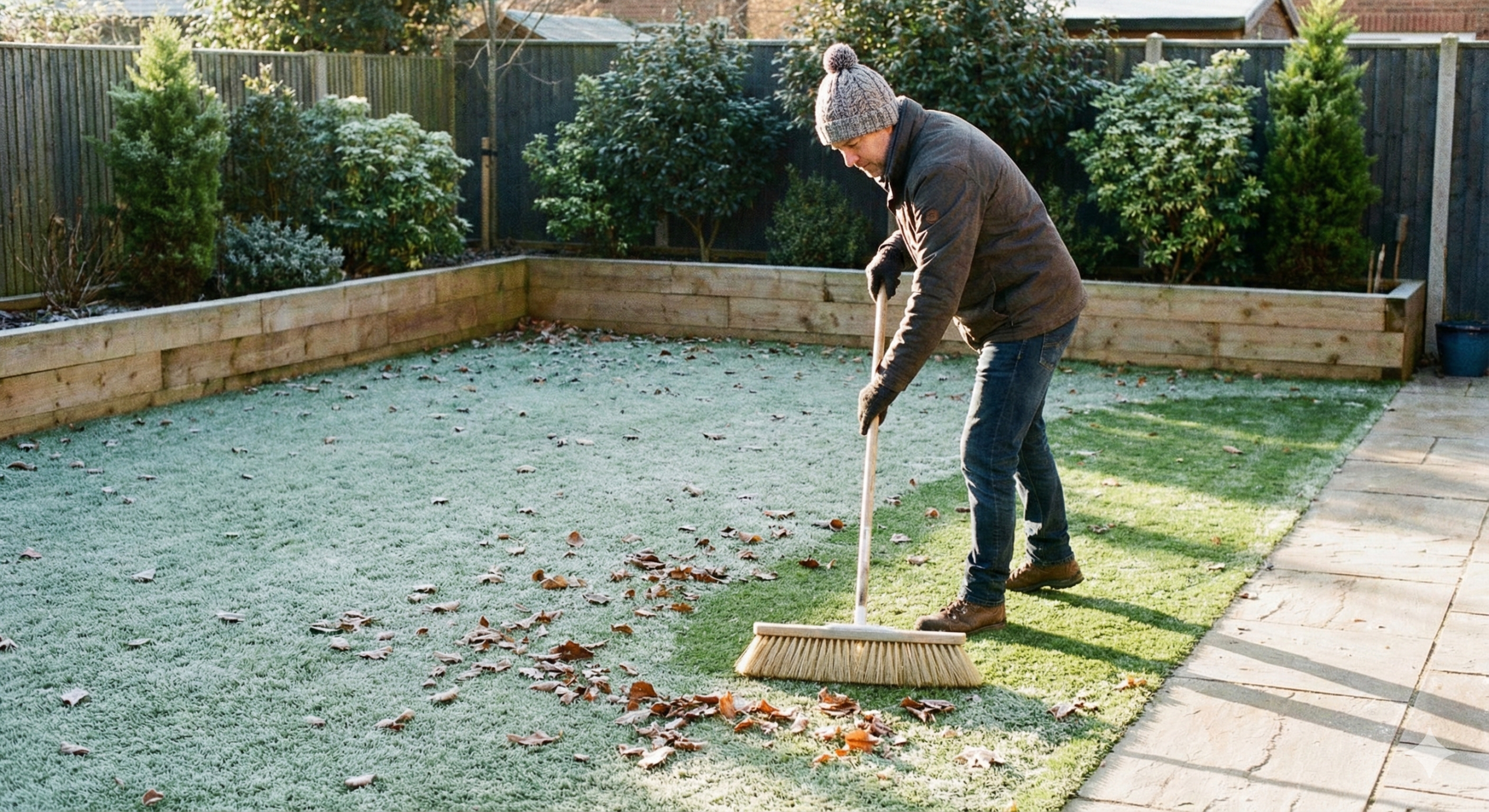
Leaf build-up is another issue. Autumn leaves and small twigs can accumulate on the surface, blocking drainage if left for too long. Regular clearing prevents this and keeps the base free-flowing.
Pet owners may notice slightly more lingering odours in cold, damp weather. Rinsing problem spots with warm water or using a safe grass cleaner helps keep the surface fresh.
Snow is generally harmless. Artificial grass does not absorb water, meaning snow melts quickly. You can leave snow to thaw naturally or remove the top layer gently with a soft brush — never use sharp tools, which may damage the fibres.
Do’s and Don’ts for Winter Lawn Care
Good winter maintenance comes down to a few simple habits that protect the lawn’s structure and keep it looking natural.
Do:
- Brush the fibres occasionally to stop winter flattening
- Clear leaves and debris to keep drainage flowing
- Rinse with warm water if odours develop
- Check the edges for any lifted sections after storms
Don’t:
- Walk on the lawn when it is completely frozen
- Use metal shovels or sharp tools to remove snow
- Apply rock salt or chemicals not intended for artificial grass
- Ignore heavy leaf build-up, especially after storms
Following these tips ensures the lawn stays safe and smooth throughout the colder months.
Simple Maintenance That Keeps Grass Looking Fresh
The ease of winter maintenance is one of the reasons artificial grass is so appealing, especially for busy families and pet owners.
A soft-bristle brush is all you need to keep the fibres upright. Brushing against the pile helps maintain appearance and prevents long-term flattening. This is particularly useful in areas of frequent foot traffic, such as garden paths or around outdoor seating.
Removing organic matter is equally important. Leaves, berries, and twigs are common in autumn and winter, and while they won’t harm the grass itself, they can block drainage if they build up. Clearing debris once or twice a week is usually enough.
Pet owners can continue their usual cleaning routine. Even in winter, artificial grass remains hygienic as long as waste is removed promptly and the area is rinsed now and again. Many homeowners find winter easier with artificial grass because it avoids the mud and odours associated with wet natural turf.
Why Artificial Grass Is Ideal for Year-Round Use
When comparing artificial and natural lawns in winter, the differences are clear. Natural grass often suffers from reduced sunlight, soil compaction, and heavy moisture. It becomes muddy, patchy, and difficult to maintain.
Artificial grass avoids all of these seasonal problems. It remains green without sunlight, drains quickly after storms, and doesn’t turn to mud even after heavy footfall. This makes it especially practical for families with children or pets who still use the garden in winter.
The benefits continue through the shifting seasons. In spring, artificial grass looks clean and ready for use without the usual recovery period natural lawns need. In summer, it doesn’t yellow or dry out during heatwaves. And in autumn, leaf clean-up is simple because debris doesn’t sink into soil or damp turf.
Artificial grass provides a consistent, attractive appearance in every season — something natural lawns often struggle to achieve without significant upkeep.
Getting the Most from Your Lawn All Year
Artificial grass is built to handle winter, but a little seasonal care ensures it stays at its best. Clearing leaves, allowing frost to melt naturally, and brushing the fibres occasionally all help maintain a fresh appearance and smooth texture.
For homeowners tired of muddy winters and constant lawn repairs, artificial grass offers reliability and simplicity that natural turf can’t match. With proper installation and basic care, your garden remains usable, attractive, and low-maintenance even in the coldest months of the year.
Thinking about upgrading your garden with artificial grass? Contact M&C Paving Northeast for professional installation and tailored advice across the North East.