Is Your Driveway Actually Safe? Slip, Trip, and Access Risks Homeowners Miss
A driveway can look neat and still be unsafe. Most homeowners judge paving by colour, pattern, or whether it “looks level.” Safety rarely enters the conversation until someone slips, trips, or struggles to reverse safely.
Driveways are working surfaces. They deal with rain, frost, vehicle weight, foot traffic, bins, deliveries, and children running across them. When design or installation falls short, risk builds quietly.
Here are the slip, trip, and access hazards many homeowners miss and how proper installation prevents them.
Uneven Levels and Hidden Trip Points
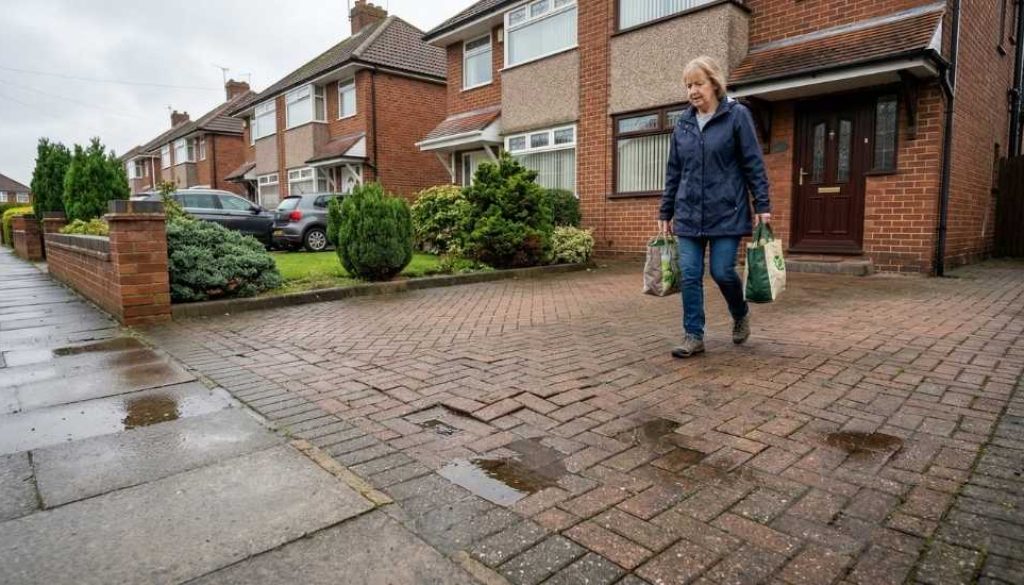
Small height differences cause big problems. Even a 10–15mm lip between paving sections can catch a shoe edge or destabilise someone carrying shopping. Over time, minor settlement creates subtle ridges that are easy to ignore until someone falls.
Common causes include:
- Inadequate sub-base compaction
- Poor edge restraints
- Water washout beneath blocks
- Root movement
- Surface overlays without excavation
Uneven areas often begin near drainage points or vehicle turning spots where pressure is highest.
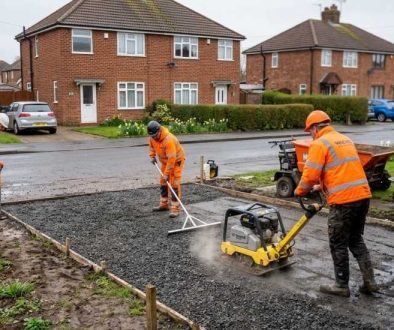
Professional installation prevents this through correct excavation depth, layered compaction, and proper edge anchoring. Settlement is not “just wear and tear.” It usually indicates a groundwork issue.
Slippery Surfaces in Wet or Icy Conditions
The Northeast climate does not forgive smooth finishes. Rain, algae growth, and winter frost can turn certain surfaces into skating rinks. Resin, concrete, and sealed finishes require correct texture specification and drainage planning to remain safe.
Slip risk increases when:
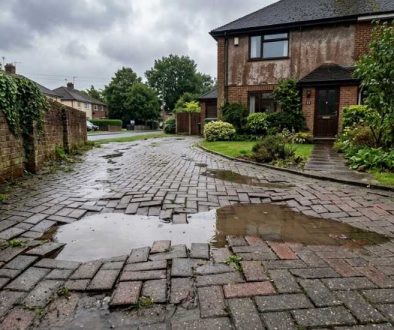
- Water pools instead of draining
- Algae forms in shaded areas
- Surfaces are over-sealed
- Fall gradients are incorrect
A driveway should channel water away efficiently. Standing water does more than damage the base; it becomes a hazard when temperatures drop.
Professionals design fall gradients carefully. The aim is controlled water movement without creating steep slopes that increase slip risk.
Poor Drainage That Creates Ice Hazards
Water that lingers overnight freezes by morning. If your driveway holds shallow pools near entrances or footpaths, winter conditions amplify risk. Ice patches often form in areas homeowners step most frequently.
Drainage planning should consider:
- Natural slope direction
- Position of thresholds
- Gully placement
- Surface permeability
Driveways built without proper fall calculation may look flat and modern but behave poorly in winter. A safe driveway manages water consistently across seasons.
Cracked or Loose Block Paving
Loose blocks are not just cosmetic. When blocks shift, joints widen. That movement reduces stability and creates rocking points underfoot. Carrying children, tools, or heavy bags across unstable paving increases accident risk.
Cracks and loose sections often result from:
- Thin sub-base layers
- Heavy vehicle use not accounted for
- Inadequate jointing sand
- Failed edge restraints
Proper compaction and load planning prevent block movement. Driveways must be built to match vehicle weight and usage patterns, not just available space.
Steep Gradients and Reversing Risks
Safety includes vehicle control. If a driveway slope is too steep or poorly graded, vehicles can struggle with traction in wet or icy weather. Reversing onto uneven or angled surfaces also reduces visibility and control.
Risk increases when:
- There is limited turning space
- The driveway meets the road at an awkward angle
- Drainage channels create abrupt surface transitions
A professional site assessment evaluates gradient, approach angle, and vehicle movement before installation begins. Access should feel controlled and predictable, not awkward.
Inadequate Lighting and Visual Contrast
Driveway safety does not end at ground level. Poor visibility increases trip risk. Uniform-coloured surfaces without edging contrast can make step changes harder to see in low light.
While lighting installation may sit outside paving scope, design should allow for:
- Clear edge definition
- Step marking
- Logical pathway alignment
A safe driveway guides movement visually as well as physically.
Damaged or Incorrectly Installed Dropped Kerbs
Access safety extends beyond the driveway itself. If a dropped kerb is poorly graded, vehicles may scrape, bounce, or struggle during entry. Over time, this creates structural damage and surface stress.
Incorrect installations can also create pedestrian hazards on the pavement edge.
Council-compliant kerb installation ensures:
- Correct depth and gradient
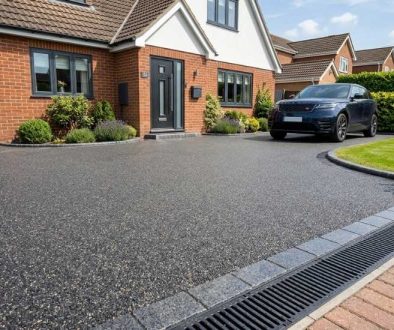
- Smooth transition between road and driveway
- Safe vehicle access
This is not a detail to overlook. It directly affects daily safety.
Moss, Algae, and Maintenance Neglect
Safety is not static. Shaded driveways and north-facing surfaces often develop algae film. This reduces traction significantly, particularly after rain.
Regular maintenance should include:
- Surface cleaning
- Re-sanding joints where required
- Checking drainage flow
- Inspecting edge stability
A professional installer advises on maintenance because long-term safety depends on it.
When Appearance Hides Risk
One of the biggest misconceptions is that a driveway looks safe if it looks new.
Some hazards are invisible at first glance:
- Subtle base movement
- Slight but incorrect fall direction
- Early joint erosion
- Poor compaction under turning areas
A rushed installation may look tidy for months. Problems usually surface after repeated wet and dry cycles.
Driveways behave like quiet structures. When they fail, they rarely fail suddenly. They deteriorate gradually until risk becomes visible.
What a Professional Safety Assessment Should Check
If you are unsure whether your driveway is safe, a proper inspection should include:
- Level and settlement check
- Drainage performance assessment
- Surface traction evaluation
- Edge restraint stability
- Kerb and access compliance
- Load suitability review
Safety is built during groundwork, not corrected with surface repairs.
Build For Safety, Not Just Appearance
A driveway should support your family safely every day. It should handle rain, frost, vehicles, deliveries, and foot traffic without becoming hazardous.
At M&C Paving Northeast, safety is addressed before installation begins. Site surveys examine drainage, ground stability, gradients, and access so surfaces perform reliably year after year.
If you have concerns about uneven paving, pooling water, or unstable blocks, do not ignore them.
Book a proper driveway assessment. Safe surfaces start below ground.