How to Fix a Sinking Driveway Before It Gets Worse
Most driveway problems don’t appear suddenly. They begin quietly — a slight dip in one corner, a block that rocks when you step on it, or a small patch where water lingers after rain. Many homeowners overlook these early signs, especially during warmer months when the ground remains firm. But once autumn rainfall sets in and winter temperatures begin dropping, these small imperfections can become major structural issues.
A sinking driveway is more than an inconvenience. It affects drainage, creates slip hazards, reduces kerb appeal, and can even damage vehicles if the surface becomes uneven enough. The earlier you address the problem, the simpler and more cost-effective the repair. Left too long, sinking can spread across large sections, requiring far more extensive work.
Understanding why sinking occurs and how it should be fixed is the key to preventing ongoing problems and protecting the long-term lifespan of your driveway.
Why Driveways Sink in the First Place
Driveways typically sink because the support beneath the surface has weakened or shifted. This sub-base — the compacted layer that provides strength — plays a crucial role in keeping the driveway level.
There are several reasons the sub-base might fail. One of the most common is poor initial installation. If the ground wasn’t excavated deep enough or the sub-base wasn’t compacted correctly, the driveway will gradually settle under the weight of vehicles. Over time, this settling becomes visible as dips or uneven patches.
Another factor is water saturation. Driveways with drainage issues often suffer from softening soil beneath the surface. Rainwater can wash away bedding sand under block paving or create voids beneath concrete and tarmac. Once the support is weakened, the driveway begins to sink in those areas.
Heavy vehicles, ground movement, and older driveways that have undergone years of wear and tear can also contribute to sinking. The important thing to remember is that sinking rarely fixes itself — it only worsens with time.
Early Warning Signs Homeowners Should Watch For
A sinking driveway doesn’t always look dramatic at first. In fact, early symptoms can be subtle, which is why many homeowners miss them until the problem has spread.
Common signs include:
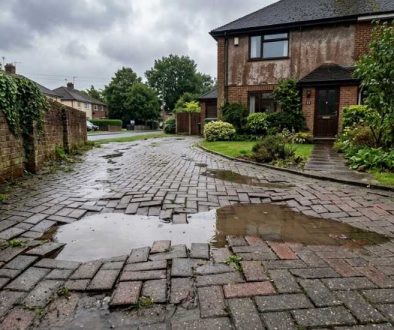
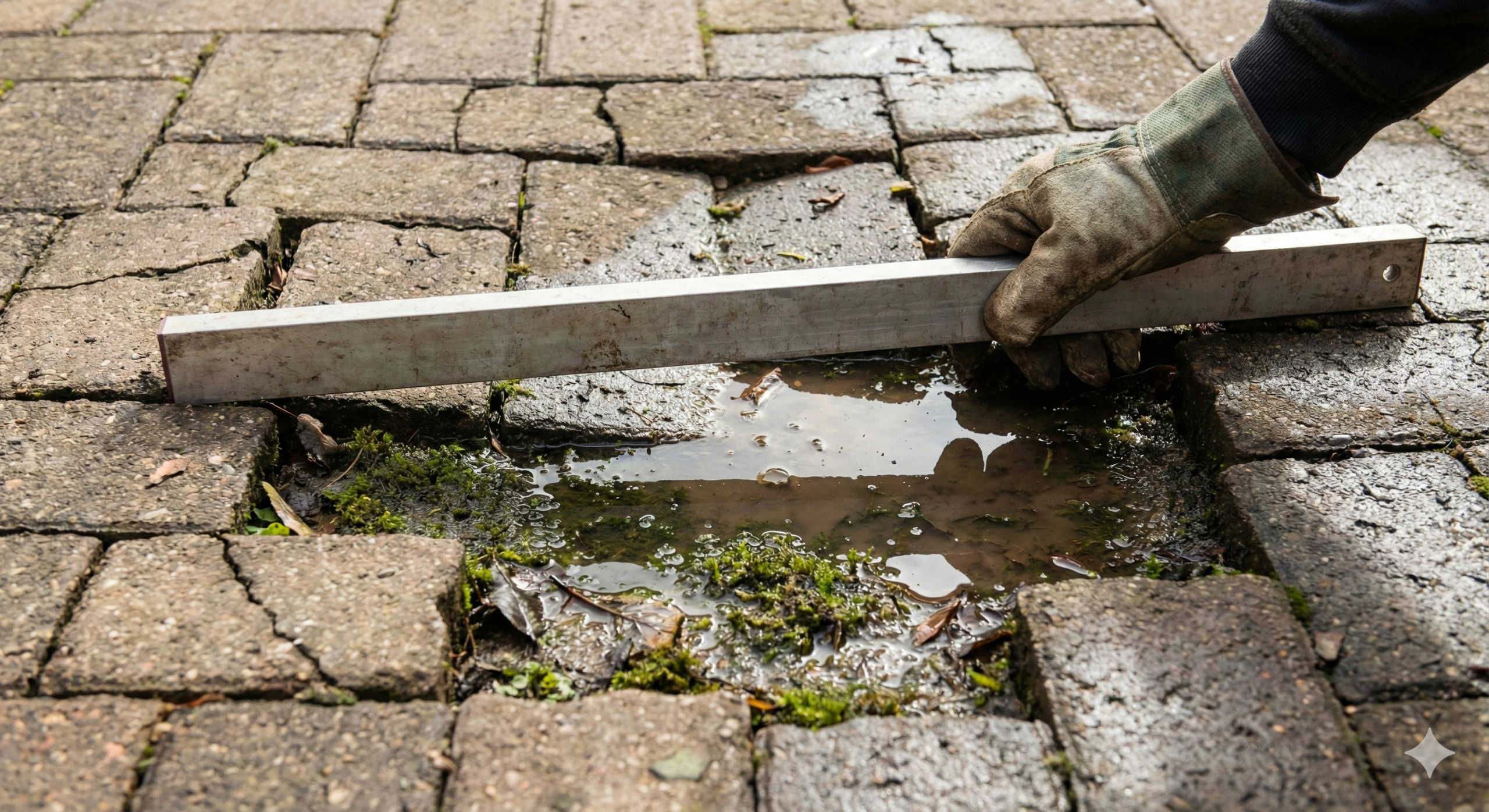
- Dips or depressions that form small puddles after rain
- Loose or rocking blocks that shift when stepped on
- Cracks in tarmac or concrete, often running in curved lines
- Edges pulling away, especially on driveways that border lawns or flowerbeds
- Uneven tyre marks, indicating the surface no longer supports weight evenly
If you spot any of these issues, the sinking has already started. Acting quickly prevents further damage and avoids the need for more invasive repairs.
When Sinking Becomes a Structural Issue
Not all sinking is equal. A shallow dip may simply be cosmetic, but deeper settling is a structural problem that affects the entire driveway.
Structural sinking occurs when the sub-base has failed in one or more areas. This leads to instability that can spread beneath the surface. For block paving, this often results in clusters of blocks shifting. For resin, concrete, or tarmac, sinking may cause cracks or hollow spots that worsen during cold weather.
Another concern is drainage. Water naturally flows toward the lowest point of a driveway. If that lowest point becomes a dip caused by sinking, water will continually collect there, making it even harder for the surface to dry. In winter, this water freezes, expands, and pushes the surface further out of place.
Once structural sinking begins, it has a habit of growing quickly. This is why early intervention — ideally before winter sets in — is essential.
How Professionals Repair a Sinking Driveway
Professional repair begins with identifying the underlying cause. A sinking surface cannot be fixed by simply patching the top layer — the sub-base must be addressed.
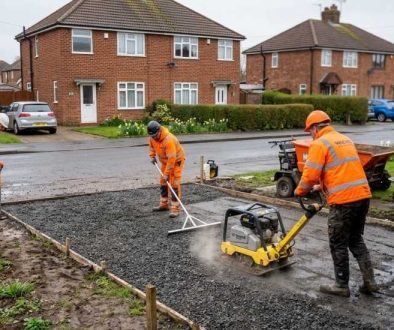
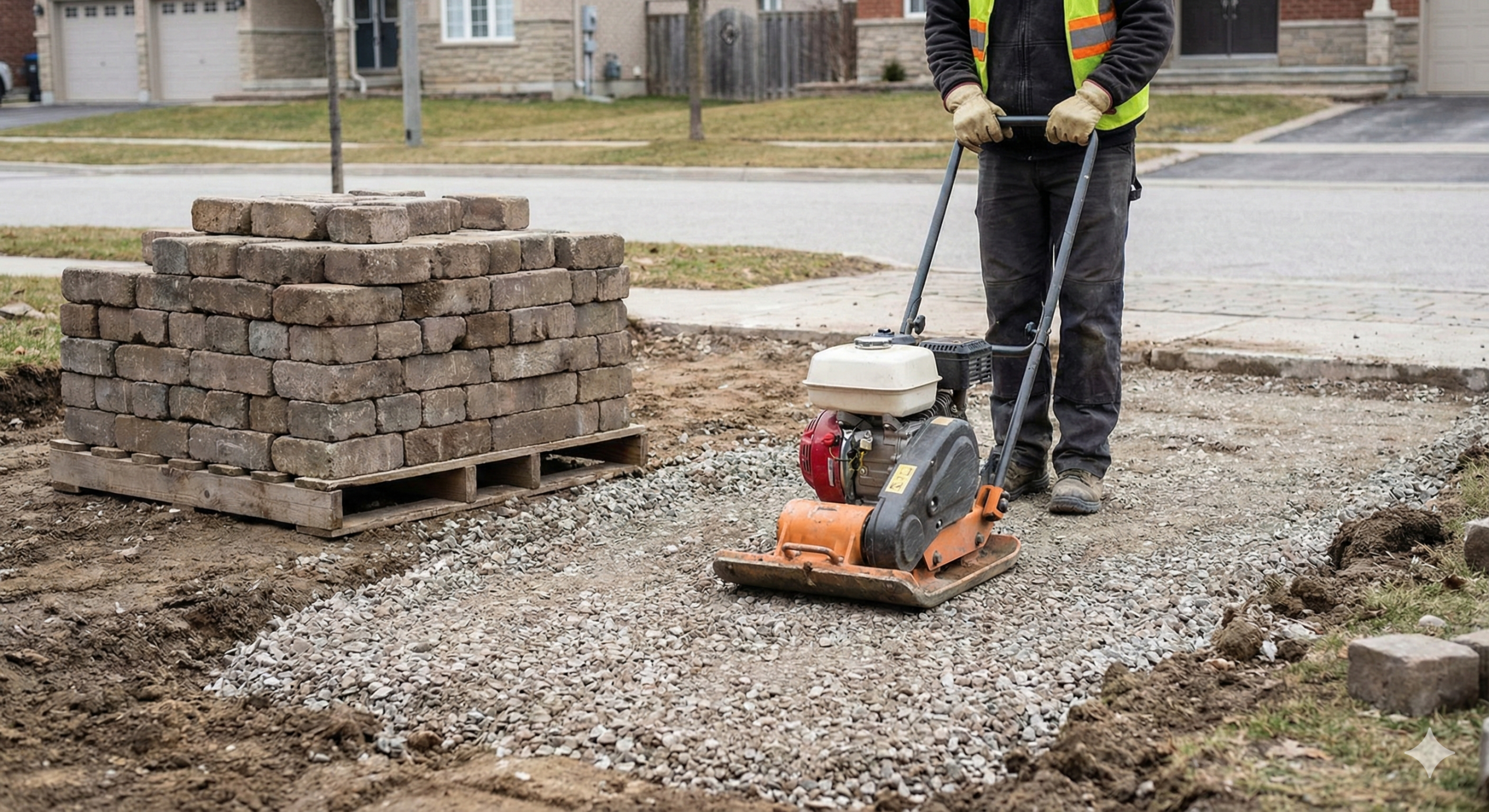
For block paving, repairs usually involve lifting the affected blocks, excavating the weakened bedding layer, and rebuilding the sub-base. Fresh MOT Type 1 aggregate is added and compacted to the correct depth. Once level, sharp sand is laid, blocks are re-set, and jointing sand is brushed in. This restores the structural stability and ensures the repaired area blends seamlessly with the rest of the driveway.
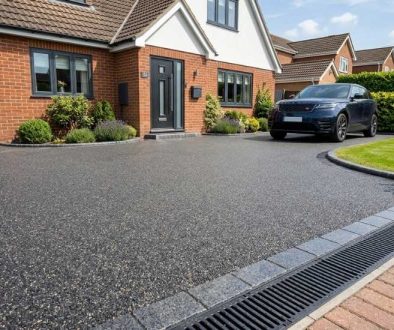
Resin-bound driveways require a more specialist approach. If the sinking is localised, the affected section can be cut out, the base rebuilt, and new resin installed to match the original colour. For larger areas, resurfacing may be needed.
Tarmac repairs typically involve removing the sunken section, re-compacting the sub-base, and laying fresh tarmac. Proper compaction is crucial to ensure the repair doesn’t sink again.
Concrete sinking is more complex. Depending on the severity, repairs may involve lifting via resin injection, cutting out and re-pouring the affected area, or replacing the slab entirely.
What all professional methods have in common is a focus on the foundation. Without rebuilding the sub-base, the surface will continue to sink regardless of how well the top layer is repaired.
Why DIY Fixes Don’t Work Long-Term
Homeowners sometimes attempt to fix sinking by filling dips with sand, applying patching compound, or adding a thin layer of material to “level” the surface. Unfortunately, these DIY fixes only hide the symptoms temporarily.
Surface-level patching does nothing to correct the failing sub-base beneath. As soon as vehicles drive over the area, or when heavy rain arrives, the patched section begins sinking again — often faster than before.
DIY patches can also trap water, reducing drainage efficiency and accelerating freeze–thaw damage. In block paving, using the wrong sand or bedding material can destabilise surrounding areas, gradually spreading the problem.
Professional repair is the only long-term solution because it resolves the root cause and restores the driveway’s structure, not just its appearance.
Preventing Sinking in the Future
Once a driveway has been repaired, good maintenance helps prevent the issue from returning. Keeping joints filled, clearing debris, and maintaining proper drainage reduces moisture penetration — one of the biggest causes of sub-base erosion.
Regular inspections, especially after heavy rain or frost, help homeowners spot early signs of movement. Maintaining the edges of the driveway also prevents the surrounding soil from washing away, which is a common cause of sinking in older gardens.
If you’re installing a new driveway, choosing a reputable installer who uses correct excavation depths, quality aggregates, and proper compaction methods is the best long-term protection against sinking.
Repairing Your Driveway Correctly the First Time
Sinking driveways are more than just an aesthetic issue — they are a sign that the structure beneath the surface is failing. When ignored, the problem spreads, becomes more expensive, and increases the risk of damage during colder months.
Fixing a sinking driveway early ensures stability, safety, and long-term performance. Whether it’s block paving, resin, tarmac, or concrete, proper repair and rebuilding of the sub-base is essential to stopping the sinking for good.
If your driveway is showing signs of sinking, contact M&C Paving Northeast for expert assessment and long-lasting repair across the North East.